
whatsapp
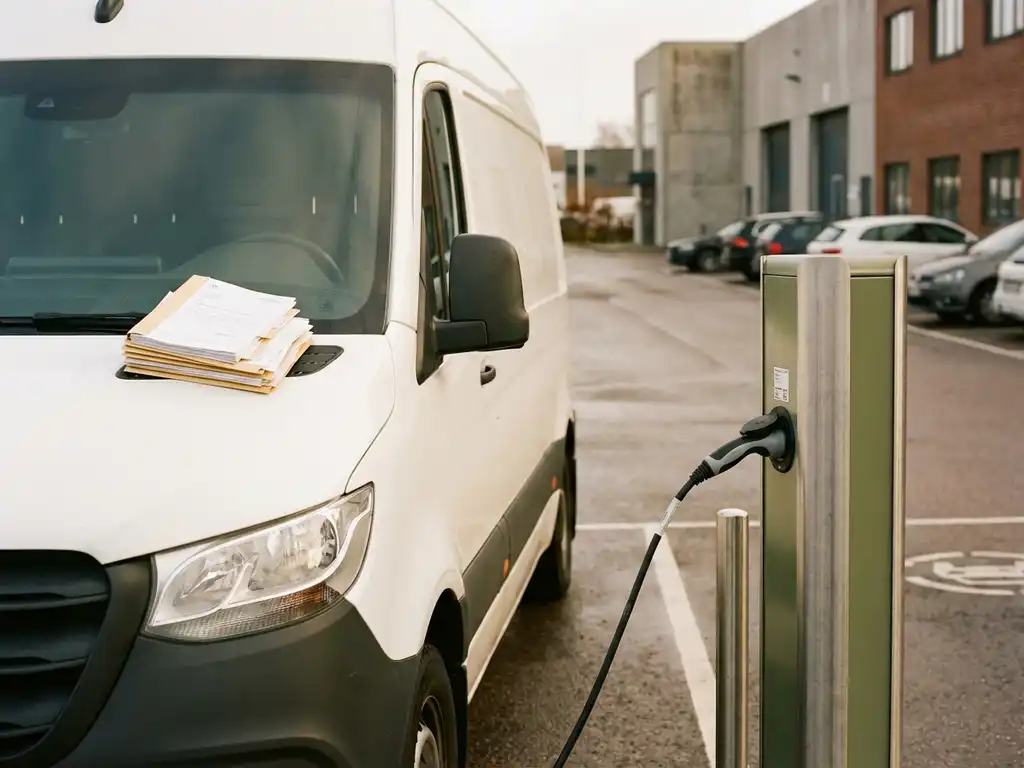
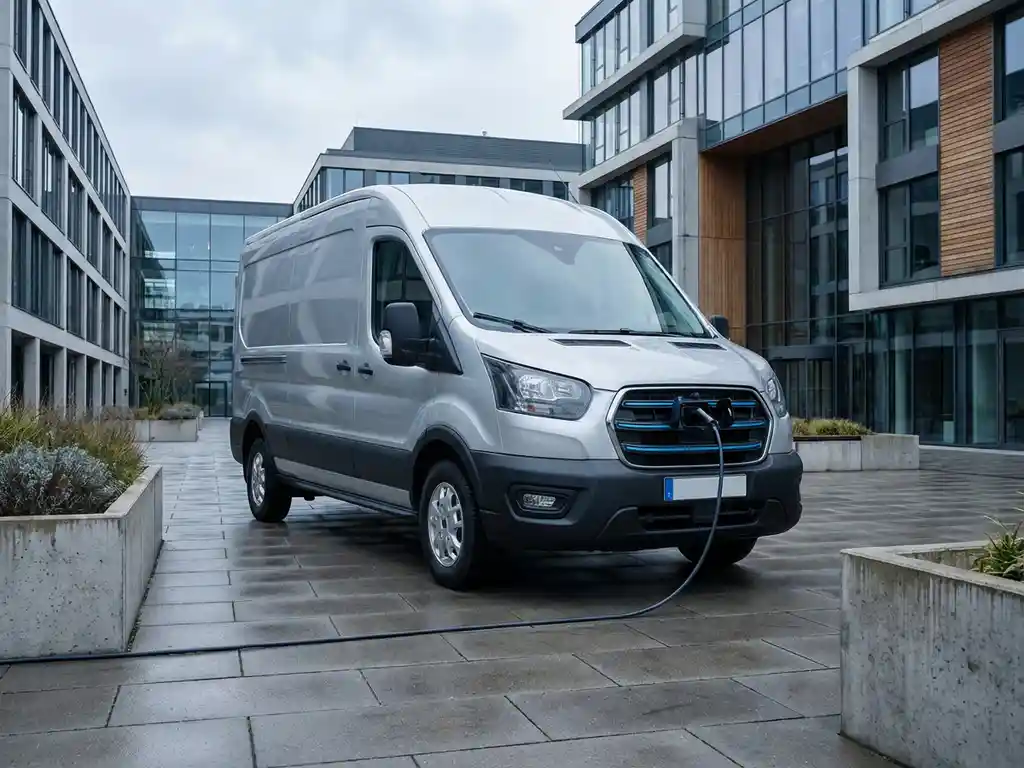
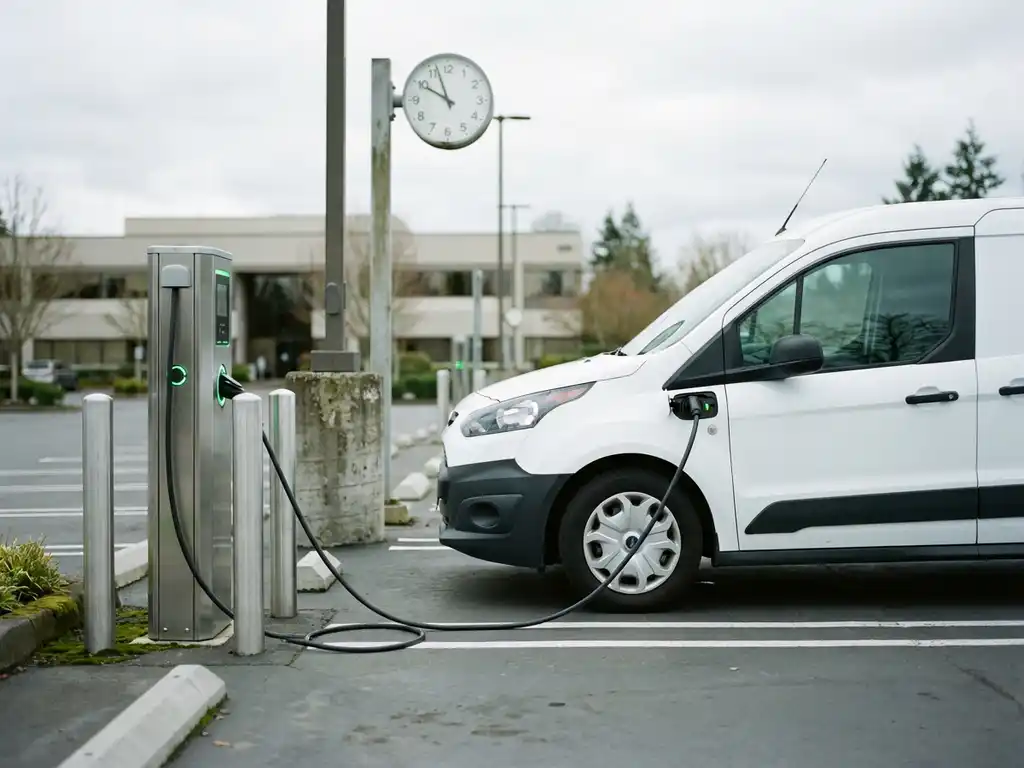
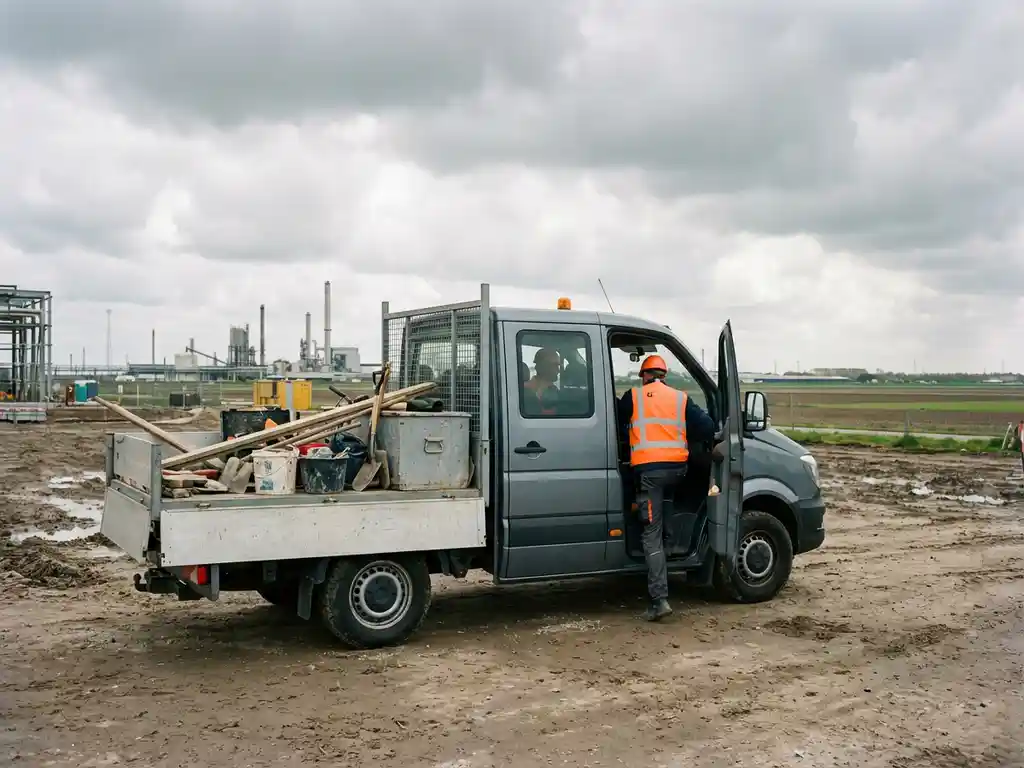
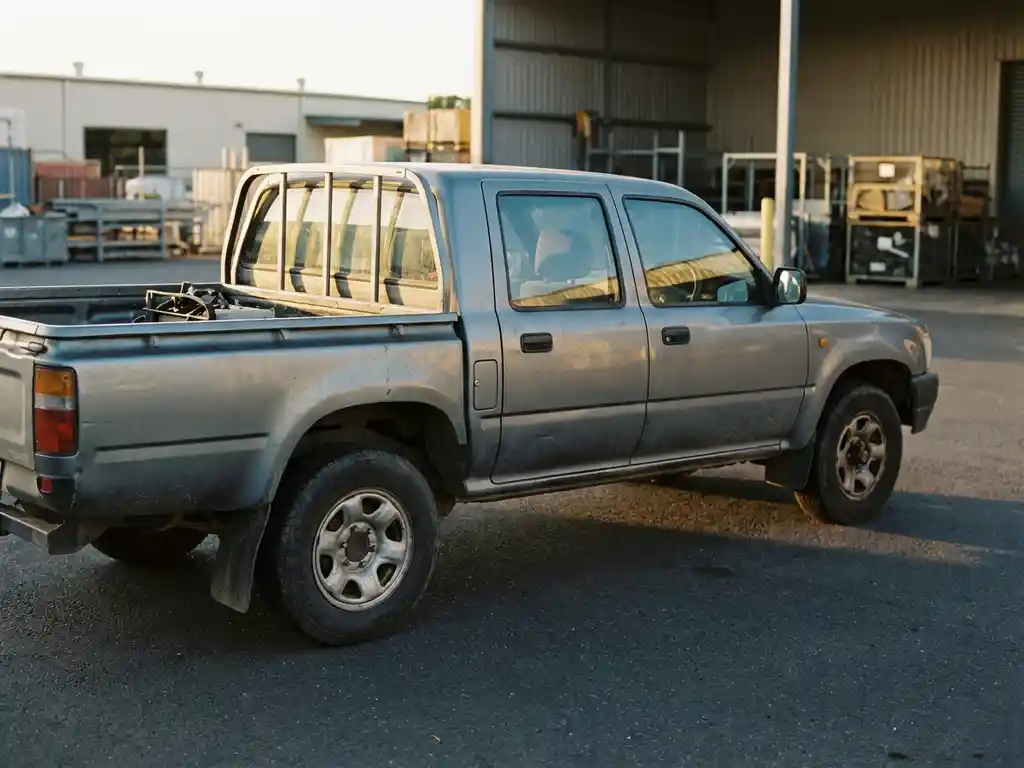
White double cab pickup truck in Dutch business park with government documents and calculator on bonnet.

What about the road tax for a double cab commercial van?

The road tax for a double cab van is a subject that concerns many entrepreneurs. Do you pay the low rate for vans, or do you still fall into a more expensive rate? The answer depends on how the tax authorities classify your vehicle, and that classification has more snags than you might expect at first glance.

In this article, we answer the most frequently asked questions about motor vehicle tax (MRB) for double-cab commercial vans. Whether you have a want to buy a small van, is considering a double-cab van to purchase or thinking about a electric company car lease, this overview will help you make the right choice and avoid unexpected tax bills.

What is a double cab company bus for tax purposes?

For tax purposes, a company double-cab van is a vehicle that is classified by the tax authorities as a passenger car or a delivery van, depending on the vehicle's specific characteristics. That classification directly determines which MRB rate you pay. A double cabin has two rows of seats and is therefore not automatically considered a van.

The Inland Revenue uses a number of technical criteria to determine whether a vehicle qualifies as a van. In the case of a double cab, the tax authorities look, among other things, at the ratio of the cargo space to the total length of the vehicle. Specifically: the cargo space must be at least as long as the cab, and the cargo space must have a flat loading floor without fixed seats.

What does the Inland Revenue count in its assessment?

The assessment of a double cab revolves around the following measurable characteristics:

  • The length of the cargo area relative to the length of the cabin
  • The presence of a flat, continuous loading floor
  • Lack of fixed seats or comfort features in the cargo area
  • The maximum payload and maximum authorised mass

If the vehicle does not meet these requirements, the Inland Revenue classifies it as a passenger car. This has direct consequences for the MRB rate, the additional taxable benefit and any exemptions. It is therefore wise to check how the vehicle is registered in the vehicle registration register before purchasing.

How much road tax do you pay for a double cab?

The road tax rate for a double cab depends on the tax classification of the vehicle. If it is classified as a van, then you will pay the lower MRB rate for vans. If it is classified as a passenger car, then the higher rates based on weight and fuel type that apply to passenger cars will apply.

The difference in costs can be significant. The MRB rate for passenger cars is weight-dependent and increases the heavier the vehicle. A double cab is usually a heavier vehicle, so the road tax rate as a passenger car can increase substantially. For vans, there is a flatter, more favourable rate that increases less sharply with weight.

What is the difference in cost in practice?

Although exact amounts depend on weight, fuel and the province where you live, the difference between the passenger car rate and the van rate for a heavier vehicle is easily several hundred euros per year. For business owners with multiple vehicles in the fleet, this difference increases to a noticeable amount per quarter. Always check the current rates via the Tax Administration's website, as they are updated annually.

Does the low MRB rate for vans also apply to a double cab?

The low MRB rate for vans only applies to a double cab if the vehicle is actually classified as a van by the Inland Revenue. This is not automatically the case. Many double cabs are registered as passenger cars by default, unless they demonstrably meet the technical criteria for a van.

Practice shows that manufacturers sometimes offer variants specifically designed to meet van requirements. Think an extended cargo area or a modified loading floor. If you want to buy a double cab with the low MRB rate in mind, always check the vehicle registration register or ask the seller to confirm the vehicle classification in writing.

How do you check the classification of a vehicle?

You can check the classification of a vehicle in two ways:

  1. Via the RDW's vehicle registration register: search on the registration number and see the vehicle type registered.
  2. Through the Tax Office: request a preliminary consultation if you are unsure about the classification of a specific vehicle you are considering buying.

Is the vehicle registered as a passenger car, but you think it meets the van criteria? Then you can apply to the RDW for reclassification. This requires a technical inspection, but can save you considerable money in the long run.

What are the consequences of incorrect vehicle classification?

An incorrect vehicle classification can result in additional tax assessments, fines and a correction to the additional taxable benefit. If the Inland Revenue finds that you have treated a vehicle as a van while it qualifies as a passenger car for tax purposes, it can still impose the underpaid ACT, including tax interest.

Besides road tax, misclassification also affects the addition for private use. If a double cab is classified as a passenger car, the addition rates for passenger cars will apply. This is more expensive for most entrepreneurs than the additional taxable benefit for vans. The combination of an additional MRB charge and a correction to the additional taxable benefit can be financially significant.

How to avoid problems with the tax authorities?

The best way to prevent problems is to be proactive:

  • Check the RDW registration before buying or leasing a vehicle.
  • If in doubt, ask the seller or leasing company for written confirmation of the classification.
  • Consult a tax adviser if you want to use a double cab for business and are unsure about the consequences.
  • Keep all documentation on the vehicle, including technical specifications and vehicle registration data.

How do you apply for road tax exemption or discount?

There is an exemption or reduced MRB rate for vans used for business purposes under certain conditions. You apply for this through the Inland Revenue, usually with a form you can submit digitally or in writing. The exemption only applies if the vehicle meets the classification requirements and is used exclusively for business purposes.

For electric vans and electric company cars additional benefits apply. Until a certain date, there is an exemption from MRB for fully electric vehicles. This makes a electric company car lease or purchase extra attractive for entrepreneurs looking to make their fleets more sustainable. Note that the exemption for electric vehicles will be phased out over the next few years, so it pays to act on it quickly.

Which exemptions are relevant for entrepreneurs?

The most relevant exemptions and discounts for business drivers are:

  • Electric van exemption: fully electric vehicles are (temporarily) exempt from MRB.
  • Reduced rate for vans: lower than the passenger car rate, provided the vehicle is correctly classified.
  • Exemption for agricultural and special vehicles: not applicable to standard double cabs, but relevant for specific applications.

Apply for the exemption in time, as the Inland Revenue does not grant it automatically. In case of an incorrect application or a non-compliant vehicle, the exemption will be reversed and an additional charge will follow.

When is a double cab the smartest choice for your business?

A double cab is the smartest choice if you want to transport several employees as well as need substantial cargo space. Think of construction and installation companies, landscapers or service mechanics who go out with a team every day and also carry materials or tools. The combination of passenger space and payload makes this vehicle type functionally versatile.

From a tax point of view, it is wise to do the math beforehand. If the double cab is classified as a van, you will benefit from the lower MRB rate and more favourable addition rules. If it is classified as a passenger car, the cost increases. For entrepreneurs who have a Want to buy small van but still need extra seats, a double cab may be the right middle ground, provided the classification is correct.

What are alternatives if the double cab is tax disadvantageous?

If a double cab is classed as a passenger car in your situation and that is tax disadvantageous, there are alternatives:

  • A standard van with a single cabin, combined with a separate passenger car for the team.
  • An electric van that meets the van criteria and benefits from the MRB exemption.
  • A leasing arrangement where the tax risks are shared with the leasing company.

The choice depends on your daily operations, the number of employees you transport and your company's fiscal situation. Proper consideration beforehand will save you a lot of hassle afterwards.

How we help you choose the right company car

At Van den Hurk Bedrijfswagens, we understand that choosing a double-cab commercial van is not just about the vehicle itself. The tax classification, the MRB rate and the lease construction all play a role. We help you make that choice right, without you having to go through all the rules yourself.

What we can do for you:

  • Provide insight into the vehicle classification of each vehicle in our stock, so you know where you stand.
  • Advising on the tax implications of buying or leasing, tailored to your business situation.
  • A broad Showing range of vans, double cabs and electric utility vehicles, including leasing options.
  • Get personalised advice from our specialists in Helmond, with no hidden costs or unclear terms.

Want to know which company car best suits your activities and fiscal situation? Contact us or drop by in Helmond. We are happy to think along with you, from initial enquiry to delivery.

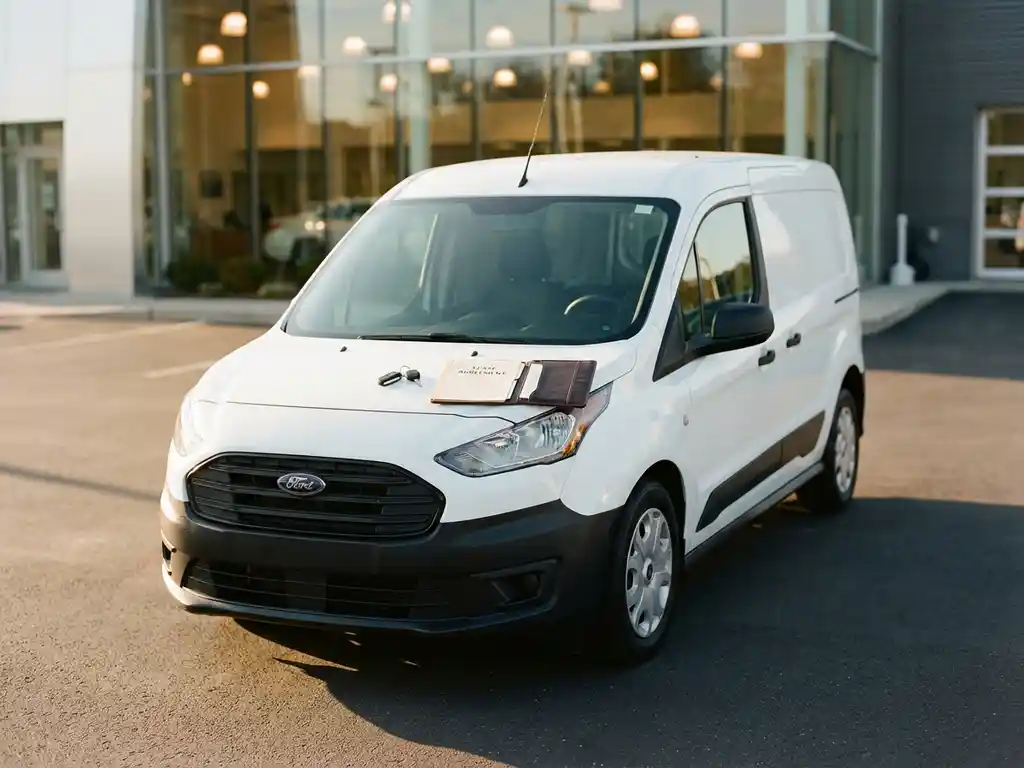
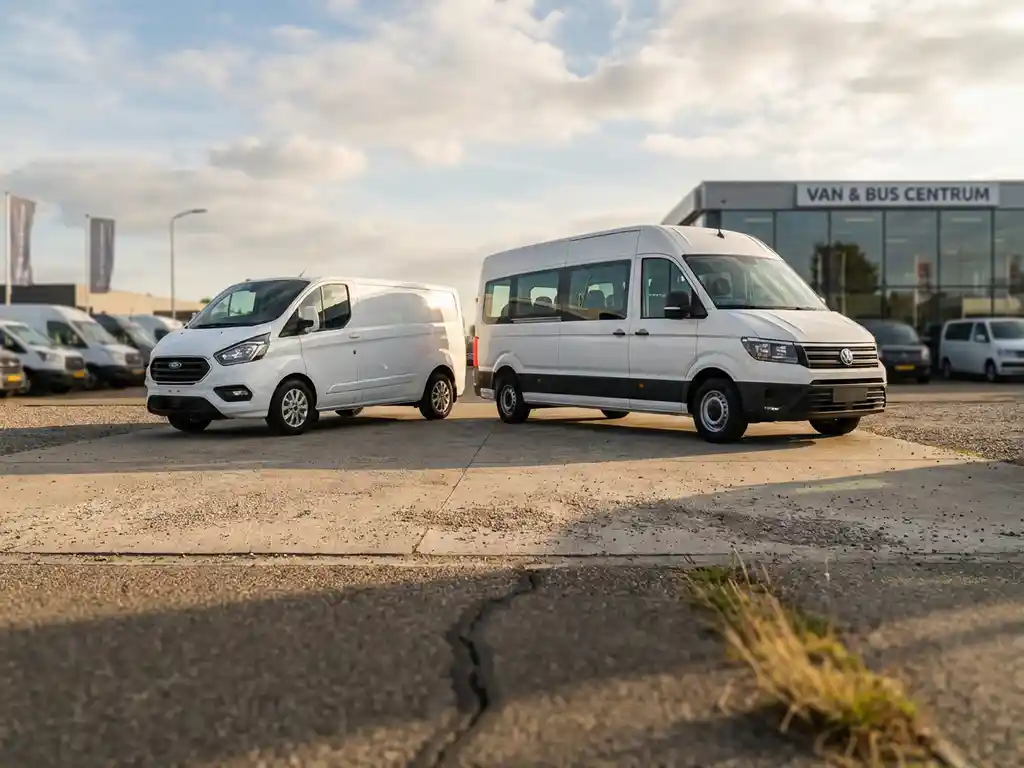
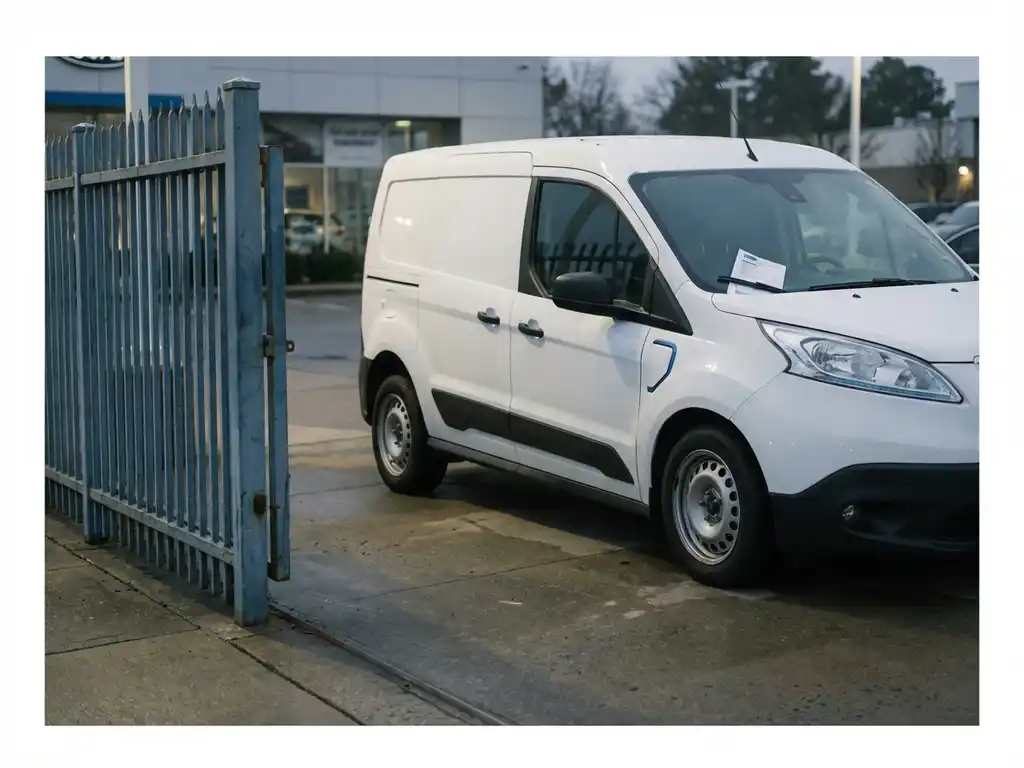
White compact van with open driver's door and automatic transmission, parked in a car dealership lot.

Is buying a small van with an automatic more expensive?

Buying a small van with an automatic transmission is becoming increasingly popular among entrepreneurs. Whereas the automatic transmission used to be mainly reserved for passenger cars, you now increasingly see it in light commercial vehicles as well. But does this choice make financial sense? And what does it mean for your daily costs?

In this article, we answer the most frequently asked questions about small vans with automatic transmission, from purchase price to maintenance and the smartest use cases. Whether you want to buy a small van for city driving or are considering switching to an electric commercial vehicle with automatic transmission, you will find concrete answers here.

What exactly is an automatic van?

An automatic van is a commercial vehicle where the gearbox shifts automatically, without the driver having to operate a clutch. Instead of shifting manually, the system itself controls the right gear based on driving speed, engine load and driving conditions. This makes driving easier, especially in busy urban traffic.

There are different types of automatic transmissions you will find in small vans:

  • Traditional automatic transmission (torque converter): the classic variant with smooth circuits and an excellent reputation for reliability
  • CVT (continuously variable transmission): Uses a belt drive for a smooth transition between gears, without noticeable gear changes
  • DCT (dual-clutch transmission): combines the efficiency of a manual transmission with the convenience of an automatic
  • Electric drive: Technically, an electric van does not need a gearbox, but its driving behaviour is similar to that of an automatic transmission

At electric commercial vehicles, which are increasingly available as leasing options, the automatic is thus actually ingrained in the concept. Consequently, choosing an automatic transmission is not always a conscious extra, but sometimes a logical consequence of the type of drive you choose.

Why do entrepreneurs choose an automatic van?

Entrepreneurs choose an automatic van mainly because of the driving comfort and lower fatigue in frequent stop-and-go traffic. For drivers who drive daily through urban areas, such as delivery drivers or service mechanics, an automatic makes a significant difference in physical strain. Less gear shifting means less muscle strain and more concentration on the road.

Benefits for everyday use

The practical benefits of an automatic transmission in a small van are concrete and noticeable. Consider:

  • Less driving stress in traffic jams and heavy city traffic
  • More accessible to multiple drivers, even without experience with manual shifting
  • Smoother ride, which can contribute to lower fuel consumption in the city
  • Reduced risk of driving errors, such as engine stalling or incorrect gear changes

Relevant for specific sectors

Healthcare carriers that have a wheelchair bus deploy, almost always opt for an automatic. Boarding and transporting passengers requires a smooth driving style where shocks are avoided as much as possible. The automatic also offers a more comfortable alternative for companies working with a company bus with double cabin, transporting several employees.

Staff management also plays a role. If several employees alternate driving the same van, an automatic lowers the threshold. Not everyone is equally adept at manual shifting, and an automatic completely eliminates that problem.

Is a small van with automatic transmission more expensive to buy?

Yes, a small van with an automatic transmission is usually more expensive to buy than a similar model with a manual transmission. The price difference varies by brand and segment, but is often several hundred to over a thousand euros for new vehicles. For used vehicles, the difference is sometimes smaller, depending on age and mileage.

New versus used van with automatic transmission

When buying a new small van, you will pay an extra price for the automatic as an option or version on top of the base price. Manufacturers like Renault, Volkswagen and Ford offer an automatic as an option in models like the Kangoo, Caddy and Transit Connect. That extra price is immediately visible at the time of purchase.

For a used van with an automatic, the situation is different. The purchase price may be similar to that of a manual one, as automatics have been less sought after in the used market in the past. This sometimes makes it interesting to look for a used van with automatic if you want to save on the purchase.

Electric vans as an alternative

Those considering an electric van lease will typically pay a higher monthly cost than with a comparable internal combustion engine. But because electric vans have an automatic drive as standard, you don't pay separately for the automatic. Moreover, tax benefits and lower energy costs can partly offset the higher lease price.

What are the maintenance and running costs of an automatic?

The maintenance costs of a van with an automatic transmission have historically been slightly higher than for a manual transmission, but the difference has narrowed in recent years. Modern automatic transmissions are more reliable and require less maintenance than before. An automatic transmission does have specific maintenance needs, such as periodic transmission oil changes.

Fuel consumption and efficiency

In the past, automatics consumed more fuel than manual alternatives. However, modern automatics, especially the DCT variants and CVT boxes, are comparable or even more economical in urban use. At constant highway speeds, the difference is minimal. For business owners who do a lot of city driving, an automatic can even contribute to lower fuel consumption.

Repair costs in case of problems

Repairing an automatic is more expensive than a manual transmission. If an automatic transmission breaks down outside the warranty period, the cost can be substantial. This is a point to consider, especially when buying a used van with an automatic transmission and higher mileage. A proper technical inspection before purchase is therefore not a luxury.

When is a small van with automatic transmission the smartest choice?

A small van with automatic transmission is the smartest choice when you do a lot of daily driving in urban traffic, have multiple drivers in the car, or when driving comfort and low fatigue weigh heavily. The automatic is also natural for entrepreneurs switching to electric driving, as electric drive comes with it as standard.

Situations where an automaton clearly pays off

  • Daily delivery trips in cities with many traffic lights and traffic jams
  • Care transport or passenger transport where smooth driving improves passenger experience
  • Companies with a double-cab van driven by alternating drivers
  • Business owners looking to control their driving costs through an electric company car lease
  • Sole traders or small businesses where the driver also carries out other tasks and wants to be less distracted by shifting gears

When a manual transmission is a better fit

For entrepreneurs who mainly drive on motorways or in rural areas, an automatic gearbox offers less added value. You are then less likely to recoup the extra cost at purchase. Also, if your budget is limited and you want to buy a simple, reliable small van without extra costs, a manual gearbox may be the wiser choice.

What should you look out for when buying a used van with automatic transmission?

When buying a used van with an automatic transmission, pay particular attention to the condition of the transmission, its maintenance history and mileage. An automatic that has not been properly maintained can cause expensive repairs. Always check that the transmission oil has been changed regularly and that no slippage, vibration or irregular shifting is noticeable during a test drive.

Concrete points to consider when buying

  • Maintenance booklet: check whether the automatic-specific maintenance intervals have been observed
  • Test drive: Ensure smooth gear changes in all gears, including acceleration and braking
  • Technical inspection: Have the transmission checked by a recognised mechanic before you bid
  • Mileage: an automatic with more than 200,000 kilometres requires extra attention
  • Guarantee: Ask whether the seller offers a warranty on the powertrain, including the transmission

Electric vans as a used option

Used electric vans are an interesting option if you want to buy a small van with automatic drive and lower running costs. With electric variants, also pay attention to battery capacity and remaining battery health. A battery that has greatly reduced in capacity limits the practical driving range and may require an expensive replacement.

How we help you find the right van with automatic transmission

At Van den Hurk Bedrijfswagens, we specifically help you find a small van that suits your use, budget and transmission preference. Our stock includes a wide range, from compact vans to electric utility vehicles and double cab vehicles, all with transparent prices and clear vehicle information.

What we can do for you:

  • Personal advice on choosing between automatic and manual, tailored to your driving profile
  • Supply of used vans with automatic transmission from our own carefully checked stock
  • Lease options for electric commercial vehicles, including guidance on tax benefits
  • Set up a stock alert so you are the first to know when a suitable vehicle arrives
  • Technical transparency about each vehicle, including maintenance history

Want to know which small van with automatic transmission is now available in our stock? View our current offer or contact us for personal advice. We will gladly think with you about the smartest choice for your business.

Double cab van on Dutch business premises with worn leather wallet and driving licence on dashboard in afternoon sun.

Can you drive a commercial bus with double cab with a B licence?

Do you have your eye on a double cab van and wonder if your regular driving licence will suffice? It is a question that concerns many entrepreneurs, sole traders and fleet managers. This is because the rules surrounding driving licences and commercial vehicles are not always clear, especially when it comes to vehicles with extra seats or a higher payload.

In this article, we answer the most frequently asked questions about the driving licence you need for a double-cab commercial van. We take you step by step through the weight limits, the number of seats and the rules for business use, so you know exactly where you stand before you buy a double-cab van purchase or lease.

What is a double cab company bus?

A commercial double-cab van is a van or light truck in which the driver's cabin is extended by a second row of seats. This type of vehicle combines transport capacity with space for several passengers, making it particularly suitable for construction companies, installers and other sectors where a crew of employees as well as materials need to be transported at the same time.

In practice, a double cabin usually five to six seats, complemented by a cargo area or open cargo box behind the cabin. You will find this type of bodywork on popular models such as the Volkswagen Transporter, Ford Transit, Mercedes-Benz Sprinter and Renault Master. The combination of passenger and goods transport makes the double cab a versatile choice, but also brings with it specific questions about driving privileges.

Difference with a single cabin

With a single cab, there is only one row of seats, directly behind the steering wheel. A double cab adds a full second row, which affects the overall length, weight and sometimes use of the vehicle. This distinction is relevant in determining which driving licence you need.

What driving licence do you need for a commercial van?

For most commercial buses and vans, you need a B driving licence, provided the vehicle does not exceed 3,500 kilograms total permissible weight (TTG) and has no more than eight seats, excluding the driver. If the vehicle falls outside these limits, a C1 or C driving licence is required.

Dutch driving licence categories are based directly on European regulations. This means that driving licence rules are largely the same across Europe. For business use, the same basic rules apply as for private use, although there are additional rules if you want to offer passenger transport for payment.

Overview of relevant driving licence categories

  • Driving licence B: Vehicles up to 3,500 kg TTG, maximum 8 seats, excluding driver
  • Driving licence B+E: Driving licence B with trailer, where the combination may be heavier than 3,500 kg
  • Driving licence C1: Vehicles between 3,500 and 7,500 kg TTG
  • Driving licence C: Vehicles heavier than 7,500 kg TTG
  • Driving licence D1: Vehicles with 9 to 16 seats, excluding driver

Can you drive a double cab with a B licence?

Yes, you may drive a commercial bus with double cab with a B driving licence, as long as the vehicle does not exceed 3,500 kilograms TTG and has no more than eight seats, excluding the driver. If the double cab meets both conditions, no additional driving licence is required.

Most light commercial double-cab vans fall within this category. A standard Volkswagen Transporter or Ford Transit with double cab usually has a TTG of 3,000 to 3,500 kg and offers five or six seats. This will keep you well within the limits of the B licence. Still, it is wise to always check the vehicle documents before getting behind the wheel, as extra options such as a heavy tail lift or higher payload can increase the TTG.

When is a B licence not sufficient?

A B driving licence is not sufficient if the vehicle weighs more than 3,500 kg or has more than eight seats. Also, if you are coupling a trailer that takes the combination over 3,500 kg, you need at least a B+E driving licence. Check the vehicle's registration certificate: it shows the permissible total weight.

What are the weight limits for a B licence?

A B driving licence allows you to drive vehicles with an authorised total weight of up to 3,500 kilograms. This weight includes the weight of the vehicle itself, including fuel, plus the maximum load and all passengers. If you exceed this limit, you need a C1 or C driving licence.

The TTG is always stated on the vehicle's registration certificate, on the so-called registration card. It is not the unladen weight, but the maximum weight with which the vehicle is allowed on the road. So a van with an unladen weight of 2,200 kg and a TTG of 3,500 kg may carry a maximum of 1,300 kg of cargo and passengers before reaching the limit.

Trailer and weight

If you couple a trailer to a vehicle with driving licence B, additional rules apply. In principle, the combination of tractor and trailer may not exceed 3,500 kg if you only have driving licence B. With driving licence B+E, you may drive a heavier combination, where the total weight of the combination depends on the tractive power of the vehicle. This is particularly relevant if you use a company bus with double cab to pull a trailer with equipment or machinery.

What changes if the bus has more than 8 seats?

If a commercial bus has more than eight seats, excluding the driver, the vehicle no longer falls under the category of B driving licence. You will then need a minimum driving licence D1 for vehicles with 9 to 16 seats, or driving licence D for larger buses. This applies regardless of the weight of the vehicle.

In practice, double-cab commercial buses rarely have more than eight seats. Most models offer five or six seats, which falls well within the B category. Nevertheless, there are specific versions, such as wheelchair buses or minibuses for care transport, that can have more seats. In that case, an additional driving licence is required.

Care transport and passenger transport

If you offer passenger transport for payment, additional requirements under the Passenger Transport Act also apply. This is relevant for care transporters and taxi companies. In addition to the correct driving licence, a driver's pass or additional certification may be required. For business passenger transport, always consult the current regulations of the RDW and the municipality.

What driving licence is required for business use of a van?

For business use of a van, the same driving licence rules apply as for private use. You need driving licence B for a van up to 3,500 kg TTG with up to eight seats, excluding the driver. It makes no difference to the driving licence requirement whether you use the van privately or on business.

However, there are additional things business users need to keep in mind. For instance, some lease contracts require drivers to hold a valid driving licence for the relevant vehicle category. Fleet managers would do well to check this structurally, especially if several employees use the same vehicles.

Buying or leasing a small van for business use

If you want to buy or lease a small van for business use, it is wise to decide in advance how you will use the vehicle. If it is for light transport with one or two employees, a standard van with driving licence B will suffice. If you are transporting a crew of four or five plus equipment, then a double cab is a logical choice that still falls within the B category, provided the weight allows it.

When leasing a electric company car weight is extra relevant. Electric powertrains and the associated batteries add weight to the vehicle. As a result, some electric vans come closer to or even exceed the 3,500 kg limit. Therefore, always check the TTG of the specific model before signing a lease contract.

How we help you choose the right company bus

We understand that choosing the right commercial van goes beyond driver's licence. It's about finding a vehicle that suits your job, your team and your budget. That's exactly what we can help you with, with over 60 years of experience in the Helmond and North Brabant region.

Whether you are looking for a small van to buy, a double-cab company van for your team, or an electric company van to lease: we think with you. Here's what we can do for you:

  • Advice on the right vehicle based on your usage and driving licence
  • A large, diverse stock of commercial vehicles, including electric models and double cabs
  • Flexible leasing and purchase options tailored to your situation as a self-employed person, SME or fleet manager
  • Personal assistance from advice to delivery, without fuss
  • A handy stock alert service, so you are the first to know about new offers

Want to know which double cab van suits your driving licence and operations? Contact us or take a look at our current offer of commercial vehicles on the website. We will be happy to help you.

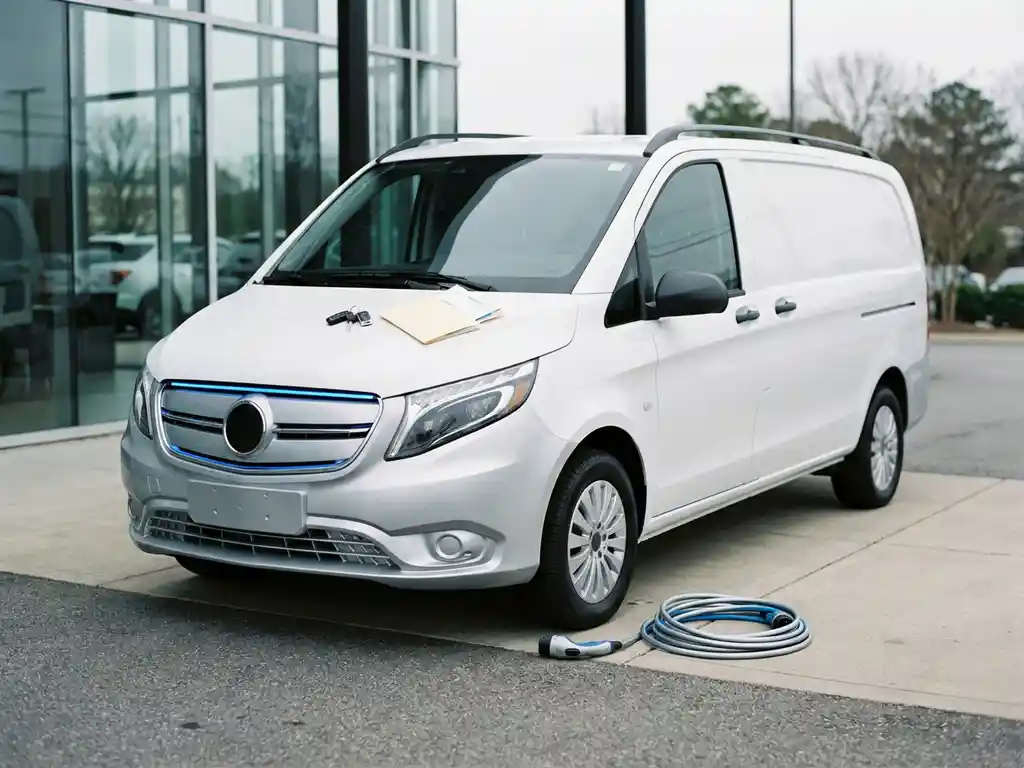
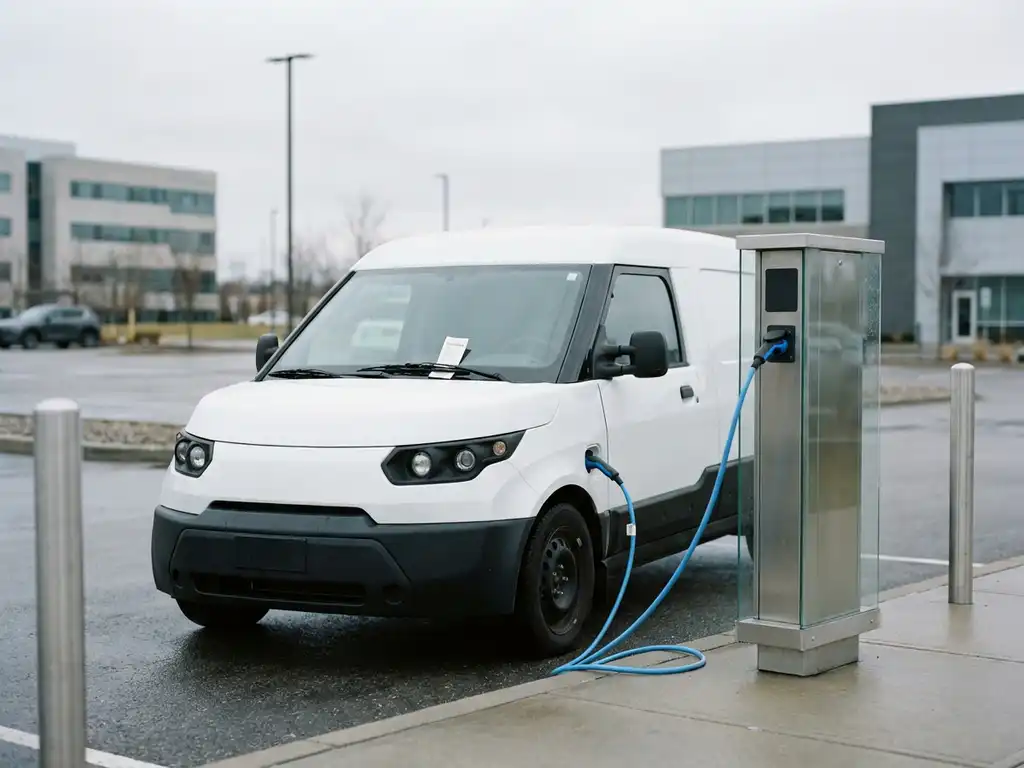
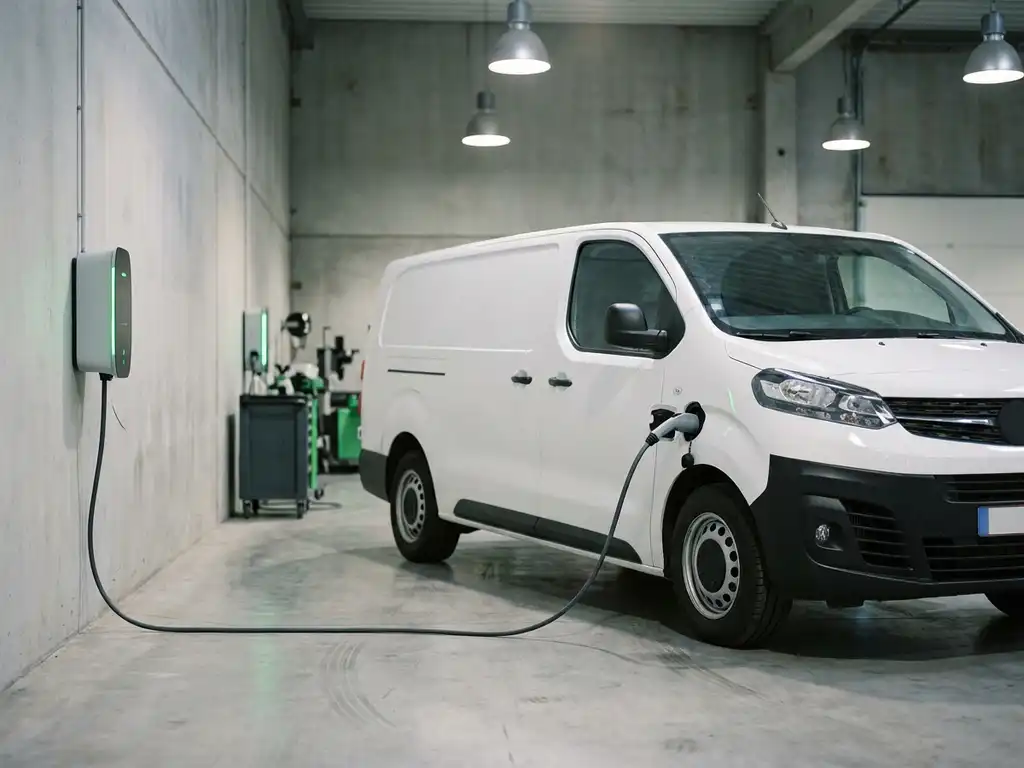
White electric company car is charged with euro banknotes around charging port, symbolises charging cost

What does charging electric commercial vehicles cost?

Charging an electric company car costs between €5 and €25 per 100 km, depending on your charging method. Charging at home is cheapest (€5-8 per 100 km), while fast charging on the road is more expensive (€15-25 per 100 km). Your charging costs depend on electricity tariffs, battery capacity and where you charge. We discuss all charging options and their costs, so you know exactly what electric driving will cost your business.

What are the different ways to charge your electric utility vehicle?

You can get your electric company car charging in three main ways: at home at a private charging point, at public charging stations or at fast charging stations. Each method has its own advantages and disadvantages in terms of cost, speed and convenience.

Home charging is usually done at night at a wallbox or regular socket. This is the cheapest option because you pay your own electricity tariff. Charging does take longer: a completely empty battery is full again after 6-12 hours. Perfect for company cars that come home in the evening and need to be ready the next morning.

Public charging stations can be found all over the Netherlands, especially in city centres and near shops. Charging costs more than at home, but you do not need your own installation. The charging speed varies from slow (3.7 kW) to fast (22 kW). Handy for in-between charging during work visits.

Fast-charging stations along motorways charge your battery to 80% full in 20-45 minutes. This is the most expensive option, but indispensable for long trips. Most fast chargers provide 50-350 kW of power.

How much does it cost to charge your electric company car at home?

Home charging costs about €0.25-0.35 per kWh at an average Dutch electricity rate. For a commercial vehicle with a 75 kWh battery, you will pay around €19-26 for a full charge from 0 to 100%. This gives you about 300-400 kilometres of driving range.

You save big with a night tariff. Many energy suppliers offer cheaper electricity between 23:00 and 07:00. The night tariff is often €0.05-0.10 per kWh lower than during the day. A smart charging station automatically schedules your charging sessions in the cheapest hours.

Case in point: a Ford E-Transit with a 68 kWh battery costs €17-24 to fully charge at normal tariffs. With night tariff, this drops to €14-20. Per 100 kilometres, you then pay only €5-8 in charging costs. That's much cheaper than filling up with diesel.

Solar panels make home charging even more advantageous. Power generated during the day will only cost you the purchase price of your solar panels. Some entrepreneurs charge their company cars for free with their own solar power.

What are the costs of charging at public charging stations?

Public charging stations cost €0.35-0.60 per kWh, depending on the operator and loading speed. On top of this, there are often starting charges of €0.35-1.00 per session. AC charging (up to 22 kW) is cheaper than DC fast charging (50+ kW).

Major operators such as Allego, Fastned and Shell Recharge have different tariff structures. Allego, for example, charges €0.39 per kWh for AC charging and €0.59 for DC charging. Fastned charges €0.69 per kWh at their fast chargers. These prices change regularly with the energy market.

Charge card subscriptions can save you money with regular use. For €5-15 per month, you often get lower kWh rates and no starting charges. NewMotion, for example, offers €0.05 discount per kWh with their subscription.

Charging costs at public poles are around €12-20 per 100 kilometres. This is more expensive than charging at home, but often cheaper than diesel. Plan your route smartly and charge mainly at home to reduce costs.

Which factors affect your charging costs the most?

You battery capacity largely determines your charging cost per session. A small commercial vehicle with a 40-kWh battery costs €10-14 to fully charge, while a large one with a 100-kWh battery costs €25-35. More capacity does mean more driving range per charge.

Electricity tariffs vary enormously by supplier and time of day. Fixed contracts offer security, but variable tariffs can be cheaper when energy prices are low. Business power contracts often have better terms and conditions than private contracts.

Seasonal influences play a big role. In winter, your commercial vehicle 20-30% consumes more energy due to heating and battery loss in cold weather. In summer, the same car travels further on the same charge. Take this into account in your cost calculation.

Your driving style significantly affects consumption. Calm driving, anticipation and regenerative braking can 15-25% save energy. Motorway driving consumes more than city driving because of higher air resistance.

How Van Den Hurk helps with electric commercial vehicles

We will help you make the switch to electric driving as smoothly as possible. With more than 60 years of experience in commercial vehicles, we know exactly what entrepreneurs face when choosing electric mobility.

Our support includes:

  • Personal advice on charging options and charging infrastructure for your situation
  • Cost-benefit analyses in which we compare charging costs with fuel costs
  • Practical tips on optimal charging and reducing your consumption
  • Flexible leasing options to suit your cash flow
  • Aftercare and support after purchase or lease

Our product range electric commercial vehicles is constantly growing. From compact vans to large transporters, we have a suitable electric solution for every business. Since January 2025, electric commercial vehicles have also become more financially attractive due to the BPM levy on diesel.

Wondering what electric driving can bring to your business? Contact us for a no-obligation chat. We will be happy to calculate with you and show you how you can save on mobility costs.

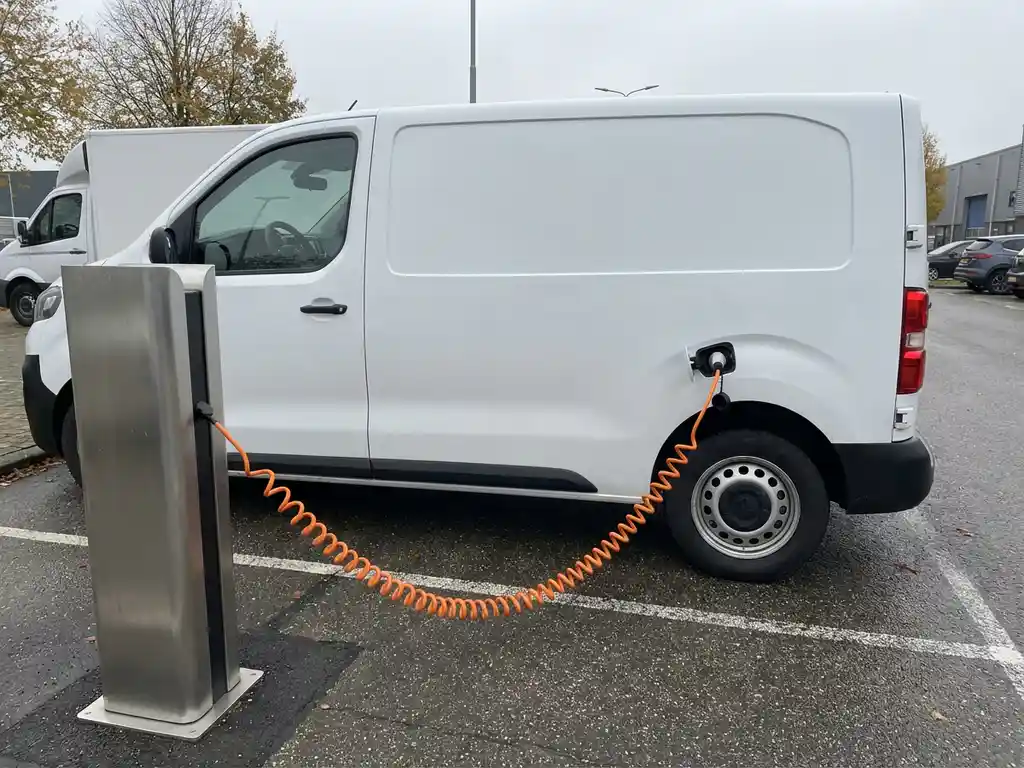
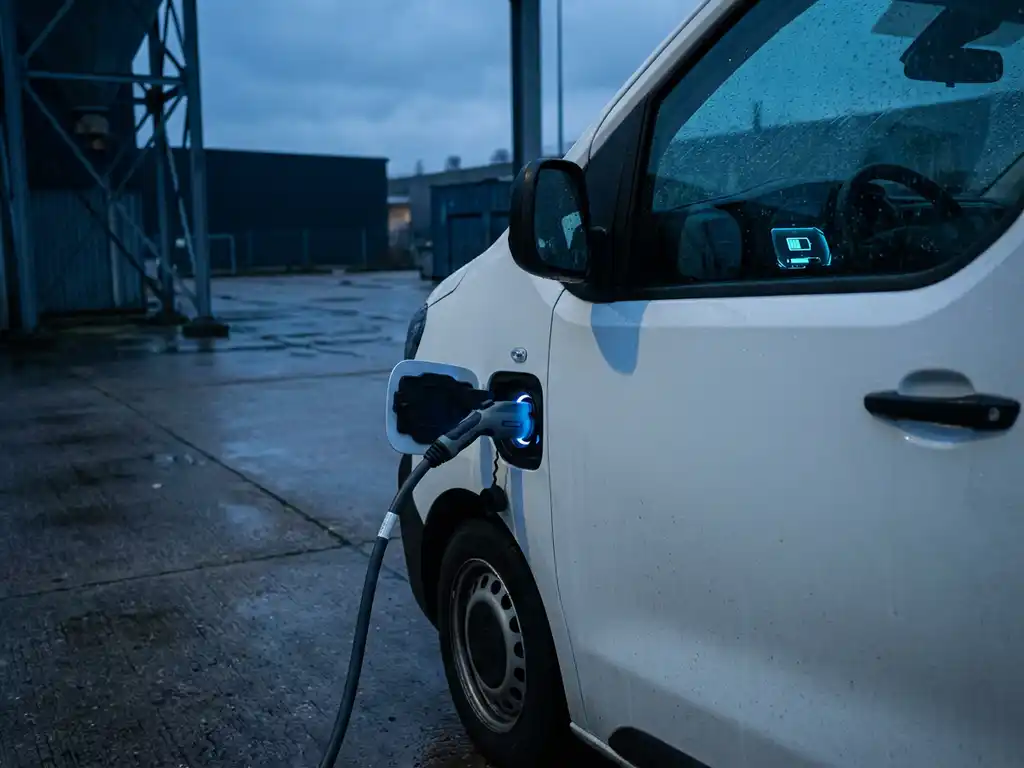
White electric commercial vehicle with blue lights is charged against green background

What benefits do electric commercial vehicles offer businesses?

Electric commercial vehicles offer companies significant financial benefits through lower fuel costs and maintenance savings, plus tax advantages such as a favourable additional tax rate. They support sustainability goals through CO2 reduction and improve your corporate image. In practical terms, they provide greater driving comfort, quiet operation and access to environmental zones. Modern electric commercial vehicles have sufficient range for business use, with a growing charging infrastructure allowing flexible planning.

What are the main financial benefits of electric commercial vehicles?

Supplying electric commercial vehicles significant cost savings on through lower energy and maintenance costs, plus favourable tax treatment. You pay much less for electricity than diesel or petrol per kilometre, while maintenance costs fall due to fewer moving parts.

Fuel costs are often 60-70% lower than for traditional commercial vehicles. Electricity costs on average 3-5 euros per 100 kilometres, while diesel quickly costs 8-12 euros for the same distance. In business use with many kilometres per year, this difference increases significantly.

Maintenance costs are structurally lower because electric motors have far fewer parts that can wear out. You don't have to change oil, change spark plugs or repair exhaust systems. Brakes last longer due to regenerative braking, which recovers energy.

Fiscally, electric company cars are very attractive. The additional tax rate is much lower than for fuel vehicles, which is especially interesting if you also use the company car privately. In addition, subsidies are often available for the purchase, and from 2025, BPM will apply to new diesel and petrol company cars, making electric relatively more advantageous.

The total cost of ownership (TCO) of electric commercial vehicles, meanwhile, is often lower than that of comparable diesel versions, especially when used intensively. These benefits will only increase as fuel prices rise and electric driving becomes cheaper.

How does an electric company car contribute to your company's sustainability goals?

Electric commercial vehicles help companies increase their Drastically reduce CO2 emissions and sustainability targets. They produce no local emissions and support the transition to climate-neutral business, which is increasingly important for corporate image and compliance.

The environmental impact is significantly lower than for traditional commercial vehicles. Even taking into account electricity generation, an electric commercial vehicle 50-70% emits less CO2 than a diesel variant. As the electricity grid becomes greener, this percentage improves further.

For your corporate image, switching to electric driving sends a powerful signal. Customers and partners see that you do business in a socially responsible way and invest in sustainable solutions. This can give you a competitive advantage, especially in tenders where sustainability counts.

Sustainability reporting gets easier with electric company cars. You can measure and report concrete CO2 reductions, which helps achieve climate goals. Many companies need to make their environmental impact increasingly transparent, and an electric fleet contributes directly to this.

Opting for electric commercial vehicles fits perfectly with corporate social responsibility. It shows that your company is looking ahead and taking responsibility for its impact on the environment. This can also motivate employees and help attract talent that values sustainability.

What practical advantages do electric commercial vehicles offer in everyday use?

Electric commercial vehicles offer superior driving comfort due to their quiet operation, instant power generation and vibration-free drive. They give immediate access to all environmental zones and often offer parking advantages in city centres, increasing operational flexibility.

The noise reduction is huge. Electric commercial vehicles are much quieter than diesel vehicles, which improves driving comfort and reduces noise pollution in residential areas. This is especially useful for early or late deliveries, where you need to consider nearby residents.

The instant torque of electric motors improves performance, especially when accelerating and driving with a heavy load. You have maximum power available immediately, without having to wait for the engine to rev. This makes driving more enjoyable and efficient.

Access to environmental zones is becoming increasingly important. Many cities are introducing emission zones where only electric vehicles are welcome. With an electric commercial vehicle, you can go anywhere, now and in the future, without worrying about access restrictions.

Parking benefits in cities are a practical benefit that can be felt on a daily basis. Many municipalities offer free parking for electric vehicles or reserve dedicated parking spaces. At charging stations, you can often park more cheaply or even for free while charging.

The reliability of electric drive is high due to the relatively simple technology with few moving parts. Electric motors suffer less from teething problems and wear and tear than complex internal combustion engines, which means that your commercial vehicle is available more often.

What do you need to know about the range and charging capabilities of electric commercial vehicles?

Modern electric commercial vehicles have a range of 200-400 kilometres, which is sufficient for most business applications. Fast charging allows you to refuel enough energy in 30-45 minutes for the rest of the working day, while home charging ensures a full battery overnight.

The range of electric commercial vehicles has improved considerably in recent years. Most new models reach 250-350 kilometres on a full charge, which is more than sufficient for daily business use. Even with air conditioning, heating and charging, the practical range usually remains above 200 kilometres.

Fast-charging facilities along motorways make longer journeys possible. With fast charging, you can top up enough energy in a half-hour break to reach your destination. The network of fast chargers is growing rapidly, making electric driving increasingly practical for longer business trips.

Home charging is the most practical solution for many businesses. You can install a charging station on your premises and charge the company car at night, when electricity prices are low. A regular 11 kW charging station fully charges most commercial vehicles in 4-8 hours.

The public charging infrastructure is becoming increasingly extensive. The Netherlands has one of the best charging networks in the world, with charging stations in almost every locality. Many supermarkets, office parks and car parks now have charging facilities.

Route and charging planning becomes easier with modern navigation systems that automatically schedule charging stops. Apps show available charging stations and their status in real time, so you always know where you can charge. With some planning, electric business driving is as flexible as traditional driving.

How Van Den Hurk helps with electric commercial vehicles

We make the switch to electric driving made easy with personal advice, flexible leasing options and practical support. Our team will help you choose the right electric company car to suit your business activities and ensure a hassle-free implementation.

Our approach to electric commercial vehicles is fully tailored to your needs:

  • Personalised advice: we analyse your driving behaviour and business needs to find the perfect electric company car
  • Wide choice: from various brands such as Volkswagen, Ford and Mercedes-Benz to specialised versions
  • Flexible financing: purchase, financial lease or operating lease - we find the best solution for your situation
  • Practical support: help with charging station installation, subsidy applications and the transition of your current vehicle fleet
  • Transparent service: clear prices and conditions, no surprises later

With more than 60 years of experience in commercial vehicles, we understand that electric driving requires careful planning. That is why we accompany you from the first consultation to delivery and beyond. Want to know which electric company car suits your company best? Contact us for a no-obligation discussion about the possibilities.

White electric utility vehicle is charged at construction site with building materials and scaffolding during golden hour

Which electric utility vehicles are suitable for construction?

Electric utility vehicles for construction combine power with sustainability and offer practical benefits such as lower operating costs and access to environmental zones. The best choice depends on your specific construction tasks, payload and desired range. Popular models such as the Volkswagen e-Crafter, Ford E-Transit and Mercedes eVito offer different capacities for material and tool transport.

What benefits do electric utility vehicles offer construction companies?

Electric commercial vehicles provide construction companies with tangible financial and operational benefits. You save substantially on fuel costs, have access to all environmental zones and can even work silently in residential areas at night or early in the morning. In addition, you benefit from government subsidies and tax breaks.

The lower operating costs are immediately noticeable. Electricity costs much less than diesel and maintenance is cheaper because electric engines have fewer moving parts. For example, you don't have to change oil or replace an exhaust.

For construction projects in city centres, electric commercial vehicles are a godsend. Many municipalities are introducing environmental zones where only emission-free vehicles are welcome. With an electric commercial vehicle, you can go anywhere, without worrying about access restrictions.

Quiet driving opens up new possibilities. You can start supplying materials earlier or continue working later without inconveniencing residents. This gives you more flexibility in your planning and can increase your productivity.

What are the key specifications to look out for?

In electric utility vehicles for construction load capacity, range and cargo space the most important specifications. Always check the maximum load weight, the dimensions of the cargo space and how many kilometres you can drive on one battery charge. Towing weight is also relevant if you regularly use a trailer.

The payload determines how much material you can carry. Most electric utility vehicles have a payload between 800 and 1,400 kg. Be aware that the batteries cost weight, so the payload is sometimes lower than comparable diesel models.

The range should fit your daily routes. For local construction projects, 150-200 kilometres is usually sufficient. Do you work regionally or nationally? Then you may need a larger range or plan your routes differently.

The dimensions of the loading space are practically important. Check whether long materials such as beams or pipes will fit. Some models have a pass-through to the cab or extra-high cargo areas that are useful for specific construction applications.

How do you arrange charging of electric utility vehicles on site?

Charging electric commercial vehicles requires good planning, but is easier than you think. Home charging is often the basis: install a charging station at your company or home for daily charging. For on the road, use public charging stations or fast chargers for longer trips.

Charging at home is most economical and practical. An 11 kW charging station will fully charge your company car overnight. Costs are low and you start every day with a full battery. Many suppliers help with installation and subsidies are available.

Mobile charging solutions exist for construction sites without a fixed power supply. Think of portable batteries or generators especially suited for charging electric vehicles. These are useful for longer projects in remote locations.

Plan your routes smartly. Use apps that show where charging stations are located and whether they are available. On longer trips, you can schedule a quick charging stop during lunch or a work meeting. That way, charging becomes part of your normal routine.

Which electric models are best suited to different construction tasks?

For various construction tasks, there are suitable electric models available. Small maintenance jobs do just fine with a Volkswagen e-Up! or Opel Combo-e. For heavier materials, choose a Ford E-Transit or Mercedes eVito. Large construction projects call for a Volkswagen e-Crafter or a similar heavy commercial vehicle.

Light commercial vehicles such as the Peugeot e-Partner or Citroën ë-Berlingo are ideal for tool transport and small materials. They have a payload of around 800 kg and are agile in the city. Perfect for installers, plumbers and electricians.

Medium-duty models such as the Ford E-Transit Custom and Mercedes eVito offer more cargo space and can carry 1,000-1,200 kg. These are suitable for general construction work, tile transport and medium-sized construction projects where you need to bring in materials regularly.

For heavy construction tasks, the Volkswagen e-Crafter and Ford E-Transit are the best options. With load capacities of up to 1,400 kg and large cargo spaces, you can transport hefty amounts of material. They also have sufficient towing weight for trailers carrying construction equipment.

How Van den Hurk helps with electric commercial vehicles

We will fully guide you through the transition to electric commercial vehicles. With more than 60 years of experience, we know exactly which electric utility vehicle is right for your construction company. We offer personal advice, flexible financing and make sure you make the right choice.

Our support includes:

  • Personal consultation - We analyse your current fleet and operations.
  • Test drive opportunities - Test different models in your own working environment.
  • Flexible leasing options - Financial lease and operating lease are available.
  • Charging solutions - Advice on charging stations and installation at your premises.
  • Tax advice - Explaining all benefits and subsidies.
  • After-sales service - Maintenance and support when you need it.

Ready to make the switch to electric driving? Contact us for a no-obligation consultation. We will be happy to help you find the perfect electric commercial vehicle for your construction company.

Electric commercial vehicle at modern charging station with blue LED indicators and fast charging symbols

Which electric commercial vehicles have the fastest charging time?

The fastest charging times are found with electric commercial vehicles such as the Mercedes eSprinter (10-80% in 42 minutes), Volkswagen ID. Buzz Cargo (35 minutes) and Ford E-Transit (34 minutes). The charging speed depends on the charging capacity of your vehicle, the type of charging station and the battery temperature. For everyday use, it is important to consider both fast-charging options and your normal charging pattern.

What actually determines the charging speed of an electric utility vehicle?

The charging speed of electric commercial vehicles is determined by five key factors that combine to create the final charging time. Battery capacity and charging technology are the biggest influencing factors on how quickly you can get back on the road.

Your battery capacity determines how much energy can be stored. A larger battery will charge slower than a smaller one, even if it has more power. Your commercial vehicle's charging technology is just as important. Modern vehicles can charge faster thanks to better battery management systems.

Temperature also plays a big role. In cold weather, batteries charge slower because chemical processes are slower. In winter, your charging time can be as much as 30% longer. Your battery status also matters: going from 10% to 80% is faster than going from 80% to 100%, because the charging speed decreases as the battery gets fuller.

The charging infrastructure ultimately determines your maximum charging speed. An ordinary socket charges much slower than a fast charger. Even if your commercial vehicle can charge 150 kW, you are limited to 50 kW if the charging station cannot handle that.

Which electric commercial vehicles are charging fastest right now?

The Mercedes eSprinter, Volkswagen ID. Buzz Cargo and Ford E-Transit are among the fastest-charging electric commercial vehicles. These vehicles charge from 10% to 80% battery capacity in 30-45 minutes at a fast charger. Practical loading times vary by vehicle category and use.

Among small vans, the Volkswagen ID. Buzz Cargo scores best with a charging time of about 35 minutes (10-80%) at 170 kW DC fast charging. The Peugeot e-Partner and Citroën ë-Berlingo follow with about 45 minutes at 100 kW charging.

For medium-sized commercial vehicles, the Ford E-Transit Custom is a fast charger with 34 minutes for 10-80% at 125 kW. The Mercedes eVito charges slightly slower, but is still competitive with around 40 minutes at 110 kW DC charging.

Large bucket trucks like the Mercedes eSprinter reach 10-80% in about 42 minutes at 115 kW charging. The Iveco eDaily has similar performance. These times are for optimal conditions with a modern fast charger and a battery at the right temperature.

What is the difference between AC charging and DC fast charging for commercial vehicles?

AC charging you use at home or in the office for slow charging during the night, while DC fast charging on the go provides quick top-ups during breaks. AC charging is cheaper and better for your battery, DC fast charging is practical for long trips and when under time pressure.

AC charging works via alternating current and usually goes up to 22 kW, sometimes 43 kW. This is perfect for your daily routine: you plug in your company car in the evening and start the next morning with a full battery. Charging takes 6-8 hours for an empty battery, but that doesn't matter if you don't drive anyway.

DC fast charging uses direct current and can deliver up to 350 kW, depending on your vehicle. You use this at motorway service stations or during work breaks. In 30-45 minutes, you have enough energy for the rest of your working day. It is more expensive per kWh and puts more strain on your battery.

For your daily operations, combine both methods. AC charging at your fixed location keeps your costs down and ensures a full battery every morning. DC fast charging is used only when you need to cover more kilometres than your battery range allows, or when you don't have time for slow charging.

How to choose the right electric utility vehicle for your charging needs?

First determine your daily mileage and compare it with the practical range of electric commercial vehicles. Choose a vehicle whose battery 20-30% has more range than you drive on average. Charging infrastructure and downtime determine what loading speed you really need.

If you drive less than 150 kilometres daily and can charge at night, a commercial vehicle with AC charging up to 11 kW will suffice. For longer distances, you need fast-charging capabilities of at least 50 kW, preferably 100 kW or more.

Take a realistic look at your available charging infrastructure. Do you have your own charging station at the office? Then you can opt for a vehicle with a smaller battery and slower charging. Do you need to charge often on the road? Then choose a company vehicle that can charge quickly and is compatible with many charging networks.

Your downtime capabilities also matter. Can you charge during lunch breaks or customer visits? Then you need less fast-charging capacity. Do you work in an industry where every minute counts? Then invest in a vehicle with the fastest charging capabilities.

Budget considerations also come into play. Vehicles with faster charging options often cost more but save time. Calculate what an hour of waiting time will cost you and compare this with the extra cost of faster charging.

How Van den Hurk helps with electric commercial vehicles

We help you switch to electric commercial vehicles with personal advice that suits your specific charging needs and work patterns. With over 60 years of experience in commercial vehicles, we understand that the choice of electric driving needs to be well thought through.

Our support includes:

  • Tailored advice on your daily mileage and charging options
  • Extensive range electric commercial vehicles of different brands
  • Flexible leasing options to suit your budget
  • Support for charging infrastructure planning
  • Transparent information on costs and practicalities

We take the time to understand your situation and only recommend vehicles that really suit you. From small vans to large cargo vans, we will help you make the right choice for your business.

Wondering which electric company car best suits your charging needs? Contact us for a personal discussion about the possibilities.

Two electric commercial vehicles on urban street with green efficiency and orange cost symbols, euro signs show savings

Which electric commercial vehicles have the lowest operating costs?

Electric commercial vehicles with the lowest operating costs are often compact models such as the Renault Kangoo E-Tech and Volkswagen e-Crafter, thanks to their efficient energy consumption and lower maintenance costs. Total operating costs depend on energy costs, maintenance, insurance and tax benefits. You mainly save on fuel and maintenance compared to diesel vehicles.

What determines the operating costs of electric commercial vehicles?

The operating costs of electric commercial vehicles consist of five main categories: energy costs, maintenance, insurance, depreciation and tax benefits. These cost factors work differently from traditional commercial vehicles and together determine your total monthly expenses.

Energy costs replace your fuel costs and are often 50-70% lower than diesel. You pay for electricity instead of fuel, resulting in lower costs per kilometre. Home charging costs around €0.25 per kWh, while public charging is between €0.35 and €0.50 per kWh.

The maintenance costs are significantly lower because electric motors have fewer moving parts. You don't need oil changes, filter changes or exhaust system maintenance. However, new costs are added, such as battery checks and software updates.

For insurance you often pay a little more because of the higher purchase value, but this difference will narrow as electric vehicles become more common. The depreciation is currently progressing faster than diesel vehicles, although this is stabilising due to increased demand.

Important tax benefits make electric company cars more financially attractive. You pay no BPM, get a discount on motor vehicle tax and can take advantage of favourable addition rules for business use.

How much do you save on fuel with an electric company car?

With an electric company car, you save on average €1,500 to €3,000 per year on energy costs compared to a comparable diesel company car, depending on your annual mileage and charging habits. The savings increase the more kilometres you drive.

A practical calculation example: a diesel company car consumes an average of 7 litres per 100 km. At €1.50 per litre of diesel, this costs €10.50 per 100 km. A comparable electric company car consumes about 20 kWh per 100 km. When charging at home (€ 0.25 per kWh), you pay € 5.00 per 100 km.

For different driving distances means this:

  • 15,000 km per year: savings of around €825
  • 25,000 km per year: savings of around €1,375
  • 40,000 km per year: savings of around €2,200

Your charging location significantly affects the savings. Home charging is the cheapest and produces the biggest savings. Public charging costs more, but is still more economical than diesel. Quick charging on the road is more expensive, but remains competitive, especially for long trips.

Energy prices fluctuate less than diesel prices, making your costs more predictable. This helps with budget planning and makes you less dependent on fuel price fluctuations.

What maintenance costs do you have with electric commercial vehicles?

Electric commercial vehicles have 40-60% lower maintenance costs than diesel vehicles because they have fewer moving parts and no complex internal combustion engine. You mainly save on regular maintenance, such as oil changes, filter changes and exhaust system repairs.

Disappearing costs for electric vehicles:

  • Oil changes (€100-150 per turn)
  • Air and fuel filters (€50-100 per year)
  • Exhaust system maintenance and repairs
  • Spark plugs and glow plugs
  • Clutch maintenance (for automatic transmission)

New cost items that come with it:

  • Battery checks and diagnostics (€50-100 per year)
  • Software updates and system checks (often free of charge)
  • Coolant for battery cooling (€ 30-50 per year)
  • High-voltage system inspections (€75-125 per turn)

Parts that remain the same, are tyres, brakes (which often last longer due to regenerative braking), windscreen wipers and air conditioning. Brake pads last even longer because electric vehicles recover a lot of energy when braking.

Batteries are usually guaranteed for 8 years or 160,000 km, which reduces the risk of major replacement costs. After this period, batteries still retain 70-80% of their capacity, which remains sufficient for most applications.

How do you calculate the total cost of ownership of an electric utility vehicle?

The Total Cost of Ownership (TCO) for electric commercial vehicles includes the purchase price minus subsidies, operational costs, maintenance costs, insurance, depreciation and tax benefits. This calculation gives you the actual cost difference with traditional commercial vehicles over the entire ownership period.

Step 1: Calculate the net purchase price

Deduct available subsidies from the list price. For electric commercial vehicles, you can often count on SEBA subsidy (Subsidy Scheme for Emission-Free Commercial Vehicles) and any provincial or municipal schemes.

Step 2: Determine annual operating costs

  • Energy cost: (annual mileage ÷ 100) × consumption per 100 km × electricity price
  • Insurance: often 5-15% higher than diesel due to higher value
  • Road tax: significantly lower or zero for electric vehicles

Step 3: Calculate maintenance costs

Assume an average of 40-60% of the maintenance costs of a comparable diesel commercial vehicle. For a medium-sized commercial vehicle, this means about €800-1,200 a year instead of €1,500-2,000.

Step 4: Determine residual value and depreciation

Electric commercial vehicles currently depreciate faster, but this is stabilising. Considering 15-25% residual value after 4 years is realistic, depending on battery condition and technological developments.

Practical calculation formula TCO:

TCO = (Purchase price - Subsidies - Residual value) + (Annual operating costs × ownership period) - Tax benefits

How Van Den Hurk helps with electric commercial vehicles

We fully support you in the transition to electric commercial vehicles with personal advice on cost optimisation and practical guidance. We combine our experience of more than 60 years in the commercial vehicle industry with expertise in sustainable mobility.

Our concrete support:

  • Free TCO calculation for your specific situation and driving behaviour
  • Advice on the most cost-effective electric models for your business
  • Assistance with grant applications and tax benefits
  • Flexible financial lease options to suit your budget
  • Help in setting up charging infrastructure and charging strategy
  • Transparent prices with no hidden costs

We take the time to understand your business situation and calculate the real savings together. Our large stock of electric company cars means you can switch quickly, without long waiting times.

Want to know how much you can save with an electric company car? Contact us for a personal consultation and a free costing that suits your business.

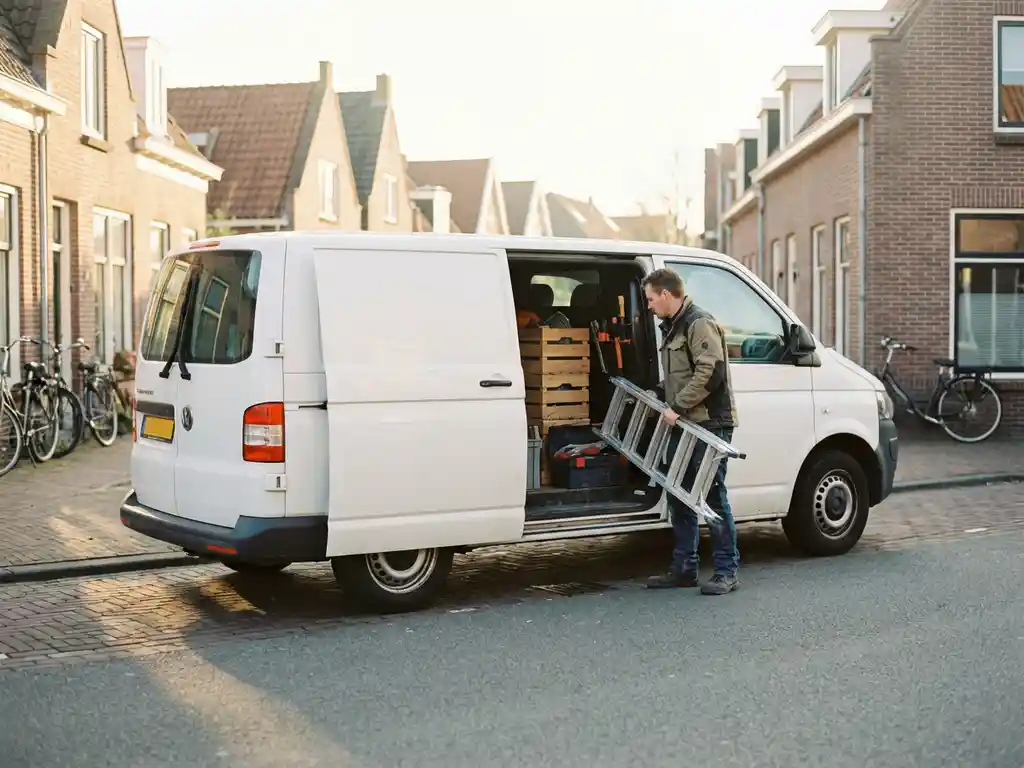
White double-cab van on company forecourt with open cargo area and two employees in work jackets.

Is a double cab company bus cheaper than two separate vehicles?

A double-cab commercial van is attracting increasing attention from entrepreneurs who want to transport both people and materials. The question that arises is logical: is such a vehicle really more economical than buying two separate vehicles? The answer depends on how you drive, how many people you carry and how much cargo space you need. In this article, we answer the most frequently asked questions so you can make an educated decision.

Whether you want to buy a small van for a growing team, are thinking about a double-cab company van or are orientating on electric company car leasing, the calculation is always bespoke. We list the facts.

What exactly is a commercial double cab van?

A double-cab van is a van or light truck with two rows of seats, combined with a cargo area or load floor behind the cabin. The vehicle typically accommodates five or six people while also having a functional loading compartment for tools, materials or goods.

You can recognise the double cab by the extra door on the side, which gives access to the rear row of seats. This distinguishes it from an ordinary van, which only has a driver's cab, and from a passenger van, which is fully equipped for passenger transport with no significant cargo space.

What body shapes are there?

Double cabs are available in different designs. The most common are:

  • Closed van with double cab: an enclosed cargo space behind the cabin, ideal for goods that need to remain dry or secure.
  • Double-cab pick-up: an open cargo box, popular in construction and with landscapers.
  • Chassis cab with double cab: A bare chassis on which you have a superstructure of your choice fitted, such as a tipper or a flatbed.

The choice of body shape helps determine the versatility of the vehicle and the costs you incur for any bodywork or modifications.

How much does a double cab company bus cost?

A new commercial double-cab van costs between EUR 30,000 and EUR 65,000 on average, depending on the make, trim and engine. Used ones are available from around 10,000 to 15,000 euros for older models with more mileage, while well-maintained ones three to five years old usually cost between 20,000 and 40,000 euros.

Well-known brands in this segment are the Volkswagen Transporter, Mercedes Sprinter, Ford Transit, Renault Trafic and Peugeot Expert, all available with a double cab option. Electrical variants, such as the Volkswagen e-Transporter or Ford E-Transit, are higher price-wise, but can be made more financially attractive through lower monthly charges and tax benefits via electric company car leasing.

What does leasing versus buying cost?

With financial lease, you pay a fixed monthly amount and the vehicle becomes your property at the end of the term. With operational lease, maintenance, insurance and sometimes tyres are included in the monthly rate. For a double cab, operational lease rates are usually between €600 and €1,200 per month, depending on the vehicle, term and annual mileage.

Buying gives you more flexibility and no mileage restrictions, but does require a larger initial investment or financing through the bank. For SMEs and sole traders, leasing is often attractive as it protects cash flow and the vehicle is immediately tax deductible as a business asset.

When is a double cab cheaper than two separate vehicles?

A double cabin is cheaper than two separate vehicles when you regularly transport more than two people and need to carry materials or tools at the same time. You then combine two functions in one vehicle, resulting in direct savings on purchase, insurance, road tax and maintenance.

The math is simple: two separate vehicles mean two purchase costs, two insurances, two MOT inspections per year and double maintenance costs. A double cab replaces all this with one vehicle, one policy and one servicing. That quickly saves thousands of euros on an annual basis.

In what situations does it not pay off?

There are also scenarios where two separate vehicles make more sense. Consider:

  • You have multiple shifts working simultaneously in different locations.
  • Your cargo volume is so large that a double cab does not offer enough space.
  • Employees drive from different starting points and each needs their own vehicle.
  • You rarely transport more than two people at a time.

In those cases, you pay for seats you hardly use, while you sacrifice cargo space compared to a standard van. So it is important to honestly analyse your daily driving pattern before tying the knot.

What additional costs should you include in the calculation?

Besides the purchase price or lease rate, there are several additional costs that determine the total cost of ownership of a double-cab commercial van. Consider insurance, road tax, fuel or energy, maintenance, tyres and any build-up costs.

Below is an overview of the costs you shouldn't forget:

  • Insurance: A business double cab is covered by business third-party or hull insurance. The premium depends on use, drivers and vehicle weight.
  • Road tax: depending on weight and fuel. Electric commercial vehicles are currently exempt or have a greatly reduced rate.
  • Fuel or loading costs: a diesel version consumes an average of 1 in 10 to 1 in 13, depending on load and driving style. Electric variants are cheaper per kilometre, but require charging infrastructure.
  • Maintenance and MOT: count on at least 800 to 1,500 euros a year for a well-maintained vehicle.
  • Construction or decoration: fitting out the loading space with shelving, a partition or tool holders costs extra, but significantly increases efficiency.
  • Depreciation: commercial vehicles depreciate on average 15 to 25 per cent per year in the early years.

Putting all these items side by side for both the double cab and two separate vehicles gives you a realistic picture of what each option will actually cost you over a period of three to five years.

What are the practical advantages and disadvantages of a double cab?

The main practical advantages of a double-cab commercial van are the combination of passenger transport and cargo capacity in one vehicle, lower total cost of ownership with intensive use and easier fleet management. The disadvantages are the larger dimensions, less cargo volume than a full van and a higher purchase price compared to a small van.

Benefits at a glance

  • Taking five to six people and materials in one trip.
  • One vehicle means less administration and lower fixed costs.
  • Versatile for construction, plant engineering, healthcare and logistics.
  • Fiscally attractive as a business asset, especially with an electric version.
  • Many models are suitable as tractors with trailers, increasing loading capacity.

Disadvantages to consider

  • Cargo space is smaller than in a comparable standard van without a double cab.
  • The vehicle is longer and wider, making parking in cities more difficult.
  • The purchase price is higher than if you buy a small van without a double cab.
  • Not all car parks and loading bays are suitable for the larger sizes.
  • With little passenger traffic, you pay for capacity you don't use.

For companies that move a crew of employees every day while carrying tools or materials, the advantages outweigh the disadvantages in most cases.

What should you look out for when buying a used double cab?

When buying a used double-cab commercial van, pay particular attention to the service history, mileage, the condition of the cargo area and bodywork, and whether the vehicle has been used for business purposes. Business used vehicles are often taxed more heavily than private cars, so a thorough inspection is always worthwhile.

Check the following points before making a decision:

  • Maintenance booklet: Have all service intervals been carried out on time and at an approved company? Missing stamps are a warning sign.
  • Mileage versus age: a five-year-old vehicle with 300,000 kilometres has a different remaining lifespan than one with 80,000 kilometres.
  • Rust and body damage: Check wheel arches, sills and loading floor for rust, especially on vehicles used in construction.
  • Technical condition: Get an independent MOT or technical inspection before you buy.
  • Cargo space and superstructure: check that the equipment of the cargo area is properly fixed and does not mask hidden damage.
  • Registration papers and NAP: Check the vehicle history via the RDW and the National Car Pass to verify the odometer reading.

Buying a used double cab from a specialised dealer gives you more security than a private purchase. Dealers often offer a warranty, have the vehicle technically inspected and can help you with financing or a lease arrangement.

How we help you choose the right company bus

At Van den Hurk Bedrijfswagens, we will help you make the right choice, whether you are considering buying a small van, looking for a company bus with double cabin or are interested in electric company car leasing. We have more than 60 years of experience in the Helmond and North Brabant region and know the needs of SMEs, sole traders and fleet managers like no other.

What we can do for you:

  • Personalised advice based on your driving pattern, team size and budget.
  • A large and diverse stock of used and new commercial vehicles, including double cabs, electric vehicles and special versions.
  • Transparent prices with no hidden costs.
  • Flexible financing options, including financial lease and operational lease.
  • A stock alert service, so you are the first to know when the right vehicle becomes available.

Contact us or visit our Helmond office for a no-obligation discussion. We will be happy to think along with you to determine whether a double cab is the smartest investment for your business.

White electric company car charges in business district with calculator showing depreciation curves

How does the residual value of electric commercial vehicles work?

The residual value of electric commercial vehicles is determined by battery condition, make, model, mileage and market conditions. Electric vehicles lose value faster than diesel commercial vehicles due to technological developments and market acceptance. The battery plays the most important role here, as it is the most expensive component and directly affects the residual value.

What determines the residual value of electric commercial vehicles?

The residual value of electric commercial vehicles depends on six key factors: battery condition, make and model, mileage, maintenance status, age and market conditions. These factors work together to determine the final value, with the battery having by far the biggest impact.

Battery condition forms the basis of valuation. A battery that still has 80% of its original capacity retains significantly more value than one with 60% capacity. Most manufacturers provide an 8-year battery warranty, which reassures buyers.

The make and model determines demand on the second-hand market. Well-known brands such as Volkswagen, Ford and Mercedes-Benz hold their value better than lesser-known electric brands. The type of commercial vehicle also plays a role: rigids are more popular than double-cab vans.

The mileage affects both battery life and overall wear and tear. Electric commercial vehicles with lower mileage retain more value because the battery has undergone fewer charge cycles.

Market conditions such as subsidies, tax breaks and demand for sustainable mobility determine how much buyers are willing to pay for used electric utility vehicles.

How does the value trajectory of electric versus diesel company cars differ?

Electric commercial vehicles lose value faster than comparable diesel models in the first three years, but stabilise thereafter. Diesel commercial vehicles follow a predictable depreciation pattern of 15-20% per year, while electric vehicles may initially depreciate 25-30% per year.

The faster turnover in value of electric commercial vehicles is due to technological progress. New models have a longer range and better charging capabilities, making older electric vehicles less attractive. For diesel commercial vehicles, the technological leaps are smaller.

The market acceptance also plays a role. Many companies are still cautious about used electric commercial vehicles because of uncertainty about battery life and charging infrastructure. This limits demand and depresses prices.

However, from 2025, this pattern reverses with the introduction of BPM on new diesel commercial vehicles. Electric vehicles become more fiscally attractive, increasing demand for used electric commercial vehicles and stabilising the value trend.

For business decision-making, this means that with electric commercial vehicles you have to take into account higher depreciation in the first few years, but also future benefits due to stricter environmental regulations and access to zero-emission zones.

What role does the battery play in the residual value of electric commercial vehicles?

The battery determines 60-70% of the residual value of electric commercial vehicles. A battery in good condition with at least 80% of its original capacity retains significantly more value than one that falls below this limit. Battery replacement costs between €15,000 and €25,000, which drastically affects the residual value.

The battery capacity gradually decreases with use and time. After 8-10 years or 150,000-200,000 kilometres, a battery usually has 70-80% of its original capacity left. This is acceptable for daily use, but does affect the market value.

Battery warranties offer protection for buyers. Most manufacturers guarantee 8 years or 160,000 kilometres that the battery retains at least 70% capacity. This warranty is transferable to new owners, which supports residual value.

You can check the battery status through the vehicle dashboard or by diagnostics at an authorised dealer. Note the State of Health (SoH)-percentage: this indicates the current capacity compared to new.

When buying a used electric utility vehicle, always ask for the battery status and check if the warranty is still valid. When selling, make sure you have documentation on battery condition and maintenance.

Battery replacement costs, although gradually decreasing due to technological developments, remain an important factor in the valuation of used electric utility vehicles for the time being.

How can you best estimate the residual value of electric commercial vehicles?

You estimate the residual value of electric commercial vehicles by using online valuation tools, viewing comparable vehicles and checking battery status. For an accurate valuation, consult a specialist or authorised dealer experienced in electric commercial vehicles.

Online valuation tools such as those provided by BOVAG or AutoTrack give an initial indication of value. Enter the registration number and check that the tool takes electric drive and battery condition into account. These tools are getting better and better at valuing electric vehicles.

Compare your vehicle with similar ads on platforms such as AutoScout24 or Marktplaats. Look for vehicles with the same year of manufacture, make, model and similar mileage. Also check if sellers provide information on battery status.

Check these factors at valuation:

  • Battery capacity and warranty status
  • Maintenance history and servicing
  • Original range versus current performance
  • Presence of charging cables and documentation
  • Any software updates and recalls

Professional valuation is recommended for more expensive electric utility vehicles or when you have doubts about the battery condition. An authorised valuer can assess the technical condition and take into account market conditions.

For business lease returns, check the pre-agreed residual value in your contract. Leasing companies often use conservative estimates for electric vehicles, which can be advantageous at contract expiry.

How Van den Hurk helps with electric commercial vehicles

We help you with a transparent value assessment of electric commercial vehicles by combining our 60 years of experience in the commercial vehicle industry with knowledge of sustainable mobility. Our specialists assess battery condition, technical condition and market value to offer you the best deal.

Our services for electric commercial vehicles:

  • Professional value assessment including battery status
  • Transparent prices with no hidden costs
  • Flexible leasing options adapted to electric driving
  • Guidance on the transition to electric mobility
  • Support with subsidies and tax benefits
  • Aftercare and maintenance by recognised specialists

Whether you want to sell your current electric utility vehicle or are looking for a reliable used one, we provide an honest valuation and personal service. Our stock of electric commercial vehicles is constantly growing and we are happy to help you find the perfect match for your business.

Contact us for a no-obligation valuation of your electric commercial vehicle or drop by our showroom in Helmond to see our range.

White electric company car is charged in modern garage with professional tools in background

How do you maintain electric commercial vehicles?

Maintenance of electric commercial vehicles differs considerably from traditional vehicles. You have fewer moving parts, eliminating a lot of regular maintenance. No oil changes, no air filter changes and less wear and tear on brakes due to regenerative braking. However, the battery does require specific attention and you need specialised knowledge for certain repairs. Maintenance costs are generally lower, but service intervals and checks remain important for optimal performance.

What is different about servicing electric commercial vehicles?

With electric commercial vehicles, many traditional maintenance chores fall away. You don't have to engine oil change, no air or fuel filters to change and the exhaust requires no maintenance. The electric motor has far fewer moving parts than an internal combustion engine, meaning less can wear out or break down.

The biggest difference is in the attention paid to the battery and the electrical system. Your battery needs specific charge and temperature management. The cooling system for the battery requires periodic checks, as do the electrical connections and charging port. Your vehicle's software also gets regular updates, similar to your smartphone.

Regenerative braking makes your brake pads and discs last much longer. Instead of just using friction to brake, the electric motor converts kinetic energy into electricity that goes back to the battery. This means your brakes are put under less strain and last longer.

How do you care for your electric utility vehicle's battery?

Your electric utility vehicle's battery will last the longest if you Regular loading between 20% and 80%. Avoid driving completely empty or charging constantly to 100% unless you have a long drive ahead. Fast charging is convenient for travelling, but preferably use a regular charging station at home for everyday use.

Temperature plays a big role in the life of your battery. Park your commercial vehicle in the shade or covered areas whenever possible. In extreme cold or heat, the battery uses more energy for temperature regulation. In winter, you can pre-heat your vehicle while it is still on the charger so that your battery does not have to warm up while driving.

Look out for warning signs such as suddenly reduced range, longer than normal charging times or error messages on the dashboard. If you notice that the battery is draining faster than usual, have this checked. Modern batteries have a battery management system that protects the cells, but extreme conditions can still cause damage.

What maintenance costs can you expect with electric commercial vehicles?

Maintenance costs for electric commercial vehicles are on average 30-50% bearing than for diesel or petrol versions. You save on engine oil, filters, spark plugs and exhaust systems. The brakes also last longer due to regenerative braking, saving you money on brake pads and discs.

Electric vehicle tyres may wear slightly faster due to the higher weight of the battery and the direct torque of the electric motor. Choose tyres suitable for electric vehicles; these are often optimised for lower rolling resistance and noise reduction. Regular tyre rotation helps achieve even wear.

However, some repairs can be more expensive because you need specialised garages. Not every mechanic is certified to work on high-voltage systems. On the other hand, things don't break down as often, so over the entire life of your commercial vehicle, you usually come out cheaper with electric.

When should you go to the garage with your electric utility vehicle?

Most electric commercial vehicles have service intervals of 12 months or 20,000 kilometres, which is longer than for traditional vehicles. These checks focus on the battery, electrical systems, air conditioning and general safety rather than engine maintenance.

Seasonal maintenance remains important. Before winter, check your tyres, wipers and lights. In summer, pay extra attention to battery cooling and air conditioning. The 12V battery (not the main battery) still needs periodic checks, just like regular cars.

Go to the garage if your dashboard shows warning lights, hears unusual noises or if the range suddenly decreases. A check-up is also wise if you experience charging problems or the air conditioning is not working properly. You can often install software updates yourself, but sometimes this has to be done at the dealer.

How Van den Hurk helps with electric commercial vehicles

We understand that the move to electric commercial vehicles questions about maintenance and costs. With our 60 years of experience in commercial vehicles, we will help you make the right choice and guide you through the whole process.

Our service for electric commercial vehicles includes:

  • Personal advice on which electric company car suits your business
  • Explaining maintenance costs and practical differences from traditional vehicles
  • Support in finding suitable charging solutions
  • Flexible leasing options that take into account lower maintenance costs
  • Ongoing guidance after purchase for optimal use

Want to know which electric company car best suits your situation? Contact us for a no-obligation discussion. We will be happy to help you with practical information on maintenance, costs and the possibilities electric driving offers your company.

Modern electric commercial vehicle with blue accent lighting in professional studio environment

How does the additional tax liability for electric company cars work?

Additional tax rate for electric commercial vehicles is much lower than for traditional vehicles. In 2025, you will pay 16% additional tax on electric company cars, while petrol and diesel cars cost 22%. This tax advantage makes electric business driving attractive for entrepreneurs. The government is thus encouraging the switch to sustainable mobility.

What is additional tax and why do you pay less with electric company cars?

Additional tax is the tax you pay on the private use of your business car. The tax authorities see this as taxable income and charges payroll tax on it. The percentage depends on the type of vehicle and its CO2 emissions.

Electric company cars get a lower additional tax rate because the government wants to encourage sustainable transport. This tax benefit makes electric driving more financially attractive for entrepreneurs. This fits in with climate goals and helps the Netherlands reduce CO2 emissions.

The difference is quite significant. Whereas you pay 22% additional tax for a traditional company car, this is only 16% for electric vehicles. This quickly saves hundreds of euros a year in tax. The government is gradually increasing this rate, but electric remains more advantageous than petrol or diesel for now.

Exactly how much additional tax liability do you pay for an electric company car?

For electric company cars, you will pay in 2025 16% addition on the list value. This rate increases every year: in 2026 it will be 17%, in 2027 it will be 20% and from 2028 you will pay 22% - the same as petrol and diesel vehicles.

A practical example: suppose you have an electric company car with a list value of €40,000. Then you will pay payroll tax on €6,400 (16% of €40,000) in 2025. At a tax rate of around 37%, this will cost you around €197 in extra tax each month.

By comparison, the same car with a petrol or diesel engine would cost you 22% additional tax. That's €8,800 taxable income per year, or €271 per month in extra tax. So you save about €74 a month by choosing electric.

What conditions must your electric company car fulfil for low additional tax rate?

Your electric company car should all-electric be eligible for 16% additional taxable benefit. Hybrid vehicles are not covered by this scheme and get the normal rate of 22%.

Important conditions are:

  • The vehicle must be registered with the RDW as an electric car
  • The car must run exclusively on electricity (without range extender)
  • There are no restrictions on catalogue value
  • The registration date determines which additional tax rate applies

Note that plug-in hybrids do not qualify for the low rate, even if they can run electric. Only fully battery-powered vehicles get the tax benefit. This applies to all makes and models, from small vans to large electric vans.

How do you calculate the additional tax rate for your electric company car?

The calculation is simple: list value × 16% × your tax rate. The list price is the new car price including VAT and bpm. Your tax rate depends on your income and is usually between 37% and 49.5%.

Step-by-step calculation:

  1. Look up the catalogue value from the dealer or manufacturer's website
  2. Multiply this value by 16% (in 2025)
  3. This amount is added to your taxable income
  4. You pay payroll tax on this according to your tax rate

Example with a €50,000 electric company car: €50,000 × 16% = €8,000 taxable income per year. At a tax rate of 40%, you will pay €3,200 per year in extra tax, or €267 per month. This is considerably less than the €440 per month you would pay for a comparable petrol or diesel car.

How Van den Hurk helps with electric commercial vehicles

We help you switch to electric commercial vehicles with complete support and transparent advice. With over 60 years of experience in commercial vehicles, we understand exactly what you need to look out for when choosing electric driving.

Our concrete support includes:

  • Personal advice on additional taxes and tax benefits for your situation
  • Flexible leasing options to suit your operations
  • Extensive range electric commercial vehicles of different brands
  • Transparent prices with no hidden costs
  • Practical guidance on switching to electric driving

We make sure you not only find the right electric company car, but also take full advantage of all tax benefits. Our experience with corporate customers helps you make the best choice for your business and growth plans.

Want to know which electric company car best suits your situation? Contact us for personal advice on additional tax liability, leasing options and the switch to sustainable company mobility.

Two modern electric company vans, white and dark blue, in showroom with holographic comparison charts

How do you compare different electric utility vehicles?

Comparing electric commercial vehicles starts with determining your daily driving distance, charging capabilities and specific work needs. Look at battery capacity, range, cargo space and charging speed. Then calculate the total cost, including purchase, energy and maintenance. This comparison will help you choose the right electric company car that fits your operations and budget.

What are the main differences between electric commercial vehicles?

The core differences between electric commercial vehicles are in battery capacity, range, charging speed and load space. These factors directly determine how well the vehicle fits your daily operations. Compact models often have a smaller battery and range, while larger commercial vehicles offer more capacity for both charge and mileage.

Battery capacity is expressed in kilowatt hours (kWh) and usually ranges between 37 kWh and 77 kWh for standard commercial vehicles. A larger battery means more range, but also a higher purchase price. The range varies from around 150 kilometres to over 400 kilometres, depending on the model and driving conditions.

Charging speed varies considerably between models. Some vehicles charge at a maximum of 7.4 kW at a regular charging station, while others can handle up to 100 kW or more at fast chargers. This affects how much time you spend charging during weekdays.

Cargo space remains similar to diesel variants in many electric commercial vehicles. However, battery placement can sometimes affect the load floor height or maximum load capacity. Therefore, always check the exact dimensions and load volume for your specific needs.

How do you determine what range you need for your business?

Calculate your daily mileage by keeping track of how much you drive for a week, including trips to customers, deliveries and return trips to home base. Add to this 20-30% safety margin for unexpected trips, air conditioning and winter conditions that increase consumption.

Distinguish between your average working day and peak times. If you usually drive 80 kilometres a day, but sometimes 150 kilometres, choose a range that also covers those longer days. Remember that the stated range applies under ideal conditions. In practice, the actual range is often 10-20% lower.

Also consider the future growth of your business. If you expect to get more clients or expand your area of operation, include this in your calculation. Seasonal variations also play a role. For example, construction companies often drive more miles in summer, while catering companies may be busier around holidays.

A practical rule of thumb: choose a range that covers at least 1.5 times your longest working day. This gives you enough room for contingencies and avoids range anxiety during important customer visits.

Which charging options best suit your situation?

Home charging is most economical and practical if you have a permanent pitch with access to electricity. An 11 kW charging station at home will fully charge most company cars overnight. This costs around 4-6 euros per 100 kilometres, depending on your energy tariff.

For businesses without a fixed home base, public charging stations and fast chargers are important. Regular public charging stations (11-22 kW) are more expensive than home charging, but convenient for longer stops at customers' premises. Fast chargers (50-150 kW) are even more expensive, but charge your vehicle in 30-45 minutes up to 80%.

Charging at the workplace is becoming increasingly popular. If you have a business premises, consider installing a charging station. This gives you control over charging costs and ensures that vehicles always leave charged. For employees starting from home, a home charging scheme with cost reimbursement can be practical.

Combine different charging options for optimal flexibility: home charging as a base, complemented by public chargers for emergencies and fast chargers for long trips. Also check if your regular customers have charging options where you can top up during appointments.

What is the real cost of an electric company car?

Electric commercial vehicles have higher acquisition costs but lower running costs than diesel vehicles. The purchase price is €8,000-15,000 higher on average, but this is offset by lower energy, maintenance and tax costs over the vehicle's lifetime.

Energy costs are significantly lower than fuel costs. Home charging costs around 4-6 euros per 100 kilometres, while diesel often costs 12-15 euros per 100 kilometres. At 20,000 kilometres a year, this quickly saves 1,600-2,200 euros a year in fuel costs.

Maintenance costs are lower because electric motors have fewer moving parts. No oil changes, less wear on brakes due to regenerative braking and fewer failure-prone parts. Count on 30-50% lower maintenance costs compared to diesel.

Tax benefits make electric company cars extra attractive. No BPM levy on purchase, lower additional taxable income for employees and often local benefits such as free parking or access to environmental zones. Over a five-year period, electric commercial vehicles are therefore often more advantageous than diesel alternatives, despite the higher purchase price.

How Van Den Hurk helps with electric commercial vehicles

We help you make the right choice from our extensive range electric commercial vehicles. With over 60 years of experience, we understand that switching to electric driving requires careful consideration. That is why we offer personal advice that suits your specific business situation and growth plans.

Our service includes:

  • Free consultation to determine your real needs
  • Calculation of total costs and potential savings
  • Flexible financing and leasing options
  • Transparent prices with no hidden costs
  • Support in applying for grants and tax benefits

We take the time to analyse your current driving pattern and match it with the right electric commercial vehicle from our diverse range. From compact city delivery vehicles to spacious transporters, we have electric solutions for every business need.

Want to know which electric company car is best for your business? Contact us for a no-obligation discussion. We will be happy to help you make a switch that is both sustainable and financially advantageous.

White electric van connected to charging station with blue charging cable and LED indicators during golden hour

How long does it take to charge electric commercial vehicles?

The charging time of electric commercial vehicles depends on several factors, but is usually between 30 minutes and 12 hours. A fast charger will charge you to 80% in 30-60 minutes, while a regular wall socket plug will take 8-12 hours for a full charge. Battery capacity, type of charging post and current battery status will determine how much time you need.

What factors determine the charging time of electric commercial vehicles?

The battery capacity is the main factor determining how long charging takes. A commercial vehicle with a 50-kWh battery takes less time than a vehicle with a 75-kWh battery. In addition, the charging speed of your charging station plays a big role in the total charging time.

Temperature also affects your charging time. In cold weather, batteries charge slower because the chemical processes inside the battery are slower. In winter, your charging time can be up to 25% longer than in summer.

Your current battery status also makes a difference. A battery charges fastest between 20% and 80% capacity. Below 20% and above 80%, charging is slower to protect the battery. The vehicle type also determines the maximum charging speed your commercial vehicle can accept.

What is the difference between AC and DC charging in commercial vehicles?

AC charging is done via regular charging posts and sockets, with the inverter in your company car converting the alternating current to direct current for the battery. DC charging in fast chargers, the current sends power directly to your battery, making charging much faster.

AC charging typically has an output between 3.7 kW and 22 kW. This is ideal for home or workplace use, where your company vehicle is parked for longer periods of time. The cost is lower, but you need more time for a full charge.

DC fast charging works with power ratings from 50 kW to 350 kW. You use this mainly on the road for quick stopovers. It is more expensive per kWh, but ideal when you need to get back on the road quickly. For daily use, you combine both: AC charging at fixed locations and DC charging for longer trips.

How much time does it take to fully charge an electric commercial vehicle?

At home charging With an ordinary socket (3.7 kW), you need 8-12 hours for a full charge. With an 11 kW home charging station, this shortens to 4-6 hours. Workstation charging with 22 kW charging posts provides a full charge in 2-4 hours.

Public charging stations vary widely in speed. Standard public AC charging poles (11-22 kW) have similar times to workplace charging. Fast DC charging poles along the motorway charge your company car in 30-45 minutes to 80%.

Concrete examples: a Volkswagen e-Crafter with a 35.8 kWh battery fully charges at home in about 10 hours. On a fast charger, you can get 80% in 45 minutes. A Ford E-Transit with a 68 kWh battery needs 18 hours at home, but on a 50 kW fast charger achieves 80% in about 75 minutes.

How do you smartly plan the charging of electric commercial vehicles?

Efficient charge management starts by planning your charging times. Especially charge at home at night, when power prices are lower. Plan your routes so that you can charge upon arrival at your destination, rather than stopping for a fast charger along the way.

Charging apps such as PlugShare, ChargeMap and NewMotion help you find and reserve available charging stations. Always check if charging stations are available and working before you leave. Many apps also show real-time availability and prices.

For businesses with multiple vehicles, smart charging infrastructure is important. Install load balancing to make best use of your electricity connection. Schedule charging sessions so that not all vehicles charge at the same time. Keep charging logs to recognise patterns and improve your charging strategy.

How Van Den Hurk helps with electric commercial vehicles

We fully support you in the transition to electric commercial vehicles. From choosing the right vehicle to practical advice on charging solutions, we make sure you take the step to electric driving with confidence.

Our services include:

  • Personal advice on the best electric company car for your business
  • Explanation of charging options and charging infrastructure for your specific situation
  • Flexible leasing options to suit your budget and growth plans
  • Support in applying for grants and tax benefits
  • Aftercare and service for all your questions after purchase

With over 60 years of experience, we understand that every business owner has unique needs. We take the time to discuss your situation and find the best electric solution. Contact us for a no-obligation discussion about your switch to electric company transport.

Three modern electric vans in white, silver and dark blue on glossy showroom floor with charging stations in background

Which electric commercial vehicles have the best value for money?

You can find the best value for money in electric commercial vehicles by comparing total lifetime costs, not just the purchase price. Compact models often offer the best value for city distribution, while medium-sized vans perform best for versatile business applications. Switching to electric becomes financially attractive from around 15,000 kilometres per year.

What determines the value for money of electric commercial vehicles?

The value for money of electric commercial vehicles is determined by six main factors: purchase price, range, charging speed, maintenance costs, battery life and practicality. Together, these factors determine how much value you get for your investment over its entire useful life.

The purchase price is the starting point, but look beyond that initial amount. Electric commercial vehicles often cost more to buy than diesel versions, but compensate for this through lower operating costs. Since January 2025, this difference has become even smaller with the introduction of BPM tax on fuel vehicles.

The range determines how practical the vehicle is for your operations. For urban distribution, 150-200 kilometres is often sufficient, while regional services require 300+ kilometres. Charging speed affects daily practicality: fast charging 10-80% in 30-45 minutes makes in-between charging practical.

Maintenance costs are structurally lower in electric vehicles due to fewer moving parts: no oil changes, less wear and tear on brakes due to regenerative braking and simpler powertrains. A battery life of 8-10 years with guarantees of up to 160,000 kilometres provides certainty about long-term costs.

Which electric commercial vehicles currently offer the best value for money?

In the compact category vehicles such as the Renault Kangoo E-Tech and Peugeot e-Partner offer excellent value through their combination of practical cargo space, reliable range of 250-280 kilometres and competitive pricing. These models are ideal for local distribution and services.

For medium-sized commercial vehicles, models such as the Ford E-Transit Custom and Mercedes eVito dominate the market. They offer a range of 350+ kilometres, fast-charging facilities and sufficient charging capacity for most business applications. Their price-performance ratio is strong due to proven reliability and extensive dealer networks.

In the large van category, the Ford E-Transit currently offers the best value. With different battery options (68 kWh and 77 kWh), load capacities of up to 1,600 kg and a range of up to 350 kilometres, it suits a variety of business needs. The purchase price is competitive and maintenance costs remain manageable through Ford's extensive service network.

When making your choice, look in particular at the match between range and your daily routes, the charging capabilities at your business location and the availability of service in your region. These practical factors ultimately determine the real value more than specifications on paper.

How do you calculate the total cost of an electric company car?

The Total cost of ownership (TCO)-calculation gives the actual cost over the entire useful life. Add up the purchase price, energy costs, maintenance, insurance and depreciation, and subtract any subsidies and tax breaks.

Start with the purchase price minus the residual value after your planned period of use. Electric commercial vehicles retain their value reasonably well due to increasing demand and improved battery warranties. For depreciation, count about 15-20% per year for the first five years.

Energy costs are calculated by dividing your annual mileage by consumption (usually 20-25 kWh/100 km) and multiplying this by your electricity tariff. With home charging, you pay your regular rate, with public charging often €0.40-0.60 per kWh. Business charging at your company is usually the most advantageous.

Maintenance costs are 30-40% lower than for diesel vehicles. Count around 0.08-0.12 euros per kilometre for periodic maintenance, tyres and minor repairs. Insurance costs similar amounts, sometimes slightly more due to the higher purchase value.

Don't forget the tax benefits: no BPM on purchase, low addition for private use and deductible energy costs. These benefits can save hundreds to thousands of euros annually, depending on your situation.

When is an electric company car more financially interesting than diesel?

The tipping point is usually around 15,000-20,000 kilometres per year, depending on fuel prices and your specific driving pattern. At higher annual kilometres, the lower operating costs of electric driving become noticeable faster and offset the higher purchase price.

Urban distribution with a lot of stop-start traffic makes electric rather interesting due to regenerative braking and efficiency at low speeds. Diesel engines perform worse in the city and require more maintenance due to particulate filter problems on short trips.

At fuel prices above EUR 1.50 per litre, electric driving becomes more financially attractive. With electricity prices of 0.25 euros per kWh, electric driving costs around 0.05-0.07 euros per kilometre, while diesel costs 0.10-0.15 euros per kilometre, depending on consumption and prices.

Leasing often makes electric rather interesting due to staggered costs and inclusive maintenance packages. Financial leasing with a term of 4-5 years spreads the higher purchase price over more years, making monthly costs comparable to diesel alternatives.

Also consider future developments: environmental zones are becoming stricter, fuel prices are structurally rising and electric vehicles are becoming cheaper. What breaks even now will become increasingly advantageous for electric in the coming years.

How Van den Hurk helps with electric commercial vehicles

We will help you find the right electric commercial vehicles choose one that perfectly suits your business needs and budget. With our 60 years of experience in the commercial vehicle industry, we understand that switching to electric requires careful consideration.

Our approach includes:

  • Personal advice - We analyse your driving patterns, charging options and business requirements
  • TCO calculation - Transparent cost comparison between electric and traditional drives
  • Large stock - Electric commercial vehicles of various brands readily available
  • Flexible financing - Financial lease options that make electric driving accessible
  • Complete unburdening - From advice to delivery, all under one roof

We take the time to understand your situation and offer tailor-made solutions with no strings attached. Whether you need one electric company car or want to make your entire fleet sustainable, we will help you think about the best approach for your business.

Curious about the possibilities for your business? Contact us for a no-obligation discussion about electric commercial vehicles that really suit you.

Two identical white vans side by side: electric van with charging cable on left, diesel van with exhaust on right

What is the difference between electric and diesel commercial vehicles?

Electric commercial vehicles differ from diesel commercial vehicles in three main areas: cost, performance and environmental impact. Electric vehicles have higher purchase prices but lower operating costs, while diesel commercial vehicles offer greater driving range but pollute more. The choice depends on your daily mileage, budget and sustainability goals for your business.

What are the main cost differences between electric and diesel company cars?

Electric commercial vehicles cost more to buy but are cheaper to operate than diesel vehicles. The higher purchase price is offset by lower fuel costs, less maintenance and tax advantages. Over the total lifetime, electric commercial vehicles are often more economical.

The purchase price of electric commercial vehicles is on average higher than that of comparable diesel models. However, this difference is narrowing due to falling battery prices and increasing production. Since January 2025, BPM levy on new diesel commercial vehicles also applies, further reducing the price difference.

Operating costs fall clearly in favour of electric vehicles. Charging costs less than refuelling, especially when charging at home with a cheap energy tariff. Maintenance costs are lower because electric motors have fewer moving parts. You don't have to change oil and brake pads wear less due to regenerative braking.

Fiscally, electric commercial vehicles offer significant advantages. You pay no motor vehicle tax and can take advantage of accelerated depreciation. A lower addition rate applies to lease car drivers. These tax advantages make electric driving financially attractive for entrepreneurs.

How do the performance and driving range of electric and diesel commercial vehicles differ?

Modern electric commercial vehicles have a driving range of 250-400 kilometres, while diesel vehicles reach 600-800 kilometres. Electric vehicles offer instant torque and quiet operation, but charging takes longer than refuelling. For daily regional use, performance is similar.

The driving range remains an important difference between the two powertrains. Diesel commercial vehicles can travel further without refuelling, which is useful for long journeys or intensive use. Electric vehicles have sufficient range for most daily routes, but require more planning for long distances.

Charging time is different from refuelling. Fast charging takes 30-45 minutes to about 80% capacity, while refuelling takes a few minutes. Home charging happens at night and is very convenient for companies with fixed sites. Charging infrastructure is expanding rapidly, but still requires more planning than petrol stations.

Performance varies depending on the situation. Electric motors instantly deliver maximum torque, which ensures smooth acceleration and pleasant driving. In cold weather, electric vehicles' range decreases, while diesel engines perform better in low temperatures. Load capacity is similar between the two types.

What impact do electric versus diesel company cars have on the environment?

Electric commercial vehicles produce no local emissions and are quieter than diesel vehicles. Over the entire life cycle, including production and power generation, electric vehicles have a lower environmental impact. These benefits increase as the electricity grid becomes greener.

Local air quality improves directly through electric commercial vehicles. They do not emit nitrogen oxides, particulates or carbon monoxide. This is important in urban areas and inner cities where air quality is an issue. Many cities are introducing environmental zones where only clean vehicles are welcome.

Noise pollution decreases with electric vehicles. They are much quieter than diesel engines, especially at low speeds. This improves the quality of life in residential areas and allows early or late deliveries without inconveniencing nearby residents.

Electric vehicle production requires more energy than diesel cars, especially for the battery. However, this disadvantage is offset during use. As more renewable energy becomes available and batteries are recycled, the environmental difference widens even more in favour of electric driving.

What do you need to arrange practically when switching to electric commercial vehicles?

To switch to electric commercial vehicles, you need a charging strategy. Install charging points on your premises, arrange home charging for drivers and plan routes along public charging stations. In addition, you need to adapt insurance and maintenance to electric driving.

Charging infrastructure is the basis of electric driving. A charging station on your premises ensures convenience and lower costs. For drivers who charge at home, you can arrange a fee or have a charging station installed. Public charging stations are convenient for on-the-go charging, but require planning and are more expensive.

Route planning becomes more important with electric vehicles. Use apps that take into account your battery capacity and available charging points. Plan longer trips with charging stops and take into account seasonal influences on range. Many navigation systems in electric cars do this automatically.

Insurance and maintenance differ from diesel vehicles. Insurance premiums can be lower due to safety systems, but damage repairs are sometimes more expensive. Maintenance is simpler: no oil checks, but battery checks. Look for a garage with experience in electric vehicles for optimal service.

How Van den Hurk helps with electric commercial vehicles

We will fully guide you through the transition to electric commercial vehicles. With our vast experience and practical approach, we make electric driving accessible to your business. We offer not just vehicles, but a complete solution for sustainable business mobility.

Our electric range includes different makes and models to suit a variety of business needs. From compact vans to spacious cargo vans, we will help you find the right electric vehicle to suit your daily operations and budget.

Our support includes:

  • Personal advice on the right electric model for your situation
  • Flexible leasing and financing options adapted to electric driving
  • Practical tips for charging infrastructure and route planning
  • Transparent explanation of tax benefits and total cost of ownership
  • Aftercare and support for the transition to electric mobility

Want to know which electric company car is best for your business? Contact us for a personal discussion. Together, we will look at your specific needs and make the transition to electric driving as smooth as possible.

Silver electric van with holographic euro sign 2026 above cargo area, charging port visible

Are there subsidies for electric double cab vans in 2026?

Are you planning to switch to an electric van double cab and wondering what subsidies are available to you in 2026? In 2026, direct purchase subsidies for electric commercial vehicles such as the SEBA scheme will be largely phased out. However, you can still enjoy tax benefits such as 0% additional taxable benefit, MIA/Vamil schemes and lower operating costs. The combination of these benefits makes an electric double cab financially interesting, even without direct subsidies.

What subsidies are there for electric double cab vans in 2026?

The SEBA scheme (Subsidy Scheme for Emission-Free Commercial Vehicles), which played an important role in the purchase of electric commercial vehicles for many years, will no longer be available in 2026. This scheme has been phased out because the government now considers the market for electric commercial vehicles mature enough. For double-cab electric vans, this means you can no longer apply for a direct purchase subsidy.

This is not to say that there is no longer any financial support at all. The focus has shifted from direct subsidies to tax incentives and incentives. This approach means that you mainly benefit through lower taxes and operational costs over the lifetime of your company car.

Some provinces and municipalities do still offer local sustainable transport incentive schemes. These are often linked to specific sectors or business activities. It pays to check with your municipality or province whether any local schemes are still available that may be applicable to your situation.

How to apply for a grant for an electric double cab?

Since the national SEBA scheme no longer exists, there is no standard application process for direct subsidies on electric vans in 2026. If there are local schemes available in your area, the application process varies by local council or province.

For local schemes, you usually need the following documents:

  • Commercial register extract of your company
  • Offer or purchase agreement of the electric van
  • Registration certificate or order documentation
  • Bank details for possible payment

You usually apply via the website of your municipality or province. Keep in mind that local schemes often work with limited budgets and that applications are processed in order of receipt. So be quick when a scheme opens.

Processing time varies, but count on four to eight weeks before you get your final notice. Important to know: many schemes require you to submit the application before you register the car. If you do this afterwards, you often become ineligible.

What are the tax advantages of an electric double cab besides subsidies?

The tax benefits of an electric van double cab in 2026 are significant and are actually the main financial incentive. The big advantage is the 0% additional tax rate for all-electric vans. If you also use the car privately, you don't pay any additional tax on the list value. With a diesel or petrol variant, you would pay 22% addition on the list value.

A concrete example: for an electric double cab with a list value of €50,000, you pay €0 additional taxable benefit per year. With a comparable diesel, you would pay around €11,000 per year in additional taxes (22% of €50,000). So this will save you over €900 per month.

In addition, you can use the MIA and Vamil schemes. With the Environmental Investment Allowance (MIA), you deduct an extra percentage of the investment from your taxable profit, on top of the normal depreciation. For electric company cars, this percentage is around 36%. The Vamil (Random Environmental Investment Depreciation) gives you the freedom to write off 75% of the investment in the first year, improving your cash flow.

Another advantage is that you can reclaim the full VAT on the purchase if you are liable for VAT. For a double cab van that you use for business, you can simply offset the VAT. Operational costs such as insurance and maintenance are also often lower with electric vehicles, further lowering your overall cost picture.

What does an electric double cab van really cost after subsidies and benefits?

The purchase price of an electric van double cab is higher than a diesel or petrol variant. Expect an additional price of around €15,000 to €25,000 for a similar model. A new electric double cab costs on average between €45,000 and €70,000, depending on brand, version and range.

If you look at the Total Cost of Ownership over, say, five years, the picture becomes different. Due to tax advantages and lower operating costs, an electric variant may even be more advantageous than diesel. Energy costs for charging are significantly lower than fuel costs. Whereas with diesel or petrol you count on €0.15 to €0.20 per kilometre on fuel, with electric charging you often pay between €0.04 and €0.08 per kilometre.

A practical calculation example for an entrepreneur driving 30,000 kilometres a year:

Electric:

  • Purchase price: €55,000 (excl. VAT)
  • Energy cost per year: €1,800 (30,000 km × €0.06)
  • Maintenance per year: €400
  • Addition per year: €0
  • Total over five years: €66,000

Diesel:

  • Purchase price: €40,000 (excl. VAT)
  • Fuel cost per year: €5,100 (30,000 km × €0.17)
  • Maintenance per year: €800
  • Addition per year: €8,800 (22% of €40,000)
  • Total over five years: €113,500

With leasing, the advantages become even more apparent. The monthly costs of an electric double cab via financial lease are often only €100 to €200 higher than a diesel variant, while you save hundreds of euros every month on fuel and additional taxes. Over the term of the lease contract, you will therefore be cheaper.

How we help with electric double cab vans and subsidies

At Van den Hurk, we understand that switching to electric driving raises questions about costs, tax benefits and practical issues. We are happy to help entrepreneurs make an informed choice for an electric double-cab van. Our team has over 60 years of experience in the commercial vehicle industry and knows exactly how to maximise the tax benefits available.

This is how we support you:

  • Personal advice on which electric double cab best suits your business activities and daily mileage
  • Explanation of all tax benefits such as 0% addition, MIA/Vamil and depreciation options
  • Insight into the Total Cost of Ownership, so you know exactly what you are saving compared to diesel
  • Flexible financing options via financial lease, where you can reclaim VAT directly
  • Transparent calculations showing what you save monthly and annually
  • Current overview of available electric double cab models in our stock

At our showroom in Helmond, you can view and compare different electric commercial vehicles. We take the time to do the calculations with you and look at what best suits your situation. Whether you choose to buy or lease, we will provide a total solution that suits your needs.

Want to know what an electric double cabin brings you? Contact us for a no-obligation chat or drop by our showroom. We will be happy to help you find the perfect electric company car for your business.

Three modern electric commercial vehicles in white, silver and dark blue parked at a professional car dealership

How to choose the right electric company car for your business?

Choosing the right electric commercial vehicle depends on your daily mileage, charging capabilities and budget. First determine your range requirements, analyse your charging infrastructure and compare the total cost of ownership with traditional commercial vehicles. Financing options such as leasing can also make the switch more attractive. This guide answers the most important questions about electric commercial vehicles for businesses.

What are the main advantages of an electric company car?

Electric commercial vehicles offer lower operating costs, access to environmental zones and tax breaks for entrepreneurs. Since January 2025, the BPM levy on fuel vehicles has also made them more advantageous than diesel commercial vehicles in purchase.

The practical benefits are immediately noticeable in your operations. You save significantly on fuel costs because electricity is cheaper than diesel or petrol. Maintenance costs are lower because electric engines have fewer moving parts that can wear out. Think no oil changes, less brake maintenance due to regenerative braking and no exhaust system that can break down.

For the future, you are well prepared. More and more cities are introducing environmental zones where only electric vehicles are welcome. Your company contributes to a cleaner environment without local emissions, which is also good for your corporate image. Tax advantages make electric driving extra attractive for entrepreneurs.

How many kilometres can you drive with an electric company car?

Modern electric commercial vehicles have a range between 200 and 400 kilometres on a full battery. The actual distance depends on the weather, your charge, driving style and the use of heating or air conditioning.

Range varies by model and battery capacity. Compact commercial vehicles such as the Volkswagen ID. Buzz Cargo drive around 250-300 kilometres, while larger models with more battery capacity can go further. In winter, the range 20-30% may be lower due to the use of heating and the properties of batteries in cold temperatures.

To determine the right range, calculate your daily kilometres and add a safety margin. If you drive an average of 150 kilometres a day, a range of 250 kilometres is more than enough. For longer journeys, plan charging stops along the way, which is becoming increasingly easier with the growing network of fast chargers.

How long does it take to charge an electric company car?

Home charging takes 6-12 hours at a regular charging station, fast charging on the road takes 30-60 minutes take for 80% battery capacity. Charging time depends on the charging capacity of your vehicle and the type of charging station.

You have several charging options. At home or at your premises, you usually charge at an 11 kW or 22 kW charging station. This is perfect for overnight charging so your vehicle is full every morning. Public charging stations in the city have similar speeds.

For fast charging on the road, use DC fast chargers along motorways. These charge at 50 kW to 150 kW or more, depending on what your vehicle can handle. A 30-minute coffee break will give you enough energy for the rest of your route. Plan charging sessions during breaks or customer visits to use your time efficiently.

What does an electric company car cost in purchase and use?

Electric commercial vehicles cost more to buy than diesel vehicles, but the total cost of ownership is often lower through cheaper energy, less maintenance and tax advantages. The payback period is usually 3-5 years.

The purchase price is €15,000-25,000 higher than that of comparable diesel commercial vehicles. This difference will be reduced by the BPM levy on fuel vehicles since 2025. In use, you save considerably on energy costs: electricity costs about half of what you would spend on diesel for the same kilometres.

Maintenance costs are 30-50% lower because electric motors are more reliable. You have no oil changes, less brake maintenance and no exhaust system. Insurance costs about the same as traditional commercial vehicles. For the total cost comparison, calculate all costs over 4-5 years, including depreciation, energy, maintenance and taxes.

What financing options are available for electric commercial vehicles?

Operational and financial lease are popular options for electric commercial vehicles, in addition to regular financing and subsidies. Leasing spreads the higher purchase cost over several years and can include maintenance and insurance.

With operational leasing, you pay a fixed monthly amount that includes everything: depreciation, maintenance, insurance and road tax. This provides cost visibility and security. Financial lease means you write off the company car and become its owner at the end of the contract.

Several government schemes make electric driving more attractive. There are subsidies for buying electric company cars and tax benefits such as no or lower additional taxable benefit for entrepreneurs. Some municipalities offer additional incentives. Always compare total monthly costs, including energy and maintenance, to choose the best form of financing.

How Van den Hurk helps with electric commercial vehicles

We guide your complete switch to electric driving with personal advice, a large stock electric commercial vehicles and flexible financing solutions. We combine our 60 years of experience with knowledge of the latest electric technologies.

Our support includes:

  • Personal consultation on range, charging options and TCO calculation
  • Large stock electric commercial vehicles from well-known brands such as Volkswagen, Ford and Mercedes-Benz
  • Flexible leasing options including operational and financial leases
  • Transparent pricing without hidden costs
  • Full service from advice to delivery and after-sales service

Whether you are considering your first electric company car or want to make your entire fleet sustainable, we will help you think about the best solution for your business. Contact us for a no-obligation discussion about the possibilities.

White electric company car is charged at charging station with calculator and energy bill in foreground

How do you calculate the energy costs of electric commercial vehicles?

You calculate the energy cost of electric commercial vehicles by multiplying the consumption (kWh per 100 km) by your electricity price per kWh. An average electric company car consumes 20-25 kWh per 100 km. At a power price of €0.30 per kWh, you pay around €6-7.50 per 100 km. The total cost depends on your charging method, driving behaviour and vehicle type.

What determines the energy cost of an electric utility vehicle?

The energy cost of your electric utility vehicle is determined by five key factors: battery capacity, consumption per 100 km, power tariffs, charging methods and your driving behaviour. Together, these elements determine your total energy bill.

Battery capacity determines how much energy your vehicle can store, usually between 40 and 100 kWh for commercial vehicles. A larger battery means more range, but also higher charging costs per full charge. Consumption varies between 18 and 30 kWh per 100 km, depending on the type of commercial vehicle.

Power tariffs vary widely by supplier and time of day. Night rates are often 30-40% cheaper than daytime rates. Your charging method also matters a lot: home charging usually costs €0.25-0.35 per kWh, public charging stations €0.35-0.50 per kWh and fast chargers €0.45-0.65 per kWh.

Your driving behaviour directly affects consumption. Aggressive acceleration, high speeds and lots of air-conditioning use can increase consumption by 20-30%. In contrast, economical driving with regenerative braking can significantly reduce your consumption.

How do you calculate the cost per kilometre for electric driving?

The calculation is simple: divide consumption (kWh per 100 km) by 100 and multiply by your electricity price per kWh. This formula gives you the exact cost per kilometre for electric driving.

Practical example: your electric company car consumes 22 kWh per 100 km and you pay €0.30 per kWh. The calculation then becomes: (22 ÷ 100) × €0.30 = €0.066 per kilometre, or 6.6 cents per kilometre.

For daily use, you can calculate this into monthly costs. At 1,500 km per month, this comes out to €99 in energy costs. Compare this to a diesel company car, which at €1.50 per litre and 7 litres per 100 km comes out to €10.50 per 100 km, or 10.5 cents per kilometre.

Allow for variations in your consumption. In winter, consumption may be 15-25% higher due to heating and reduced battery efficiency. In summer, air conditioning causes 5-15% extra consumption.

What is the difference between home charging and public charging in terms of cost?

Home charging is usually 30-50% cheaper than public charging. At home, you pay your own electricity tariff (€0.25-0.35 per kWh), while public charging stations cost €0.35-0.50 per kWh and fast chargers €0.45-0.65 per kWh.

When charging at home, you can benefit from night rates, which are often around €0.20-0.25 per kWh. This means that a full 60 kWh charge at home at night costs €12-15, while the same charge at a public charging station would cost €21-30.

Public charging stations use different tariff structures. Some charge per kWh, others combine it with time or starting charges. Fast chargers are the most expensive, but charge your vehicle in 30-45 minutes, ideal for on the road.

For cost optimisation, it is best to charge 80% at home and only charge publicly when necessary. Many companies also install charging stations at the workplace, which often works out cheaper than public options. Plan your trips so that you make maximum use of cheap charging moments.

What factors influence the energy consumption of your electric utility vehicle?

Weather conditions, driving style, load, climate control, terrain type and speed all have a direct impact on the energy consumption of your electric utility vehicle. These factors can make the difference between economical and costly driving.

Weather conditions play a big role. Cold temperatures (below 5 °C) can increase consumption by 20-30% because the battery works less efficiently and you need more energy for heating. Hot days (above 25 °C) increase consumption by 10-15% due to air conditioning.

Your driving style makes a lot of difference. Quiet acceleration and anticipatory driving can 15-25% save energy. Make the most of regenerative braking by releasing the throttle early. High speeds increase consumption exponentially: 120 km/h instead of 100 km/h can cost 25% more energy.

Load and terrain are also important. A fully loaded commercial vehicle consumes 10-20% more energy. Hilly terrain increases consumption, but with smart route planning you can benefit from regenerative braking when going downhill. Use eco mode whenever possible and plan your routes efficiently to avoid unnecessary mileage.

How Van den Hurk helps with electric commercial vehicles

We will help you get a complete overview of all energy costs before you make a electric company car purchase. Our experience of more than 60 years in the commercial vehicle industry enables us to give you realistic advice on what electric driving means for your business.

Our concrete support includes:

  • Personal advice on energy costs based on your driving behaviour and routes
  • Help in choosing the most cost-efficient electric utility vehicle for your situation
  • Information on charging solutions and associated costs
  • Overall cost summaries in which we compare electric to diesel
  • Support in finding suitable charging infrastructure

We understand that switching to electric driving requires careful consideration. That is why we take the time to go through your specific situation and give you a realistic picture of all the costs. Contact us for personal advice on electric commercial vehicles and find out what savings are possible for your business.

Electric commercial vehicle charges at white charging station in industrial environment with blue LED indicators

How to install a charging station for electric commercial vehicles?

Installing a charging station for your electric company car starts with choosing the right location and requesting a quote from a certified installer. You usually do not need a permit for a charging station on your own premises, but often a notification to the grid operator. Installation takes 1 to 3 working days on average, while the total lead time, including preparation, is 4 to 8 weeks.

What does it cost to have a charging station installed for your commercial vehicle?

The cost of a company charging post ranges between €1,500 and €4,000, depending on the type of charging post and the electrical modifications required. A standard 11 kW charging post costs around €2,000 including installation, while fast chargers up to 22 kW come out at around €3,500.

The most important cost factor is the type of charging station that you choose. Simple charging posts without smart features are cheaper, but smart charging posts offer benefits such as charge time planning and energy management. For businesses with multiple vehicles, it pays to invest in a charging station with higher capacity.

Additional costs often arise from adjustments to electricity. If your meter box is far from the desired location, you will pay more for cables and digging. A new group in the meter box costs around €200 to €400, while laying cables over longer distances can cost €50 to €100 per metre.

Fortunately, several subsidies are available. The SEBA subsidy (Emission-free Commercial Vehicles Subsidy Scheme) can cover up to €2,500 for charging infrastructure. Local governments also often offer additional subsidies. Always check what subsidies are available before planning the installation.

Where is the best place to install a charging station on your premises?

The ideal location for your company charging station is close to the meter box, easily accessible to vehicles and protected from damage. Choose a spot where your company vehicle can easily park without interfering with other activities.

Accessibility is paramount when choosing the location. Your commercial vehicle should be able to get there easily without complicated manoeuvres. Also consider future expansion: you might need more electric commercial vehicles in a few years' time.

Safety is another important consideration. Do not place the charging station too close to thoroughfares where forklifts or other vehicles pass. A protected location prevents damage and ensures safe charging. Also ensure adequate lighting when charging in the evening or at night.

The distance from your meter box largely determines the installation cost. The closer to the meter box, the cheaper the installation. Check whether your electricity connection has sufficient capacity: an 11 kW charging station needs a three-phase connection of 16 amps.

Don't forget the regulations. You have a lot of freedom on your own property, but do check whether there are local regulations on the placement of charging stations. If in doubt, contact your local council for advice.

What permits do you need for a company charging station?

For a charging station on your own premises, you usually do not need an environmental permit, but often you do need a notification to the grid operator. This notification is mandatory for all new charge posts and must be made at least 4 weeks before installation.

The reporting obligation to the grid operator is the main obligation. The grid operator checks whether the electricity grid can handle the extra load. You make this notification via the online portal of your grid operator, such as Liander, Enexis or Stedin. The notification is free but compulsory.
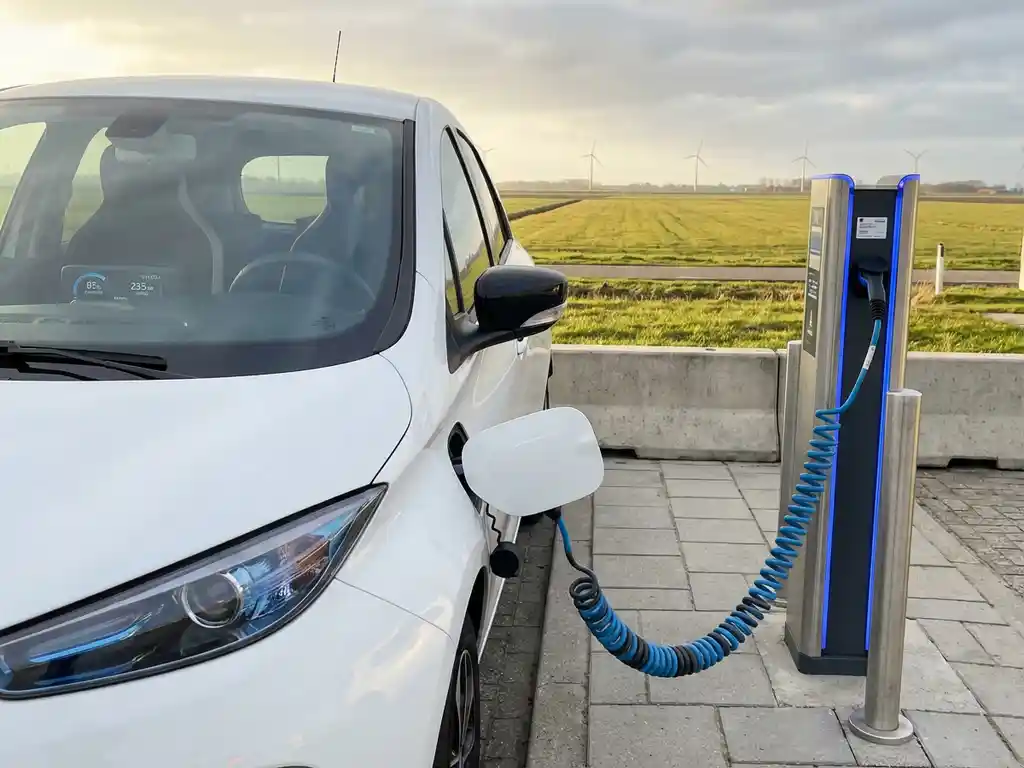
An environmental permit is only needed in special cases. If your charging station becomes part of a new construction or is located on monumental land, a permit may be required. For standard charging posts on business premises, this is rarely the case.

Different rules apply when placed in public areas. If your charging station will be on municipal land or affect public spaces, you will need a permit from the municipality. This process takes longer and costs more, so plan well in advance.

Some business premises have specific requirements. Check your lease or purchase contract and any VvE rules. Additional regulations may apply to electrical installations on industrial estates.

How long does it take to have a charging station installed?

The complete installation process takes 4 to 8 weeks on average, from quotation to delivery. The physical installation itself takes only 1 to 3 working days, but the preparation and any permit processes determine the total lead time.

The first step is to request quotes from certified installers. Allow 1 to 2 weeks for this, especially if you compare several quotes. A good installer will come on site for a technical check of your electrical connection and desired location.

After choosing an installer, the notification procedure with the grid operator. This notification must be made at least 4 weeks before installation. In busy periods, the grid operator may take longer for approval, so allow for 4 to 6 weeks.

Delivery of the charging station itself currently takes 2 to 4 weeks, depending on the brand and type. Popular brands are available faster than specialised charging posts with specific features.

Potential delays arise from electrical modifications. If your meter box needs expansion or excavation work needs to be carried out, this may take extra time. Weather conditions can also have an impact, especially for outdoor installations in winter.

How Van den Hurk helps with electric commercial vehicles

We fully guide you through the switch to electric driving, from choosing the right electric commercial vehicles to practical advice on charging solutions. Our expertise helps you make the best choices for your business situation.

Our support for electric commercial vehicles includes:

  • Personal advice On which electric company car suits your work best
  • Explanation of charging options and which charging station is suitable for your situation
  • Information on subsidies and tax benefits of electric driving
  • Flexible leasing options that make the switch financially attractive
  • Guidance throughout the process, from vehicle selection to delivery

With over 60 years of experience in commercial vehicles, we know what is important to business owners. We take the time to understand your business needs and give honest advice on electric driving options.

Want to know which electric company car suits your business best? Contact us for a no-obligation discussion about your mobility needs.

White electric company car with charging cable connected, parked in modern business district during golden hour

What are the tax advantages of electric company cars?

Electric commercial vehicles offer significant tax advantages for business owners. You benefit from 0% additional tax rate, full VAT deduction, favourable depreciation options and various subsidies. These benefits make electric driving more financially attractive than traditional fuel vehicles, especially since the introduction of the BPM levy on diesel vehicles in 2025.

What exactly does the 0% addition for electric company cars mean?

The 0% addition means that as an entrepreneur, you do not pay tax on the private use of your electric company car. Normally, you pay additional tax on 22% of the catalogue value of a company car, but for electric vehicles, this rate of 0% applies.

This scheme applies to fully electric company cars up to 50,000 euros list value. For more expensive electric vehicles, you pay an additional taxable benefit on the excess above 50,000 euros. Hybrid vehicles are not covered by this scheme and have an additional tax rate of 22%.

The 0% rate applies if you also use the company car privately. If you use the car exclusively for business purposes, additional taxable benefit does not play a role anyway. The favourable scheme applies until 2025, after which the rate will gradually rise to 16% in 2026.

What VAT benefits do you get when buying an electric company car?

With electric commercial vehicles, you can use the recover full VAT, both when buying and leasing. This applies to 100% of VAT, regardless of whether you also use the car privately. For traditional petrol or diesel company cars, you can reclaim only 50% of VAT.

This benefit also applies to VAT on repairs, maintenance and accessories of your electric company car. For a purchase price of 30,000 euros including VAT, this means a saving of around 5,200 euros in VAT that you can reclaim in full.

The same principle applies to leasing: you can reclaim the full VAT on the lease instalments. This makes leasing electric company cars extra attractive, as you benefit from lower net costs every month due to the VAT refund.

How does electric utility vehicle depreciation work for tax purposes?

Electric commercial vehicles can be fully amortise as operating expenses, regardless of private use. For traditional commercial vehicles, there is a limitation of up to 50% of depreciation when there is private use, but this limitation is removed for electric vehicles.

In addition, you can make use of the investment deduction. Electric commercial vehicles are often subject to an increased rate of 36% instead of the standard 28%. This means that in addition to the normal depreciation, you can deduct an additional 36% of the purchase price in the year of purchase.

The depreciation period is usually five years, but you can also opt for accelerated depreciation. This gives you the flexibility to make the most of the tax benefits, depending on your operating results and tax situation.

What subsidies and incentives are there for electric commercial vehicles?

For electric commercial vehicles, several subsidies and incentives available. The SEEH subsidy (Zero Emission Commercial Vehicles Subsidy Scheme) offers up to EUR 5,000 for new electric commercial vehicles, depending on the type of vehicle and purchase price.

Provinces and municipalities often offer additional incentives. These include free parking, access to environmental centres and low-emission zones, and sometimes local subsidies. These benefits vary by region, but can significantly reduce the total cost of ownership.

From 2025, there will also be a BPM levy on new diesel and petrol company cars, making electric alternatives relatively more advantageous. This measure makes the switch to electric driving even more financially attractive for companies.

How Van den Hurk helps with electric commercial vehicles

We will help you take advantage of the tax benefits of electric commercial vehicles make the most of it. With our years of experience in the commercial vehicle industry, we guide you through all aspects of the switch to electric driving.

Our support includes:

  • Personal advice on tax benefits and savings
  • Flexible leasing and financing options, tailored to your situation
  • Transparent prices with no hidden costs
  • Assistance in applying for grants and incentives
  • Guidance from selection to delivery

Whether you choose to buy or lease, we make sure you take advantage of all tax benefits and find the right electric company car to suit your business. Contact us for a personal consultation on the options for your business.

Three modern electric company vans parked in warehouse loading bay with yellow markings and industrial lighting

What are the best electric utility vehicles for transport?

The best electric commercial vehicles for transport are the Ford E-Transit, Volkswagen ID. Buzz Cargo, Mercedes eVito and Renault Master E-Tech. These models offer different load capacities and sizes for specific transport needs. You choose based on your daily driving distance, load weight and the type of goods you transport.

Which electric commercial vehicles are best suited for daily transport?

The Ford E-Transit is perfect for heavy transport jobs with a load capacity of up to 1,758 kg and a cargo space of up to 15.1 m³. This electric utility vehicle has a range of about 317 kilometres and is ideal for construction companies and logistics service providers who need to transport a lot of material.

The Volkswagen ID. Buzz Cargo combines modern technology with practical applications. With a load volume of 3.9 m³ and a range of around 425 kilometres, it is suitable for parcel delivery and smaller transport jobs in urban areas.

For medium-heavy transport, the Mercedes eVito an excellent choice. This electric commercial vehicle offers a load capacity of up to 1,005 kg and a range of about 421 kilometres. The eVito is very suitable for installation companies and service departments that commute between different locations on a daily basis.

The Renault Master E-Tech is the largest option with a load capacity of up to 1,500 kg and a cargo volume of up to 12 m³. With a range of about 300 kilometres, this truck is perfect for distribution and transporting larger goods within regional areas.

How many kilometres can you drive with an electric company car?

Modern electric commercial vehicles run between 250 and 450 kilometres on a full battery, depending on the model and conditions. The Ford E-Transit achieves about 317 km, while the Volkswagen ID. Buzz Cargo can travel up to 425 km under optimal conditions.

Your range is affected by several factors. Cold weather can reduce your range by 20-30% because the battery has to work harder. A full charge also reduces the driving range, as does an aggressive driving style with lots of accelerating and hard braking.

For optimal battery usage, plan your routes in advance and avoid unnecessary detours. Use eco mode whenever possible and take advantage of regenerative braking in the city. Allow for a safety margin of 20% and plan charging stops on longer trips.

Most companies drive 80-120 kilometres per day on average, which means that today's electric commercial vehicles offer more than enough range for daily operations without interim charging.

What is the cost of an electric commercial vehicle compared to diesel?

Electric commercial vehicles have higher purchase costs, but lower operating costs than diesel vehicles. From January 2025, you will pay BPM on new diesel commercial vehicles, making electric alternatives more financially attractive.

Fuel costs vary considerably. Electricity costs around €0.25 per kWh, equivalent to around €4-6 per 100 kilometres. Diesel currently costs around €7-10 per 100 kilometres, depending on your consumption and current fuel prices.

Maintenance costs are lower in electric commercial vehicles because they have fewer moving parts. You don't have to change oil, there are no spark plugs or exhausts, and brake pads wear less due to regenerative braking.

Tax breaks make electric company cars extra attractive. You get a discount on the additional taxable benefit, can deduct the full purchase price for corporation tax and pay no motor vehicle tax. The payback period is usually between 3 and 5 years, depending on your annual mileage.

How long does it take to charge an electric company car?

Charging an electric company car takes 30 minutes to 12 hours, depending on the charging method and battery size. Fast charging at a DC charger fills the battery to 80% in 30-60 minutes, while home charging at a regular wall socket can take an entire night.

Charging at home with an 11 kW charging station fully fills most commercial vehicles in 4-8 hours. This is ideal for overnight charging so you can start each morning with a full battery. An ordinary domestic socket (3.7 kW) takes 8-12 hours for a full charge.

On the road, use fast chargers of 50-150 kW that take the battery from 20% to 80% in 30-45 minutes. These are perfect for breaks during long trips or when you need extra range quickly.

Plan your charging sessions smartly by charging during work breaks or lunch breaks. Many companies install charging stations on their premises so that employees can charge during working hours. Apps like PlugShare and ChargeMap help you find public charging points and check availability.

How Van den Hurk helps with electric commercial vehicles

We make the switch to electric driving easy with personal advice and a wide range of offers electric commercial vehicles. Our team will help you make the right choice based on your specific transport needs, daily mileage and budget.

Our service includes:

  • Free consultation on electric mobility for your business
  • Extensive stock of electric commercial vehicles of various brands
  • Flexible financing and leasing options
  • Support with grant applications and tax benefits
  • Advice on charging infrastructure and installation service

With over 60 years of experience in the commercial vehicle industry, we understand that every business owner has unique requirements. We will take the time to talk through your current fleet and future plans to ensure you get an electric commercial vehicle that fits your business perfectly.

View our complete range electric commercial vehicles or contact us for a no-obligation discussion about the possibilities for your business.

Three modern electric commercial vehicles in different sizes parked on car dealership lot with glass showroom

What electric commercial vehicles are available with bucket truck equipment?

Electric commercial vehicles with box-body equipment are available from several brands, such as Ford, Mercedes-Benz, Volkswagen, Iveco and Renault. These vehicles combine the advantages of electric driving with practical cargo space for business transport. Popular models include the Ford E-Transit, Mercedes eVito, Volkswagen e-Crafter and Iveco eDaily, each with specific configurations for a variety of business needs.

Which electric commercial vehicles have a bucket truck design?

The market for electric utility vehicles with bucket truck equipment is growing rapidly. Ford offers the E-Transit in various lengths and heights, ideal for transport and logistics. Mercedes has the eVito and eSprinter with bucket truck attachments, while Volkswagen supplies the e-Crafter for heavier transports.

Iveco's eDaily is available as a rigid truck of up to 7 tonnes, perfect for larger loads. Renault supplies the Master E-Tech as an electric box truck and Peugeot has the e-Boxer in its range. These vehicles come in different sizes: compact for city deliveries, medium for regional transport and large for heavy loads.

Most models offer a choice of different battery capacities, which affects both driving distance and payload. Some manufacturers work with bodybuilders for customised bucket truck fittings, so you get exactly what your business needs.

What are the benefits of an electric box truck for your business?

Electric box trucks save you money on fuel costs and maintenance. They have access to environmental zones where diesel vehicles are no longer welcome. You will also benefit from tax advantages, such as lower addition and tax deductions.

Operating costs are significantly lower as electricity is cheaper than diesel. Electric engines have fewer parts that wear out, which reduces maintenance costs. Many municipalities offer subsidies for electric commercial vehicles, which lowers the purchase price.

For your corporate image, an electric cargo van is a plus. Customers increasingly appreciate sustainable choices. The vehicles run quietly, which is handy for early or late deliveries in residential areas. Moreover, you are prepared for future regulations around zero-emission zones in cities.

What is the payload of electric commercial vehicles with bucket truck equipment?

The payload of electric bucket trucks is between 800 kg and 2,000 kg, depending on the model and battery size. Compact models, such as the Volkswagen e-Crafter, load around 1,000 kg, while larger versions of the Ford E-Transit can carry up to 1,700 kg.

The battery affects the payload as it adds extra weight to the vehicle. A larger battery means more driving distance, but less payload capacity. Load volume usually remains the same as the diesel version and ranges from 8 to 15 cubic metres.

Electric box trucks often have a lower towing capacity than diesel models. Whereas a diesel rigid can tow 2,500 kg, this is around 1,000-1,500 kg for electric versions. This is due to battery weight and the protection of the electric powertrain.

What does an electric utility vehicle with bucket truck fittings cost?

New electric box trucks cost between €45,000 and €80,000, depending on brand, size and battery capacity. Used models start around €25,000 for older or smaller versions. Lease options make electric rigids more accessible, with monthly prices starting from €400-600.

The total cost of ownership is often more favourable than diesel due to lower fuel costs and maintenance expenses. Subsidies can reduce the purchase price by €2,000-5,000. Financial leasing spreads costs and offers tax advantages for companies.

Taking charging infrastructure into account is important. A home charger costs €1,000-2,000, on-site fast chargers are more expensive. Insurance costs are similar to diesel vehicles, sometimes slightly higher due to the higher purchase value.

How far can you drive with an electric box truck on one charge?

The range of electric rigids is between 150 and 400 kilometres, depending on battery size and driving conditions. Realistic daily distances are 200-300 km for most models under normal conditions.

Loading reduces the driving distance because the engine has to work harder. At full load, you can drive 20-30% less far. Cold temperatures also have an impact: in winter, the driving range drops by 15-25%. Air conditioning or heating costs extra energy.

Your driving style makes a lot of difference. Driving slowly and anticipating traffic maximises distance. Many electric rigids have an eco mode that optimises energy consumption. Regenerative braking recharges the battery while decelerating and driving downhill.

How Van Den Hurk helps with electric commercial vehicles

We will guide you through the transition to electric commercial vehicles with personal advice on which model best suits your business. Our experience of more than 60 years in the commercial vehicle industry helps you make the right choice between different makes and configurations.

Our service includes:

  • Comprehensive advice on range and payload for your specific use
  • Transparent price comparison between purchase and lease options
  • Support with grant applications and tax benefits
  • Customised truck bodies in cooperation with specialised partners
  • Aftercare and maintenance for carefree electric driving

Whether you need one electric box truck or want to make an entire fleet sustainable, we will provide a solution that fits your budget and operations. Contact us for a no-obligation discussion about the possibilities for your business.

White electric utility vehicle with open rear doors on grass surrounded by garden tools and plants

Which electric utility vehicles are suitable for landscapers?

Electric utility vehicles are becoming increasingly popular among gardeners because of their low maintenance costs and eco-friendly nature. For gardeners, models such as the Ford E-Transit, Volkswagen ID. Buzz Cargo and Mercedes eVito are suitable, with load capacities between 800 and 1,400 kg. These vehicles offer enough space for tools, plants and garden materials, while also allowing access to environmental zones in cities.

Which electric utility vehicles have enough payload capacity for landscapers?

For gardeners electric utility vehicles with a load capacity of at least 800 kg suitable. Popular models such as the Ford E-Transit (up to 1,400 kg), Volkswagen ID. Buzz Cargo (around 650 kg) and Mercedes eVito (up to 1,000 kg) offer sufficient capacity for most landscaping jobs.

Cargo space is just as important as weight. After all, a landscaper not only needs heavy tools, but also bulky items such as plants, bags of potting soil and garden furniture. The Ford E-Transit, for example, offers up to 15.1 cubic metres of cargo space, which is ideal for larger projects.

When choosing an electric commercial vehicle, you should also pay attention to the weight distribution. Heavy items such as lawnmowers are best placed as low as possible in the loading space. Many electric utility vehicles have a low loading floor, which makes loading and unloading easier.

Also consider practicalities such as attachment points for ladders and toolboxes. Some models offer special fitting options that perfectly suit the needs of gardeners.

How many kilometres can you drive with an electric company car?

Most electric commercial vehicles have a range of 150-300 kilometres per full load. For gardeners working locally, this is usually more than enough, as the average working day takes place within a 50-kilometre radius.

Range depends on several factors. Cold weather can reduce the range by 20-30%. Your driving style also makes a difference: lots of stop-and-go traffic in the city actually favours electric vehicles due to regenerative braking.

For gardeners, it is useful to have your smart planning of routes. Start with customers furthest away and work your way back home. That way, at the end of the day, you still have enough range to get home.

Modern electric commercial vehicles often have a range indicator that takes into account your driving style and weather conditions. This gives you a realistic picture of how far you can still drive.

What is the cost of electric commercial vehicles versus diesel?

Electric commercial vehicles more expensive to buy than diesel, but you recoup this difference through lower running costs. An electric commercial vehicle costs around €10,000-15,000 more than a comparable diesel, but saves €2,000-3,000 annually on fuel and maintenance.

The biggest savings are in day-to-day costs. Electricity costs around €0.25 per kWh, which works out at around €4-6 per 100 kilometres. Diesel currently costs around €8-12 per 100 kilometres, depending on your consumption.

Maintenance is also cheaper with electric vehicles. No oil changes are needed, brake pads last longer due to regenerative braking and the engine has far fewer moving parts. This saves €500-800 a year in maintenance costs.

In addition, as an entrepreneur, you get tax benefits. Electric company cars have a lower addition rate and you can take advantage of the MIA/Vamil scheme for environmental investments.

How long does it take to charge an electric company car?

Home charging takes 6-12 hours with a regular charging station, while fast charging on the go takes 30-60 minutes for 80% battery capacity. For landscapers, home charging is usually the most practical solution, as your vehicle is stationary overnight.

An 11 kW home charging station fully charges most commercial vehicles in 6-8 hours. This is ideal for landscapers who usually start early and get home late. You leave every morning with a full battery.

For longer trips, you can use fast charging stations along the motorway. These charge at 50-150 kW and top up your battery in a coffee break for 80%. Ideal if you need to go to customers further away.

Plan your smart charging sessions during your working day. Many garden centres and DIY stores now have charging stations where you can recharge while picking up materials. Some customers may also allow you to recharge during longer jobs.

How Van den Hurk helps with electric commercial vehicles

We help gardeners transition to electric commercial vehicles with personal advice and practical support. Our experience of more than 60 years in the commercial vehicle industry ensures you make the right choice for your specific situation.

Our offer for gardeners includes:

  • Personal consultation on payload and range for your working area
  • Flexible financing options and leasing arrangements
  • Assistance in applying for grants and tax benefits
  • Support for installing charging facilities
  • Complete service and maintenance for carefree driving

We understand that every landscaper has different requirements for their commercial vehicle. That is why we take the time to discuss your work and routes. Together, we will find the electric company car that fits your business perfectly.

Curious about the possibilities? Contact us for an informal talk. We will be happy to show you how electric driving can help your landscaping company move forward.

Three modern electric company vans parked at charging infrastructure during golden hour at commercial building

Which brands make the best electric commercial vehicles?

The best electric commercial vehicles come from established brands such as Ford, Mercedes-Benz, Volkswagen, Peugeot and Renault. These manufacturers combine proven reliability with modern electric technology. They offer extended warranties, good service support and a variety of models for different business needs. The choice depends on your specific requirements, such as range, cargo space and budget.

Which electric commercial vehicle brands are the most reliable?

Ford, Mercedes-Benz, Volkswagen, Peugeot and Renault are at the forefront of reliable electric commercial vehicles. These brands have decades of experience in commercial vehicles and bring that expertise to their electric models. They offer extended warranties of at least 8 years on the battery and have a well-developed service network.

Ford scores high with the E-Transit, which is available in different lengths and heights. The brand is known for its robust construction and low maintenance costs. Mercedes-Benz offers premium quality and advanced technology with the eSprinter and eVito, ideal for companies that value comfort and prestige.

Volkswagen impresses with the e-Crafter and ID. Buzz Cargo, where the brand combines its German engineering with user-friendly technology. Peugeot and Renault excel in the more compact segments with the e-Partner and Kangoo E-Tech, respectively, perfect for urban distribution.

These brands invest heavily in electric technology and have proven track records in the commercial vehicle market. Their dealer networks are well-trained in electric vehicles and parts are widely available.

What are the main differences between electric utility vehicle brands?

Range, loading speed, cargo space and price are the main differences between brands. Ford, for example, offers up to 350 kilometres of range, while Mercedes-Benz models often reach around 300 kilometres. Charging speeds range from 50 kW to 150 kW, making the difference between 45 minutes and 2 hours of charging.

Cargo space varies considerably by make and model. The Ford E-Transit offers up to 15.1 cubic metres of cargo space, while more compact models such as the Peugeot e-Partner stay around 4.4 cubic metres. Maximum payload ranges from 600 kg to 1,700 kg, depending on the model.

Towing capacity is a key differentiator. Not all electric commercial vehicles can tow trailers. Mercedes-Benz and Ford offer models that can tow up to 2,500 kg, while many other brands do not yet support this.

Price differences are significant. Compact models start at around €35,000, while large electric vans can reach €70,000 or more. Leasing rates range from €400 to €1,200 per month, depending on specifications and duration.

How many kilometres can you drive with an electric company car?

Modern electric commercial vehicles reach 200 to 400 kilometres on one charge, depending on the model and conditions. Compact models like the Renault Kangoo E-Tech reach around 300 kilometres, while larger vehicles like the Mercedes eSprinter achieve around 200-250 kilometres under realistic conditions.

Actual range depends on several factors. Outdoor temperature has a big influence: freezing temperatures can reduce range by up to 30%. Driving style also plays a role: aggressive acceleration and high speeds consume more energy. A fully loaded vehicle has a shorter range than an empty commercial vehicle.

Heating and air conditioning use significantly affect the range. In winter, heating can use up to 20% of battery capacity. Modern vehicles have heat pumps that are more efficient than traditional electric heating.

For optimal use, plan routes within 70-80% of maximum range. This gives you a buffer for unexpected circumstances and prevents you from running out of battery power. Many companies install their own charging stations to ensure full starts every day.

What does it cost to charge an electric company car?

Home charging costs around €8-12 per 100 kilometres, while public fast chargers can cost €15-25 per 100 kilometres. An average electric company car with a 75 kWh battery costs around €25-30 to fully charge at home at current energy prices of €0.35 per kWh.

Charging at work is often the cheapest option, especially if your company has solar panels or favourable business energy tariffs. Many employers offer free charging as a fringe benefit, which further reduces operational costs.

Public charging stations have different tariff structures. AC chargers (slow charging) usually charge €0.40-0.60 per kWh, while DC fast chargers charge €0.65-0.85 per kWh. Some providers also apply starting charges or time-based charges in addition to the kWh price.

Compared to diesel, you save significantly on fuel costs. A diesel company car consumes on average €12-18 per 100 kilometres of fuel, while driving electric is half to two-thirds cheaper. Over a year, this can save hundreds of euros, especially with high mileage.

How Van den Hurk helps with electric commercial vehicles

We fully support you in the transition to electric commercial vehicles with personal advice and practical solutions. Our experience of more than 60 years in the commercial vehicle industry helps you make the right choice for your specific business situation.

Our support includes:

  • Free consultation on which electric model suits your business activities
  • Calculation of total cost of ownership and savings over diesel
  • Flexible financing options, including financial lease from €400 per month
  • Support in applying for grants and tax benefits
  • Advice on charging infrastructure and optimal route planning

We have a large stock of electric commercial vehicles from reliable brands, readily available. From compact city vans to large transport vehicles, we will help you find the perfect electric solution that will future-proof your business.

Call us for a no-obligation chat about your switch to electric driving. We will be happy to calculate what electric company cars can do for your situation.

White electric commercial vehicle connected to charging cable in modern showroom with warranty certificate in foreground

How does the warranty on electric commercial vehicles work?

The warranty on electric commercial vehicles differs significantly from that on regular commercial vehicles, mainly due to the extended battery warranty of 8 years or 160,000 kilometres. Whereas traditional commercial vehicles mainly have engine warranty, with electric vehicles you get specific protection against battery capacity loss. Most manufacturers guarantee that your battery will retain at least 70% of its original capacity during the warranty period.

What is the difference between warranty on electric and regular commercial vehicles?

Electric commercial vehicles have a extensive battery warranty of usually 8 years or 160,000 kilometres, while ordinary commercial vehicles get a standard 2-3 years general warranty. The main difference is in the specific protection against battery capacity loss, as opposed to the traditional engine warranty.

In ordinary commercial vehicles, the warranty focuses on the engine, transmission and other mechanical parts. You get coverage for manufacturing defects and premature wear and tear of key components. The warranty period is usually shorter because internal combustion engines are a proven technology with a predictable lifespan.

Electric commercial vehicles, on the other hand, have specific battery warranty conditions. Manufacturers guarantee that your battery will retain at least 70% of its original capacity during the warranty period. This means you are entitled to replacement or repair if your battery deteriorates faster.

The charging infrastructure is also often covered by the warranty for electric vehicles. Think of the built-in charger, charging port and associated software. These components are usually given the same warranty period as the battery itself.

How long is the manufacturer's warranty on the battery of electric commercial vehicles?

The standard battery guarantee for electric commercial vehicles is 8 years or 160,000 kilometres, whichever comes first. Different brands apply similar terms, but the specific conditions may vary from one manufacturer to another.

Volkswagen, Mercedes-Benz and Ford all offer an 8-year warranty on the batteries of their electric commercial vehicles. Toyota often applies slightly different terms, with 8 years or 100,000 kilometres for their hybrid systems. The warranty specifically applies to maintaining at least 70% battery capacity.

If your battery drops below the 70% capacity within the warranty period, you are entitled to a free replacement or repair. This is measured through the vehicle's on-board computer and diagnostic systems. Some manufacturers even offer proactive monitoring to detect capacity loss early.

Please note that extreme conditions may affect the warranty. Very high or low temperatures, frequent fast charging or long-term storage with a depleted battery can affect the warranty terms. Always check your brand's specific conditions for exact details.

Which parts of electric commercial vehicles are not covered by the warranty?

Wear parts such as tyres, brake pads, windscreen wipers and filters are not covered by the warranty of electric commercial vehicles. Damage due to misuse, accidents or modifications is also excluded from warranty coverage.

Specific to electric vehicles, charging cables are often excluded from the warranty. These cables wear out through regular use and are considered consumables. The same applies to the 12V battery, which has a shorter lifespan than the main battery.

Damage to the battery due to misuse is also excluded from the warranty. This includes:

  • Long-term storage with a fully depleted battery
  • Use of non-approved charging equipment
  • Physical damage due to accidents or impact
  • Modifications to the battery system

Cosmetic damage, such as scratches, dents or discolouration, is never covered by the warranty, unless they are manufacturing defects visible immediately after delivery. Software updates are usually free, but damage caused by your own modifications to the software is not covered.

Maintenance, such as changing air conditioning filters, coolant and brake fluid, remains your own responsibility. Although electric vehicles require less maintenance, you must perform these basic servicing to keep the warranty.

What happens if your electric utility vehicle breaks down within the warranty period?

In case of a defect within the warranty period, report it immediately to your dealer or authorised repairer. You will usually receive a replacement vehicle if the repair takes longer than one working day. The complete repair will be carried out free of charge according to the warranty conditions.

The warranty process starts with a diagnosis at an authorised garage. They determine whether the defect is covered by the warranty and estimate the repair time. Electric commercial vehicles require specialised knowledge, so not every garage can carry out all repairs.

For battery problems, diagnosis may take longer as extensive tests are required. The garage checks battery capacity, charging performance and any fault codes. If capacity loss is detected, it is compared with the warranty conditions.

Replacement vehicles are usually arranged for business customers within 48 hours. This may be a similar electric commercial vehicle, but sometimes you will temporarily get a fuel vehicle as an alternative. The cost of this is covered by the warranty.

Complex repairs to batteries or electric motors can take 1-2 weeks due to parts availability. Simple defects to software or smaller components are often fixed within a few days. Your dealer will keep you informed of progress.

How Van den Hurk helps with electric commercial vehicles

We guide you through the complete warranty process from electric commercial vehicles and make sure you take full advantage of all warranty benefits. With our experience of more than 60 years in the commercial vehicle industry, we understand exactly what to look out for in warranty terms.

Our support for electric commercial vehicles includes:

  • Comprehensive explanation of warranty conditions upon purchase
  • Direct assistance with warranty claims and contact with manufacturers
  • Advice on optimal battery use for longer life
  • Rapid arrangement of replacement vehicles during repairs
  • Personal assistance with complex warranty issues

We work with authorised repairers who specialise in electric vehicles. This means faster diagnoses, shorter repair times and proper handling of warranty claims. As a result, our customers experience less worry and less downtime in case of any problems.

Want to know more about the warranty options for electric commercial vehicles? Contact us for personal advice on the best choice for your business. We will be happy to help you with any questions about warranty, leasing options and the switch to electric driving.

White electric company car is charged at charging station in modern business district with insurance shield reflection

What insurance do you need for electric commercial vehicles?

For electric commercial vehicles you need at least third-party insurance, as with other vehicles. But due to the higher purchase value and special components, such as batteries, more comprehensive cover is often wise. The insurance premium is on average 10-20% higher than for comparable diesel vehicles, but this difference is getting smaller. Exactly which cover you need depends on the value of your vehicle and how you use it.

What basic insurance is compulsory for electric commercial vehicles?

All electric commercial vehicles are required to have a Third-party insurance (liability insurance). This legal insurance covers damage you cause to others with your vehicle, with a minimum coverage of €6.07 million per accident. Without valid third-party insurance, you are not allowed on the road.

However, third-party insurance only covers damage to third parties. It does not cover damage to your own electric commercial vehicle, theft or vandalism. This is an important point, as electric commercial vehicles often have a higher purchase value than comparable diesel vehicles.

For business use, you must also specify whether your vehicle is used for business purposes. This may affect your premium and cover. Don't forget to inform your insurer about the electric nature of your vehicle, as this carries specific risks and repair options.

Why do electric commercial vehicles need additional insurance?

Electric commercial vehicles have specific risks and higher replacement costs that third-party insurance does not cover. The battery alone can account for 30-40% of the total vehicle value. So, in case of damage or theft, you run a significant financial risk.

Repair costs are often higher as not all garages can repair electric vehicles. You have to rely on specialised workshops, which means longer waiting times and higher costs. Parts are also sometimes more expensive and harder to obtain than for conventional commercial vehicles.

Electric commercial vehicles are also more interesting to thieves because of their higher value and demand for batteries. Moreover, software updates and technical faults can cause specific problems that do not occur with diesel vehicles. More comprehensive insurance protects you against these specifically electrical risks.

What are the main coverage options for electric vans?

WA-plus, limited casco and full casco are the three main options for electric vans. WA-plus adds fire, theft and glass damage to the basic insurance. Limited casco also covers storm, hail and animal collisions. Fully comprehensive offers the most complete protection.

WA-plus is appropriate if your vehicle is older but you want protection against theft and fire. This is relevant for electric vehicles because of their attractiveness to thieves. Limited casco is a good fit for vehicles 3 to 7 years old, where you want protection against most risks, except self-inflicted damage.

Full-casualty is recommended for new or expensive electric commercial vehicles. This cover compensates almost all damages, including those caused by your own fault. Do pay attention to the excess and whether the insurance pays the actual value or a new-for-old value. For electric vehicles, new-for-old value coverage is especially valuable because of the rapid technological developments.

What does insurance for an electric commercial vehicle cost on average?

The insurance premium for electric commercial vehicles is on average 10-20% higher than for comparable diesel vehicles. For third-party-plus insurance, you pay around €800-1,200 per year, while full-casualty comes out at €1,200-2,000 per year, depending on the value of your vehicle.

Several factors influence your premium. The purchase value is the most important: more expensive vehicles cost more to insure. Your driving experience, age and claim-free years also count. The use of your company car (mileage, type of work) also plays a role in the premium calculation.

You can save costs by choosing a higher excess, storing your vehicle safely and taking advantage of any discounts. Some insurers give discounts on electric vehicles because of their eco-friendly nature. Always compare several providers and pay attention not only to price, but also to coverage and service.

How we help with electric commercial vehicles

At Van den Hurk, we understand that the move to electric business driving requires more than just choosing a vehicle. We offer a total solution that helps your business every step of the way, from advice to insurance.

Our support includes:

  • Personal advice on which electric company car best suited to your business
  • Help comparing coverages and finding the right policy
  • Flexible leasing options that make the switch to electric financially attractive
  • Customised equipment and accessories for your specific business needs
  • Guidance on subsidies and tax benefits of electric commercial vehicles

With more than 60 years of experience in commercial vehicles, we combine proven expertise with knowledge of the latest electric technologies. Contact us for a no-obligation discussion about your electric commercial vehicle and its insurance. We will make sure you are properly insured on the road.

White electric commercial vehicle with open rear doors shows organised storage space with shelves and professional equipment

What accessories are there for electric commercial vehicles?

Electric commercial vehicles need various accessories to function optimally. You get charging cables, digital displays and modern safety systems as standard. In addition, you can expand your vehicle with workshop equipment, additional charging solutions, security systems and comfort accessories that perfectly suit your business needs.

What standard accessories do you get with electric commercial vehicles?

With most electric utility vehicles, you get a Type 2 charging cable for public charging stations, a home charging cable for regular sockets, a digital dashboard with energy information and modern safety systems such as automatic emergency braking and lane assist. This basic equipment ensures that you can drive and charge right away.

The digital display shows important information such as battery status, range and energy consumption. Many models also have regenerative braking, which recovers energy during deceleration. Modern electric commercial vehicles have climate control as standard, which allows pre-heating while still on the charger.

Safety systems such as adaptive cruise control, blind spot detection and parking sensors often come as standard. These systems make electric driving not only more sustainable, but also safer and more comfortable than traditional commercial vehicles.

How can you extend electric utility vehicles with practical working options?

You can equip electric commercial vehicles with workshop equipment such as shelving units, tool organisers, workbenches and security systems. Loading space optimisation with partitions, anti-slip mats and fastening points helps you transport materials safely. Specific adaptations are possible for different professions, such as installers, gardeners or catering services.

For construction workers, robust tool cabinets and workshop equipment are important. Installers benefit from organised storage areas for cables and parts. Gardeners can opt for special fixings for garden tools and materials.

Security options such as additional locks, alarm systems and tinted windows protect your valuable tools and materials. GPS tracking helps with fleet management and theft prevention. These modifications make your electric utility vehicle a complete mobile workshop.

What charging solutions and energy accessories are available?

You can choose from several charging solutions: home charging stations (wallboxes) for faster charging, mobile chargers for on the go, adapters for different charging stations and smart charging cables with app control. Energy monitoring systems help keep track of your consumption and charging costs for optimal energy management.

A wallbox at home charges much faster than a regular wall socket and often has smart features, such as time programming for cheaper night tariffs. Mobile chargers are useful as a backup for long trips or remote locations.

Smart charging systems can optimise your charging behaviour by taking advantage of solar panels or cheap energy tariffs. Some systems even offer bi-directional charging, where your company vehicle can feed power back to the building during peak hours.

What are the best safety and comfort accessories for electric commercial vehicles?

For optimum safety dashcams, reversing cameras, GPS tracking systems and advanced alarm systems are important. Comfort accessories such as heated seats, automatic climate control, ergonomic seat support and smartphone integration make long working days more pleasant and increase your productivity.

Security cameras around the vehicle help with parking and protect against vandalism. GPS tracking gives insight into routes and helps with fleet optimisation. Modern alarm systems can be linked to your smartphone for instant notifications.

Comfort features such as heated mirrors, automatic lighting and wireless phone charging make daily use more pleasant. Ergonomic adjustments such as adjustable armrests and lumbar support are important for drivers who drive a lot.

How Van den Hurk helps with electric commercial vehicles

We will help you choose the right electric commercial vehicles and related accessories that perfectly match your business needs. With over 60 years of experience, we understand exactly what equipment you need for your specific operations.

Our service includes:

  • Personal advice on accessories and equipment options
  • Installation of workshop equipment and security systems
  • Support for charging solutions and energy management
  • Flexible leasing options for vehicle and accessories
  • Aftercare and maintenance of all added equipment

We provide a total solution in which your electric company vehicle is fully geared to your work processes. From advice to installation and after-care: we take care of everything. Contact us for a personal discussion about your specific needs and possibilities.

White electric commercial vehicle on modern road with charging infrastructure and battery indicator during golden hour

What is the range of electric commercial vehicles?

The range of electric commercial vehicles varies between 150 and 400 kilometres, depending on the model and battery capacity. Compact vans typically achieve 200-300 kilometres, while larger models reach around 150-250 kilometres. Factors such as weather, load weight and driving style significantly affect the actual range. This guide answers all questions on the range and practical use of electric commercial vehicles.

How many kilometres can you drive with an electric company car?

Modern electric commercial vehicles achieve between 150 and 400 kilometres on a single battery charge. Compact models such as the Volkswagen e-Crafter reach 200-300 kilometres, while medium-sized vans usually achieve 250-350 kilometres. Larger vans are often around 150-250 kilometres due to their higher weight and size.

Battery capacity largely determines your range. Electric commercial vehicles typically have batteries between 35 kWh and 100 kWh. A 50 kWh battery will give you around 200-250 kilometres of range, while a 75 kWh battery will allow up to 350 kilometres.

In practice, you often get 80-90% of the stated WLTP value. This means that a commercial vehicle with 300 kilometres declared range realistically achieves 240-270 kilometres. Therefore, always plan your routes with a safety margin of at least 20%.

What factors influence the range of electric commercial vehicles?

Weather conditions have the biggest impact on your range. Cold temperatures below 5°C can reduce your range by 20-30% as the battery works less efficiently. Hot days above 30°C also cost extra energy by using the air conditioner, usually 10-15% less range.

Your load weight also plays an important role. Every 100 kg of extra weight costs about 3-5% of range. A fully loaded commercial vehicle therefore consumes 15-25% more energy than an empty one. Also pay attention to the air resistance of loads protruding outside the body.

Your driving style determines how many kilometres you get out of your battery. Aggressive acceleration and hard braking can increase your consumption by 20-40%. Highway driving at speeds above 100 km/h consumes exponentially more energy. At 120 km/h, you use about 30-40% more power than at 90 km/h.

The type of terrain also makes a difference. Hilly terrain takes extra energy when climbing, although regenerative braking on descents recovers some. City driving is usually most efficient due to lower speeds and plenty of braking opportunities.

How long does it take to charge an electric company car?

Home charging at a wallbox (11 kW) takes 4-8 hours for a full charge, depending on your battery capacity. A 50 kWh battery fully charges in about 5 hours. Charging at an ordinary power socket (2.3 kW) takes 15-25 hours and is only suitable for emergencies.

Public charging stations usually offer 11-22 kW of power. At a 22 kW charging station, your commercial vehicle will fully charge in 2-4 hours. This speed is ideal for charging during working hours or longer stops.

Fast chargers along highways provide 50-150 kW and charge your battery from 10% to 80% in 30-60 minutes. The final 20% is always slower to protect the battery. So plan fast-charging sessions to 80% for best time efficiency.

For business use, it is best to plan fixed charging times. Charge at home or at the office at night when rates are low. Use fast chargers only for longer trips or unexpected situations.

What can you do to increase the range of your electric utility vehicle?

Eco-driving can increase your range by 20-30%. Accelerate gradually, anticipate traffic lights and maintain a constant speed. Use cruise control on motorways and drive no faster than 100 km/h whenever possible.

Regenerative braking helps recover energy. Put your commercial vehicle in the strongest regeneration mode and let it coast instead of braking hard. In the city, you can recover up to 15% of your energy by smart anticipation.

Optimise your climate control. Heat or cool your cabin during charging so that the battery does not have to jump in. Use seat heating instead of cabin heating whenever possible; it uses less energy.

Keep your tyres properly inflated and avoid unnecessary ballast. Low tyre pressure causes 3-5% extra consumption. Remove heavy items you don't need and dismantle roof racks when not in use.

Plan your routes smartly with charging stops. Use apps that take into account your current battery level, weather conditions and available charging stations. Avoid detours by planning your charging stops in advance.

How Van den Hurk helps with electric commercial vehicles

We help you choose the right electric commercial vehicle that perfectly suits your daily mileage and work needs. With our large stock of electric commercial vehicles you will always find a model that meets your range requirements.

Our service includes:

  • Personal advice on range and charging options for your situation
  • Flexible leasing options that make the switch to electric driving affordable
  • Transparent information on actual consumption and range
  • Support in finding suitable charging solutions
  • Customised equipment and accessories for optimal use

With more than 60 years of experience, we understand that switching to electric driving requires careful planning. We work with you to calculate whether an electric company car is suitable for your routes and give honest advice on the options.

View our complete range electric commercial vehicles and find out which models best suit your business needs. Contact us for personal advice on range and the right choice for your situation.

White electric company car at charging station with glowing charging cable and floating euro notes in background

What are the costs of electric commercial vehicles?

The cost of electric commercial vehicles vary widely, depending on the type, brand and battery capacity. Purchase prices range from €25,000 for compact models to €70,000 for large rigids. Lease options start at around €300 to €400 per month. Due to subsidies and tax benefits, such as no BPM and a low additional tax rate, electric commercial vehicles are often more advantageous over the total ownership period than diesel variants.

What does an electric commercial vehicle cost to buy?

Electric vans cost between €25,000 and €70,000 to buy, depending on size, brand and battery capacity. Compact vans, such as the Peugeot e-Partner, start at around €25,000 to €30,000, while large vans, such as the Mercedes eSprinter, can cost up to €65,000 to €70,000.

The purchase price is mainly influenced by battery capacity and range. Vehicles with a range of 150 to 200 kilometres are cheaper than models with a range of more than 300 kilometres. Popular brands such as Volkswagen, Ford and Mercedes offer different versions.

Compared to diesel variants, you often pay €8,000 to €15,000 more for an electric commercial vehicle in purchase. However, this price difference is offset by lower operating costs and tax benefits. Since January 2025, BPM will apply to new diesel commercial vehicles, reducing the price difference.

What leasing options are available for electric commercial vehicles?

For electric commercial vehicles, you can choose from operational lease and financial lease. Operational lease starts at around €300 to €400 per month for compact models and €600 to €800 for large box trucks. Financial lease is often €50 to €100 cheaper per month, but includes fewer services.

With operational leasing, maintenance, insurance, road tax and often charging passes are included. You pay one fixed amount per month and do not have to worry about unexpected costs. Financial lease means you pay off the vehicle and are responsible for maintenance and insurance yourself.

Monthly costs depend on the term (usually 3-5 years), the number of annual kilometres and the chosen service package. For business users, operational leasing is often more attractive, as all costs are predictable and you can focus on your business operations.

What subsidies and tax breaks do you get on electric commercial vehicles?

Electric commercial vehicles benefit from no BPM levy, a low additional tax rate of 16% (compared to 22% for diesel) and often local benefits, such as free parking. These benefits can save you hundreds to thousands of euros annually, depending on your situation.

For business users, the low additional tax rate means a considerable advantage. With a €40,000 electric company car, you pay around €1,280 additional taxable benefit per year, while a comparable diesel costs €1,760. This saves €480 per year in taxable additional taxable income.

Many municipalities offer additional benefits, such as free parking in blue zones, access to environmental zones and sometimes local subsidies. For the SEBA subsidy (Subsidy Scheme for Emission-Free Company Cars), you need to apply via the RVO in good time. Always check the current schemes as they change regularly.

What is the total cost of ownership of an electric commercial vehicle?

The Total cost of ownership (TCO) of electric commercial vehicles is often 10 to 20% lower than diesel over a period of 4-5 years. Despite the higher purchase cost, you save on fuel, maintenance and taxes. At 20,000 kilometres a year, this quickly saves €2,000 to €4,000 a year.

Energy costs for electric driving are around €0.06 to €0.12 per kilometre, depending on where you charge. Diesel costs around €0.15 to €0.18 per kilometre at current fuel prices. Over 20,000 kilometres a year, you will therefore save €1,800 to €2,400 in fuel costs.

Maintenance costs are lower because electric motors have fewer moving parts. No oil changes are needed, there is less wear and tear on brakes and many components last longer. Insurance is similar to diesel, but depreciation can be higher due to rapid technological developments.

How Van den Hurk helps with electric commercial vehicles

We will help you make the switch to corporate electric mobility with personal advice and flexible solutions. With more than 60 years of experience in commercial vehicles, we combine proven expertise with the latest developments in sustainable mobility.

Our services for electric commercial vehicles includes:

  • Extensive range of various brands, such as Volkswagen, Ford, Mercedes-Benz and Toyota
  • Flexible leasing options tailored to your business needs and budget
  • Personal advice on the best electrical solution for your specific situation
  • Transparent pricing with no hidden costs or surprises
  • Grant support and making the most of tax benefits
  • Customisation and accessories to perfectly align your company car with your work processes

Want to know which electric company car is best for your business? Then contact us for no-obligation advice on options and costs. We will be happy to help you make the switch to sustainable company mobility.

Borrowing money costs money