
What is the maximum towing capacity of a double-cab commercial van?
If you want to use a double-cab commercial van to tow a trailer, it’s wise to know exactly what your vehicle can handle. The towing capacity not only determines what you can safely tow, but also has direct implications for your driving licence, your insurance and road safety. Whether you’re buying a small van or considering a double-cab van When considering a lease, understanding the towing capacity is a practical starting point.
In this article, we answer the most frequently asked questions about the towing capacity of a double-cab commercial van. From the basics to the regulations governing a Category B driving licence: you’ll find everything you need here to make an informed choice.
What is the towing capacity of a commercial van?
The towing capacity of a commercial van is the maximum weight that the vehicle is permitted to tow via the tow bar. This weight is stated on the vehicle’s registration certificate and is determined by the manufacturer based on the engine, the chassis and the braking capacity. The towing capacity varies depending on the model and specification.
There are two types of towing weight that you’ll come across in practice. The braked towing weight applies to trailers fitted with their own braking system. The unbraked towing capacity This applies to lighter trailers without their own brakes. The braked towing capacity is always higher than the unbraked towing capacity. For most commercial vans, the braked towing capacity is somewhere between 750 and 3,500 kilograms, depending on the type of vehicle and the powertrain.
As well as the towing weight, the maximum permissible combination weight relevant. This is the combined weight of the loaded company van and the loaded trailer. If you exceed this weight, you are driving in breach of the legal limits and risk fines or problems in the event of an accident.
What is a double cab on a commercial van?
A double cab on a commercial van is a configuration in which the vehicle has two rows of seats in the cab, providing space for five or six people. Behind the driver and front passenger is a full second row of seats. This configuration combines passenger transport with cargo space or a loading platform at the rear.
The double-cab is particularly popular with businesses that need to transport several employees to a work site whilst also carrying tools, materials or equipment. Examples include contractors, installation firms, landscape architects and service providers. The double-cab commercial van is therefore a versatile vehicle that combines two functions in one.
Double cab versus single cab
A single-cab model has just one row of seats, with the load area or loading platform starting immediately behind it. This provides more load space, but fewer seats. A double-cab model sacrifices some of the load length in favour of extra seats. For businesses where the team travels in the vehicle, the double cab is the logical choice. Those who only transport goods usually opt for the single cab or a panel van.
What is the maximum towing weight of a double cab?
The maximum towing capacity of a double-cab commercial van depends on the make, model and engine power, but for most common models it ranges between 2,000 and 3,500 kilograms (braked). Popular models such as the Volkswagen Transporter, Ford Transit, Mercedes-Benz Sprinter and Toyota Hilux with double cabs each have their own specifications.
A double-cab pick-up truck, such as the Ford Ranger or Volkswagen Amarok, generally has a higher towing capacity than a double-cab panel van. Pick-up trucks are built on a robust ladder frame and can, in many cases, tow up to 3,500 kilograms. Double-cab panel vans have a slightly lower towing capacity, but regularly manage between 2,500 and 3,000 kilograms.
Electric commercial vehicles and towing capacity
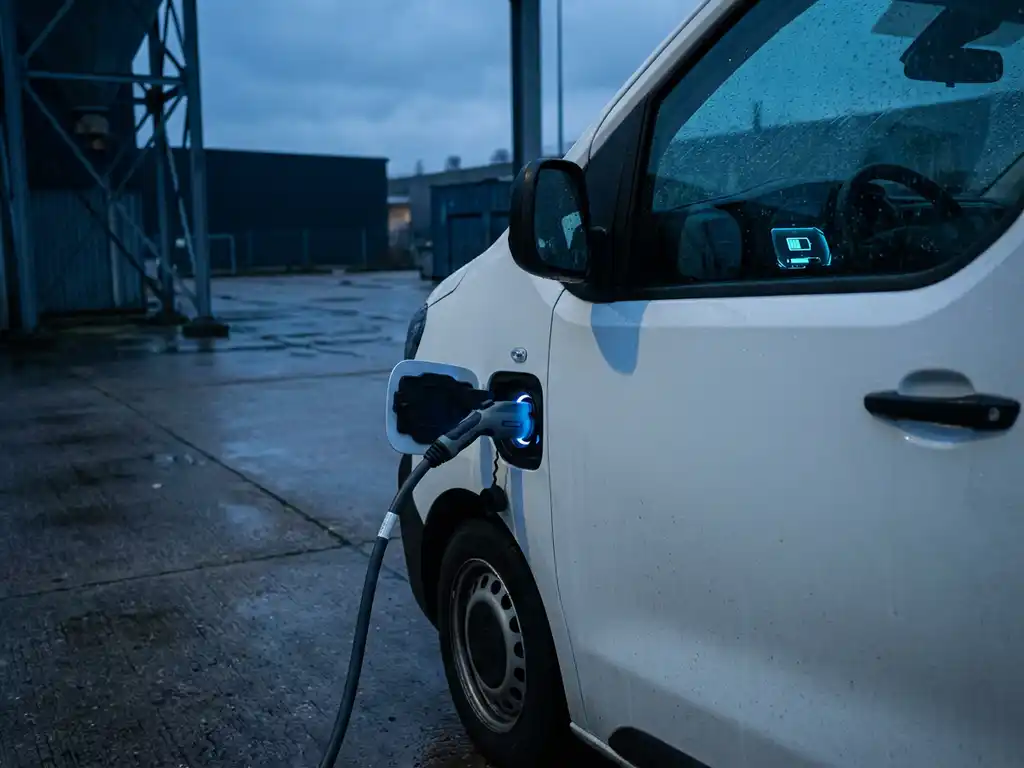
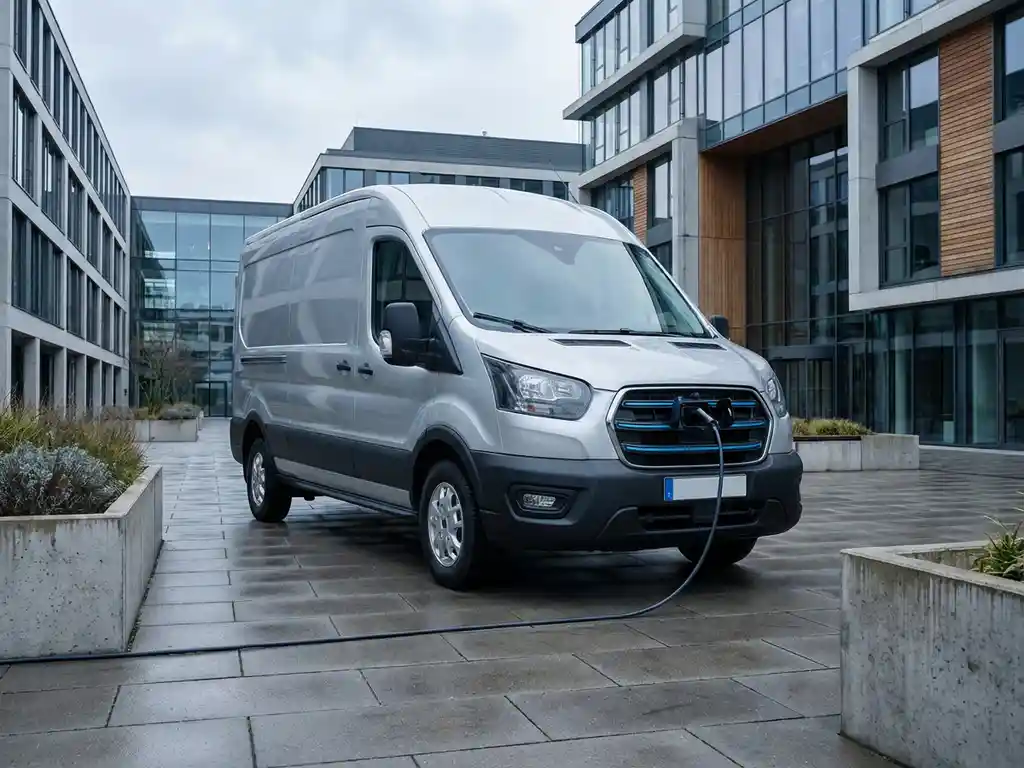
Also at electric commercial vehicles Towing capacity is a factor. Electric versions of well-known commercial vans are becoming increasingly available, but in some cases the towing capacity of electric models is lower than that of their diesel counterparts. This is due to the extra weight of the battery packs and the heat generated during prolonged towing. When leasing an electric commercial vehicle, always check the specific towing capacity specifications for the model in question, as manufacturers’ specifications can vary considerably from one version to another.
What factors determine the towing capacity of a commercial van?
The towing capacity of a commercial van is determined by a combination of technical and regulatory factors. The manufacturer sets the maximum towing capacity based on what the vehicle is structurally capable of handling, taking safety and durability into account.
The main factors are:
- Engine power and torque: A more powerful engine can drive and brake a heavier combination. Higher torque, particularly in diesel engines, makes towing heavy trailers more feasible.
- Braking system: The vehicle’s braking capacity determines the braked towing weight. A heavier combination requires greater braking force to come to a safe stop.
- Chassis construction: Pick-up trucks with a ladder frame are inherently more robustly built than monocoque models and can therefore generally tow heavier loads.
- Drivetrain (4×4 or 4×2): Four-wheel-drive vehicles often have a higher towing capacity due to better traction and torque distribution.
- Weight of the vehicle itself: A heavier vehicle generally offers greater stability when towing a trailer, but the maximum authorised combination weight also sets limits.
- Manufacturer’s specifications and type-approval: The towing capacity is specified by law on the vehicle registration certificate. You cannot simply increase this, not even by making technical modifications, unless the vehicle is re-type-approved.
Please also bear in mind that the towing capacity applies to a vehicle in running order, which may be carrying a load. If you make full use of the load space in your commercial van, this may affect the maximum weight you can safely tow within the maximum authorised combination weight.
Can you tow a double-cab trailer with a Category B driving licence?
With a Category B driving licence, you are allowed to tow a trailer, but strict weight limits apply. The combined weight of the vehicle and trailer must not exceed 3,500 kilograms. If the trailer weighs 750 kilograms or less, you may always drive with a Category B driving licence, regardless of the weight of the towing vehicle.
If you want to tow a heavier trailer, the following rules apply:
- The weight of the trailer must not exceed the unladen weight of the towing vehicle.
- The total combination weight (tractor unit plus trailer) must not exceed 3,500 kilograms for a Category B driving licence.
- If your combined vehicle weight exceeds 3,500 kilograms, you will need a BE driving licence.
For drivers of a double-cab commercial van, this means in practice that, with a relatively heavy van, you’ll quickly reach the 3,500-kilogram limit if you’re also towing a loaded trailer. A Volkswagen Transporter with a double cab, for example, already has an unladen weight of around 2,000 kilograms. With a Category B driving licence, you can then tow a trailer weighing up to 1,500 kilograms, provided the vehicle is technically capable of doing so and the trailer does not exceed the vehicle’s unladen weight.
A BE driving licence as a solution
A BE driving licence is an extension of the B driving licence and allows you to drive a combination of vehicles weighing over 3,500 kilograms. For business owners who regularly transport heavy equipment, machinery or vehicles on a trailer, a BE driving licence is a worthwhile investment. The course is relatively short and the costs are modest compared with the extra flexibility it offers.
How do you check the towing capacity of your commercial van?
The easiest way to check the towing capacity of your commercial van is to look at the vehicle registration certificate. Section 1B of the registration certificate states the maximum towing capacity, both braked and unbraked. These are the legally binding figures for your specific vehicle.
You can also look up the towing weight in the following ways:
- Vehicle registration certificate, Part 1B: Look for the fields labelled “kerb weight” and “maximum towing weights”. These appear as standard on every Dutch vehicle registration certificate.
- RDW vehicle details: You can look up all the technical details of a vehicle, including its towing capacity, by entering its registration number on the RDW website.
- User manual or manufacturer’s specifications: Your vehicle’s manual contains a technical section with all the weight specifications. The manufacturer’s website also provides this information for each model and variant.
- Dealer or importer: If you are unsure or the information is unclear, an authorised dealer can look up the exact specifications using the vehicle’s VIN number.
When purchasing second-hand vehicles, please note that the towing capacity stated on the registration certificate may sometimes be lower than the vehicle’s technical capabilities. This may be due to the original registration or to modifications carried out by the importer. In such cases, it is possible to have the towing capacity adjusted via the RDW, provided the vehicle is technically capable of it and the application for the adjustment is submitted correctly.
How we help you choose the right company bus
The towing capacity is just one of the many specifications that determine whether a commercial van is suitable for your work. We understand that choosing the right vehicle takes time and that you don’t want to be faced with any surprises after you’ve bought or leased a vehicle.
With us you will find a wide range of commercial vehicles, including:
- Double-cab commercial vans in various models and weight classes
- Small vans for sale for self-employed people and small businesses
- Electric commercial vehicles available to lease, including advice on towing capacity and range
- Specialised vehicles such as refrigerated lorries and wheelchair-accessible buses
Our advisers are happy to help you decide which vehicle best suits your needs, driving licence and towing requirements. We don’t just look at the towing capacity, but also at the payload, fuel type, financing options and suitability for your specific situation. Please get in touch with us or visit us in Helmond for personalised advice on the right commercial van for your business.