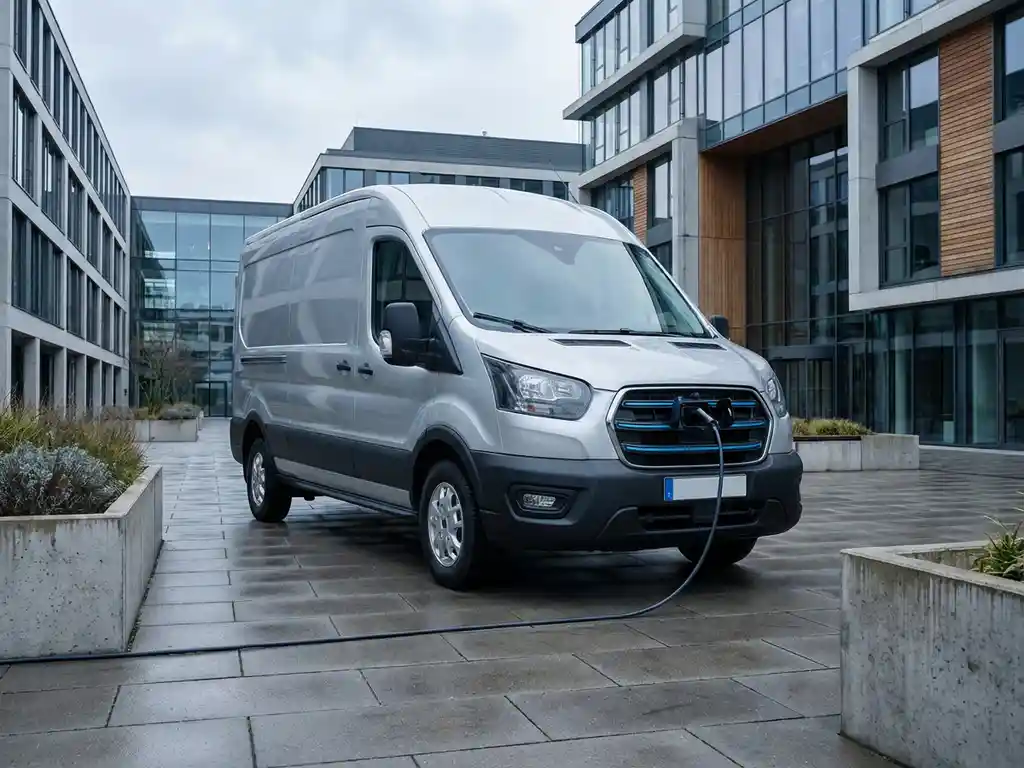

Is a double-cab company van tax-deductible?
A double-cab commercial van is a popular choice for business owners who want to transport both people and goods. But as soon as you start thinking about the tax treatment of such a vehicle, things quickly become complicated. When can you claim back VAT? Is there an additional tax liability? And which costs are actually tax-deductible? In this article, we answer the most frequently asked questions about the tax deductibility of a double-cab commercial van, so that you, as an entrepreneur, know exactly where you stand.
Whether you’re thinking of buying a to buy a small van, a double cabin Whether you’re planning to lease one or already drive a double-cab commercial van, the tax rules have a direct impact on your costs. Read on for a clear overview of the key tax considerations.
What exactly is a commercial double cab van?
A double-cab commercial van is a van or light goods vehicle with two rows of seats and an open or enclosed load area at the rear. The vehicle can accommodate several passengers – usually four to six people, including the driver – whilst also providing a functional load area for tools, materials or goods.
This type of vehicle is popular in sectors such as construction, agriculture, transport and healthcare. Think, for example, of a carpenter who transports his team and materials at the same time, or a healthcare organisation that combines staff and equipment in a single vehicle. The double cab thus offers a practical combination of passenger and goods transport.
Difference compared to a standard van
A standard van has only one row of seats and a large load compartment. A double-cab van has a second row of seats, which means the load compartment is smaller than that of a comparable van. This distinction is not only of practical importance, but also plays a role in the tax classification applied by the tax authorities.
Double-cab vehicles are sometimes classified in the vehicle registration register as passenger cars rather than commercial vehicles, depending on their specific configuration and weight. This classification then determines which tax rules apply, making this topic directly relevant to any business owner considering purchasing or leasing such a vehicle.
When does the tax authority class a double-cab pick-up as a commercial vehicle?
A double-cab vehicle is regarded as a commercial vehicle by the Tax and Customs Administration if it is classified as a van or light goods vehicle for registration purposes and the load compartment meets specific requirements. The tax authorities apply clear criteria to determine whether a vehicle is classified as a van for tax purposes.
The main conditions are:
- The vehicle is registered in the vehicle registration register as a van or commercial vehicle.
- The load compartment is fully enclosed and has a minimum height of 1 metre.
- The load compartment is at least as long as the distance from the front of the load compartment to the centre of the rear axle.
- There is a fixed, non-removable partition between the cab and the load compartment.
What if the vehicle is registered as a passenger car?
Is the double-cab registered as a passenger car in the vehicle registration register? If so, the tax rules for passenger cars apply. This means stricter restrictions on VAT deduction and, generally, a higher additional tax liability. This is a pitfall that business owners often overlook when purchasing a double-cab pick-up.
It is therefore advisable to check the vehicle registration certificate before making a purchase and, if in doubt, to contact the tax authorities or a tax adviser. The entry in the vehicle register is decisive; the vehicle’s appearance or fittings are not.
Is the VAT on a double-cab pick-up deductible?
The VAT on a double-cab pick-up is deductible if the vehicle qualifies as a van for tax purposes and you use it for business purposes. If the vehicle is used entirely for business purposes, you can claim back the full amount of VAT. If you also use the vehicle privately, you may only deduct the VAT in proportion to its business use.
This differs significantly from the rules for passenger cars. For passenger cars, a maximum VAT deduction of 100% applies if you can demonstrate private use separately, but the tax authorities scrutinise the evidence for this much more closely in the case of passenger cars. In the case of a double-cab van that meets the classification criteria, it is generally easier to claim the VAT deduction.
What if you also use the double cab for private purposes?
Do you also use the double-cab company van for private purposes? If so, you must adjust for private use in your VAT return. The tax authorities apply a flat-rate adjustment for this, or you can keep track of your actual private use by maintaining a logbook. A comprehensive logbook gives you more control over the amount of the adjustment and may work out more favourably than the flat-rate adjustment.
Please note: commuting is also treated as private use for VAT purposes. If you drive from home to a fixed place of work every day, that journey counts as private use and you must apply a correction for it.
Is there an additional tax liability for a double-cab company van?
The additional tax liability applies to a double-cab company van if the vehicle is classified for tax purposes as a passenger car, or if an employee or the business owner themselves also uses the vehicle for private purposes. If the vehicle qualifies as a delivery van and you use it exclusively for business purposes, no additional tax liability applies.
Delivery vans are exempt from the additional tax liability if two conditions are met:
- The vehicle is registered as a van.
- The delivery van is used exclusively for business purposes, as evidenced by a logbook or a written agreement with the tax authorities (no private use).
What if employees also use the double cab for private purposes?
Do employees also use the double-cab company van for private purposes? If so, they are subject to a benefit-in-kind assessment based on the vehicle’s list price. The benefit-in-kind percentage depends on the CO₂ emissions. For a standard diesel or petrol double-cab model, the standard additional tax rate usually applies. For a electric company car a lower tax assessment percentage applies, which reduces the monthly tax burden for employees.
If you wish to avoid the additional tax liability for employees, the most common method is to prohibit private use and keep a corresponding log of journeys. This does, however, require consistent and accurate record-keeping.
What expenses can you claim for a double-cab pick-up?
For a double-cab vehicle that qualifies as a van and is used for business purposes, the following costs are deductible from profit: purchase costs via depreciation, fuel or energy costs, maintenance and repair costs, insurance costs, road tax and financing costs in the case of a lease or loan.
The deduction applies to the business portion of the vehicle’s use. If you also use the double-cab pick-up for private purposes, you may only deduct the business portion of the costs. A logbook will help you to accurately determine this proportion and provide evidence of it to the tax authorities.
Depreciation of the double-cab
The purchase cost of a double-cab vehicle is depreciated over the vehicle’s useful life. The tax authorities apply a guideline of a maximum annual depreciation of 20% of the purchase value, with a residual value of at least 10% to 20%. In practice, most business owners align the depreciation period with the vehicle’s expected useful life.
In the case of an operating lease for a electric company car You don’t have to write off a double-cab yourself, as the vehicle remains the property of the leasing company. The monthly lease payments are then directly deductible as business expenses, which simplifies the administration.
Investment allowance on purchase
If you are buying a new double-cab pick-up for your business, you may be eligible for the Small-Scale Investment Allowance (KIA). This is an additional tax deduction on top of the standard depreciation, designed to encourage investment by SMEs. The amount of the KIA depends on the total investment made in a year. For electric commercial vehicles, there is also the Environmental Investment Allowance (MIA), which offers an additional tax benefit when purchasing environmentally friendly vehicles.
What should you look out for when buying a double-cab pick-up?
When purchasing a double-cab pick-up, the following points are the most important to bear in mind: check the registration classification before purchase, ensure that the load space meets the requirements of the tax authorities, consider whether buying or leasing is more tax-efficient, and determine whether an electric model qualifies for additional tax benefits.
The vehicle registration classification is the starting point for all tax rules. If the vehicle is registered as a passenger car, stricter rules apply to VAT deduction and the additional tax liability. Always check this on the registration certificate or via the RDW registration check before making a purchase decision.
Buying or leasing: which is more tax-efficient?
Whether buying or leasing is more tax-efficient depends on your circumstances. If you buy, you benefit from depreciation and possibly an investment allowance. With an operating lease, the monthly instalments are fully deductible and the vehicle remains off your balance sheet, which can be beneficial for your financial position. A finance lease is treated in a similar way to a purchase for tax purposes.
For business owners who wish to change vehicles regularly or do not want to tie up a large amount of capital, electric company car lease an attractive option. Especially now that the tax benefits for electric vehicles are still in place, it is worth comparing the total cost of ownership with a lease calculation.
Documentation and administration
Proper record-keeping is the basis for any tax deduction. Keep purchase invoices, maintenance bills and fuel receipts in a safe place. Keep a log of your journeys if you also use the vehicle privately, or enter into an agreement with the tax authorities if you use the vehicle exclusively for business purposes. This will help you avoid any disputes in the event of a tax audit.
How we can help you choose a double cab
At Van den Hurk Commercial Vehicles, we understand that choosing a double-cab is not just a practical decision, but also a tax-related one. With over 60 years’ experience in the Helmond and North Brabant region, we’ll help you make the right choice, tailored to your business situation and mobility needs.
What we can do for you:
- Advice on the tax classification of specific vehicles in our range
- A spacious range of new and used double-cab vehicles, including electric versions
- Flexible leasing options for both small vans and larger double-cab commercial vans
- Personalised support from the initial consultation through to delivery
- Stock alerts, so you don’t miss out on any interesting vehicles that meet your requirements
Would you like to know which double-cab model offers the most favourable tax treatment for your situation? If so, please get in touch with us for a no-obligation consultation. We’d be happy to help you work through the options and ensure you make a well-informed decision that suits your business.