
What is the fuel consumption of a double-cab commercial van?
A double-cab commercial van is a popular choice for businesses that want to transport both people and goods. But how much fuel does such a vehicle actually use, and how can you reduce that consumption? Whether you’re looking to buy a small van or considering leasing an electric commercial vehicle, fuel consumption plays a major role in your overall running costs. In this article, we answer the most frequently asked questions about the fuel consumption of a double-cab commercial van.
From average fuel consumption to the factors that influence it and the most fuel-efficient models on the market: here you’ll find practical information to help you make an informed choice for your business.
What is a double cab company bus?
A double-cab commercial van is a van or light goods vehicle with an extended cab that can accommodate five or more people, combined with a load compartment or open cargo bed behind the cab. This type of vehicle combines the passenger-carrying capacity of a car with the load-carrying capacity of a commercial vehicle.
The double cabin, also known as a “double cab” or “crew cab”, has two rows of seats. This makes the vehicle particularly suitable for construction and installation firms, landscaping services, haulage companies and other sectors where a team of staff needs to travel to a site together with tools or materials. This means you do not need two separate vehicles for people and materials.
What are the most common variants?
A double-cab commercial van is available in various models. The most common ones are:
- Closed van with double cab: a fixed load area behind the cab, ideal for the safe transport of tools and goods
- Double-cab pick-up: an open-top tipper, popular in the construction and agricultural sectors
- Chassis cab with double cab: a base vehicle onto which a specialised body can be fitted, such as a refrigerated body or a tipper body
Well-known models in this segment include the Volkswagen Transporter Double Cab, Ford Transit Custom Double Cab, Mercedes-Benz Vito Tourer, Renault Trafic Double Cab and the Toyota Hilux as a pick-up variant. Each model has its own fuel consumption profile, which directly affects the running costs per kilometre.
What is the average fuel consumption of a double-cab commercial van?
The average fuel consumption of a double-cab commercial van is between 8 and 13 litres per 100 kilometres for diesel models, depending on the weight, engine capacity and driving conditions. Petrol models generally consume slightly more. This means that fuel consumption is noticeably higher than that of a standard passenger car or small van.
The reason for this higher fuel consumption is a combination of factors: a larger body, a higher kerb weight due to the extra cabin space, and a higher payload, all of which place a greater load on the engine. An empty double-cab van already consumes more fuel than a standard van, and when fully loaded, that fuel consumption increases further.
Fuel consumption by fuel type
To give a realistic picture, here are the approximate fuel consumption ranges for each fuel type for a medium-sized double-cab commercial van:
- Diesel: 8 to 13 litres per 100 km
- Petrol: 10 to 15 litres per 100 km
- LPG/CNG: 11 to 16 litre-equivalents per 100 km (but lower fuel costs per litre)
- Electric: 25 to 35 kWh per 100 km (see also the section on electric variants)
For the time being, diesel remains the most commonly used fuel type in this vehicle segment, partly due to its higher torque at low revs, which is advantageous when driving with a heavy load. Nevertheless, interest in electric and alternative options is growing, particularly as emissions regulations in cities are becoming stricter.
What factors influence the fuel consumption of a double-cab bus?
The fuel consumption of a double-cab commercial van is determined by a combination of vehicle characteristics, driving behaviour and operating conditions. The most important factors are the weight of the load, the driver’s driving behaviour, tyre pressure and the type of routes you travel on a daily basis.
Vehicle-related factors
The vehicle’s own specifications have a major impact on fuel consumption. For example:
- Engine size and power: A larger engine with more cylinders generally consumes more fuel, but can actually be more efficient for heavy-duty transport than a smaller engine that becomes overloaded
- Transmission: An automatic gearbox can sometimes consume more fuel than a manual gearbox in city driving, but modern automatic gearboxes have become increasingly efficient
- Aerodynamics: A closed van performs better aerodynamically than an open flatbed or a high-sided body
- Kerb weight: The heavier the vehicle is when empty, the more energy is needed to keep it moving
Use-related factors
As well as the vehicle itself, the way you use it plays a major role:
- Load: A fully laden bus consumes considerably more fuel than an empty one. Every additional 100 kilograms increases fuel consumption noticeably
- Types of routes: City driving, which involves a lot of accelerating and braking, is much less fuel-efficient than driving at a steady pace on the motorway or outside built-up areas
- Handling: Accelerating hard, maintaining high revs and changing gear late significantly increase fuel consumption
- Tyre pressure: Inflating tyres to a pressure that is too low increases rolling resistance and thus increases fuel consumption
- Use of air conditioning and electrical systems: Air conditioning can increase fuel consumption by 5 to 10 per cent, particularly at low speeds
By being aware of these factors, you can quickly make a noticeable difference to your fuel costs, without needing a different vehicle.
How much fuel does a double-cab electric commercial van consume?
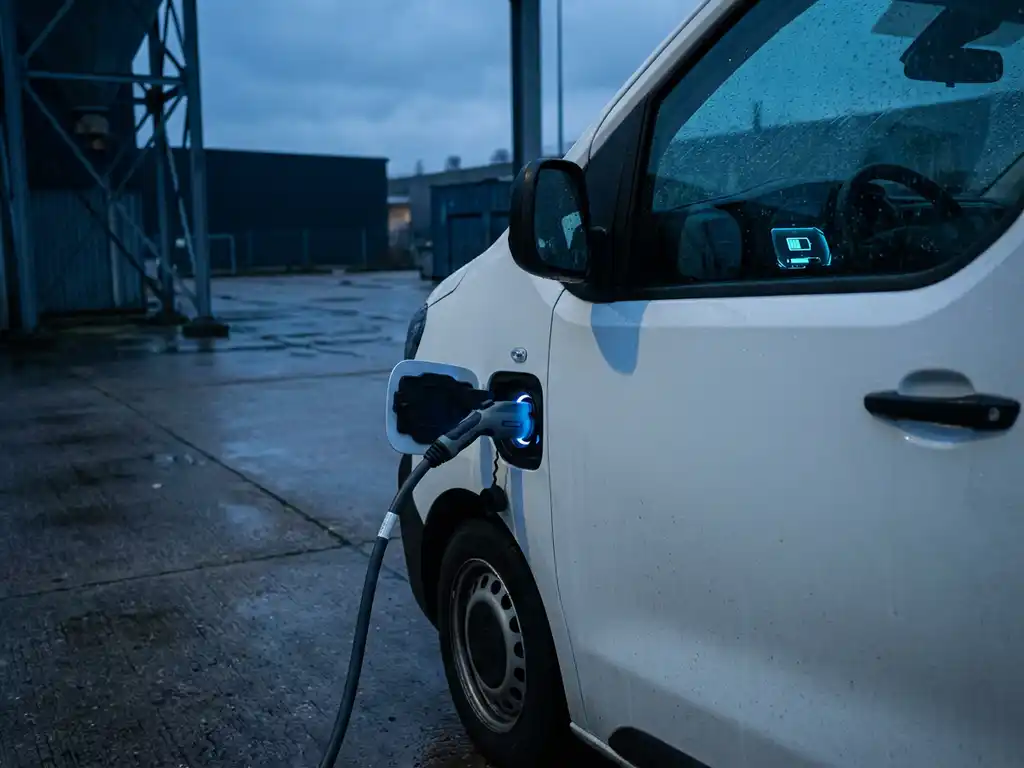
A electric company minibus The double-cab version consumes an average of 25 to 35 kWh per 100 kilometres. In terms of cost, at an average charging price of €0.30 per kWh, this works out at approximately €7.50 to €10.50 per 100 km, which is considerably lower than the fuel costs of a comparable diesel version.
Electricity consumption is, however, higher than that of an electric passenger car, as a double-cab commercial van is heavier and has a larger frontal area. Nevertheless, leasing an electric commercial vehicle offers significant advantages for businesses that drive extensively in urban areas, where lower energy costs and access to low-emission zones can provide a direct financial benefit.
What is the range of an electric double-cab pick-up?
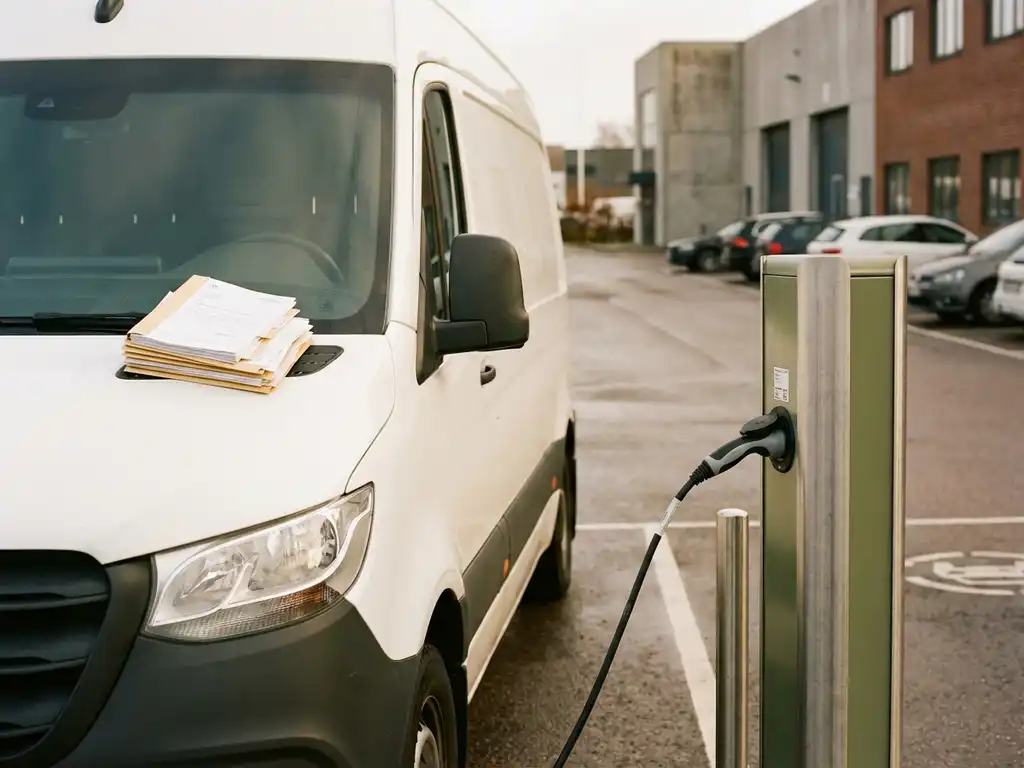
The range of electric models in this segment varies considerably depending on the model and battery pack. In practice, common models achieve a range of 150 to 300 kilometres per charge. For many businesses, this is sufficient for a full working day, particularly if they can charge the vehicles overnight on their own premises.
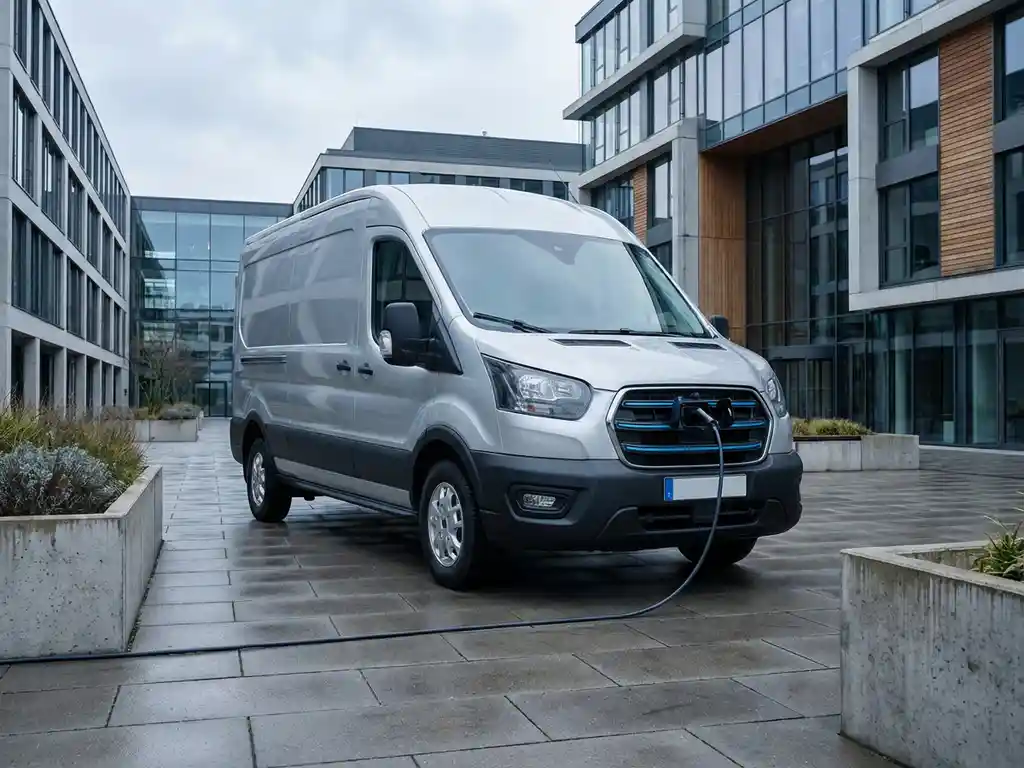
The range of electric vehicles in the double-cab commercial van segment is growing rapidly. Manufacturers such as Volkswagen, Ford, Mercedes-Benz and Stellantis are bringing more and more electric versions of their popular models to market. For businesses considering leasing an electric commercial vehicle, it is worth comparing options now, as technology and availability are improving rapidly.
How can you reduce the fuel consumption of a commercial van?
You can reduce the fuel consumption of a double-cab commercial van by driving more economically, maintaining the vehicle properly and managing its load and routes sensibly. Small changes to your driving behaviour can reduce fuel consumption by 10 to 20 per cent, without any additional investment.
These are the most effective measures you can put into practice straight away:
- Driving at a lower revs: Change gear early and keep the revs low. This reduces fuel consumption straight away and minimises wear and tear on the engine
- Anticipatory driving: Look well ahead and brake less often. Every time you brake, you lose energy that you’ve built up previously
- Keeping your tyre pressure correct: Check your tyre pressure weekly and keep it at the recommended level. Tyre pressure that is too low increases rolling resistance
- Removing unnecessary load: Leave behind any tools, materials or equipment you don’t need for a specific job. Every kilo you carry costs fuel
- Using air conditioning sensibly: Only use the air conditioning when necessary; at lower speeds, it is better to ventilate by opening the windows
- Regular maintenance: A well-tuned engine, clean air filters and fresh engine oil ensure optimum combustion efficiency
- Optimising routes: Plan your routes sensibly and avoid unnecessary detours or peak traffic times
It is also worthwhile for fleet managers to invest in telematics or journey-logging systems. These systems provide insight into drivers’ behaviour and help you give targeted feedback, thereby reducing the average fuel consumption of your entire fleet.
Which double-cab commercial van has the lowest fuel consumption?
The most fuel-efficient double-cab commercial vans are the electric versions, followed by modern diesel models with an efficient transmission and a start-stop system. In the diesel segment, compact models such as the Volkswagen Transporter Double Cab and the Ford Transit Custom Double Cab generally perform well in terms of fuel consumption.
When choosing the most fuel-efficient model, there are a few key factors to consider. Firstly, how you use the car: a model that is fuel-efficient on the motorway may actually be less so in town. Secondly, the load capacity you require: an engine that is too small and is constantly under heavy load will ultimately consume more fuel than a slightly larger engine that operates more efficiently. Thirdly, the age of the vehicle plays a role: newer models benefit from improved engine technology and lighter materials.
Electric is the most economical option in the long term
When you consider the total energy costs over the vehicle’s lifetime, electric models are the most economical choice. The higher purchase price is offset by lower energy and maintenance costs. Electric motors have fewer moving parts, which means that maintenance costs are consistently lower than for internal combustion engines.
For businesses that mainly operate in and around towns and cities and have access to charging facilities, an electric double-cab commercial van is therefore a sensible choice. This is particularly true when combined with leasing an electric commercial vehicle, as you avoid high upfront costs whilst immediately benefiting from lower running costs.
How we help you choose the right company bus
At Van den Hurk Commercial Vehicles, we help you find the double-cab commercial van that suits your needs, budget and fuel consumption requirements. Whether you want to buy a small van or would prefer to lease an electric commercial vehicle, we actively work with you to find the right solution and provide honest, straightforward advice.
Here's what we can do for you:
- Personalised advice on which type of double cab is best suited to your work and driving profile
- A wide range of used and new commercial vans, including electric models
- Flexible leasing and financing options for the self-employed, SMEs and fleet managers
- Transparent prices with no hidden costs
- A stock alert service, so you’re the first to know about new arrivals that match your search criteria
With over 60 years’ experience in the Helmond and North Brabant region, we have learnt that every business owner has different needs. Please get in touch with us or take a look at our current offer online, and we’ll make sure you find the right commercial van that’s fuel-efficient and reliable.