
Is it cheaper to buy a small van in the company’s name?
Buying a small van in the company’s name can be a smart financial decision, but it depends on your situation as a business owner. The tax benefits, VAT reclaim and depreciation options make buying a vehicle for business purposes an attractive option, but you do need to know what to look out for. In this article, we answer the most frequently asked questions about buying a small van for business use, so that you can make an informed choice.
Whether you’re a self-employed person looking for your first commercial van, or an SME looking to expand your fleet, the information below will help you make the right choice. We cover everything: from tax benefits to assessing used vehicles.
What does it mean to buy a van in the company’s name?
Buying a van in your company’s name means that the vehicle becomes the property of your business, not of you as a private individual. The purchase is processed through your company’s accounts; the vehicle is listed on the balance sheet as a business asset and all associated costs are tax-deductible. This applies to sole traders, general partnerships, private limited companies and other legal entities.
When you purchase a van for business purposes, you register the vehicle under your company’s Chamber of Commerce number and VAT number. This is not the same as registering a car in your own name and using it for business purposes. Where the vehicle is owned by the business, the costs, depreciation and VAT are directly linked to the business, which has tax implications for both the profit and the tax return.
What counts as a van for the tax authorities?
The Tax and Customs Administration applies specific criteria to determine whether a vehicle is classified as a delivery van. The vehicle must have an enclosed load compartment without side windows behind the B-pillar, and the load compartment must account for at least a certain proportion of the vehicle’s total volume. If a vehicle meets these requirements, more favourable rules apply regarding private use and the additional tax liability. This also applies to a double-cab van, in which case you must check carefully whether the tax authorities classify the vehicle as a van or a passenger car.
What are the tax benefits of a small van for business use?
Buying a small van for business use offers several tax benefits. You can depreciate the purchase price over the vehicle’s useful life, reclaim the VAT and deduct all business expenses – such as fuel, maintenance and insurance – from your profits. In the case of electric company cars, there may be additional investment allowances available.
Depreciation as a tax benefit
A company car shown on the balance sheet is depreciated over its expected useful life, which is usually five years. This annual depreciation reduces your taxable profit, resulting in immediate tax savings. For new vehicles, you can in some cases make use of arbitrary depreciation or accelerated depreciation, allowing you to charge a larger proportion to profit in the first year.
Small-scale business tax relief and investment allowance
If you invest in a business asset such as a van, you may be eligible for the small-scale investment allowance (KIA). This is an additional tax deduction on top of the standard depreciation. The percentage depends on the total amount invested in a year. For electric commercial vehicles In addition, there is the Environmental Investment Allowance (MIA) or the Vamil scheme, which makes the purchase of an electric company car even more attractive from a tax perspective.
Low or no additional tax liability for business use
In the case of a delivery van used exclusively for business purposes, there is no additional tax liability for private use. This is a major advantage compared to a passenger car. As long as you can demonstrate that the van is not used, or is used only very rarely, for private purposes, you do not need to add any additional tax liability to your income. This results in a significant saving on income tax or corporation tax.
When is it more cost-effective to buy a small van rather than lease one?
Buying is more cost-effective than leasing if you have the cash flow to finance the purchase, intend to use the van for the long term, and want to make the most of depreciation and the benefits of ownership. Leasing is a more attractive option if you prefer fixed monthly payments, wish to spread the risk or want to change vehicles regularly.
When you buy, you build up equity and, once the vehicle has been written off, you are left with a vehicle without any monthly commitments. This gives you financial flexibility in the long term. With an operational lease, you pay a fixed monthly amount and return the vehicle at the end of the contract. This is predictable, but you do not build up any equity.
Financial ownership versus right of use
With a finance lease, you finance the purchase through a leasing company, but the vehicle appears on your balance sheet and you benefit from depreciation and investment relief. With an operational lease, the vehicle appears on the leasing company’s balance sheet and the monthly costs are fully deductible as business expenses. Which option is more cost-effective depends on your profit, liquidity and how long you intend to keep the vehicle.
When is buying the better option?
- You have been driving the van for more than three to five years.
- You have sufficient equity or access to low-cost financing.
- You want to make the most of investment allowances and depreciation.
- You buy a second-hand van at a lower purchase price.
- You don’t want monthly lease commitments on your balance sheet.
How much VAT can you claim back on a commercial van?
You can claim back the full 21% VAT on a van purchased for business purposes, provided you are a VAT-registered business and use the van for business purposes. This applies both to the purchase and to additional costs, such as maintenance, fuel and accessories used for business purposes.
You can claim back VAT via your regular VAT return. You enter the VAT shown on the purchase invoice as input tax. This means you effectively only pay the net purchase price, resulting in an immediate saving of one-fifth of the purchase price. This is one of the most tangible benefits of buying a small van in the company’s name.
What if you also use the van for personal purposes?
If you also use the van for private purposes, you must apply an adjustment to the VAT claimed back. In that case, you cannot claim back the full amount of VAT, but only the portion corresponding to business use. The tax authorities apply a flat-rate scheme for this or may ask for a logbook. It is advisable to keep a comprehensive mileage log if you are unsure about the ratio of business to private use.
Which small vans are best suited for business use?
The most suitable small vans for business use are compact models with a payload of 500 to 1,000 kilograms, a spacious load compartment and low running costs. Popular choices include the Volkswagen Caddy, Renault Kangoo, Ford Transit Connect, Mercedes-Benz Citan and the Citroën Berlingo. Each model has its own strengths, depending on your specific needs.
Small vans for urban use
For business owners who drive a lot in the city, compact models with a small turning circle and a low emission class are the most practical. More and more cities are introducing low-emission zones where only vehicles with a specific emission rating are permitted. Leasing or buying an electric commercial vehicle is therefore a smart choice, both for access to these zones and for the lower fuel costs.
Double-cab vans
A double-cab company van offers extra seating for staff whilst also providing a load area or loading platform. This type is popular with construction firms, installers and gardeners. Please note, however, that the tax authorities sometimes classify a double-cab as a passenger car, which has implications for the additional tax liability and VAT refund. Always check the classification before making a decision.
Electric small vans
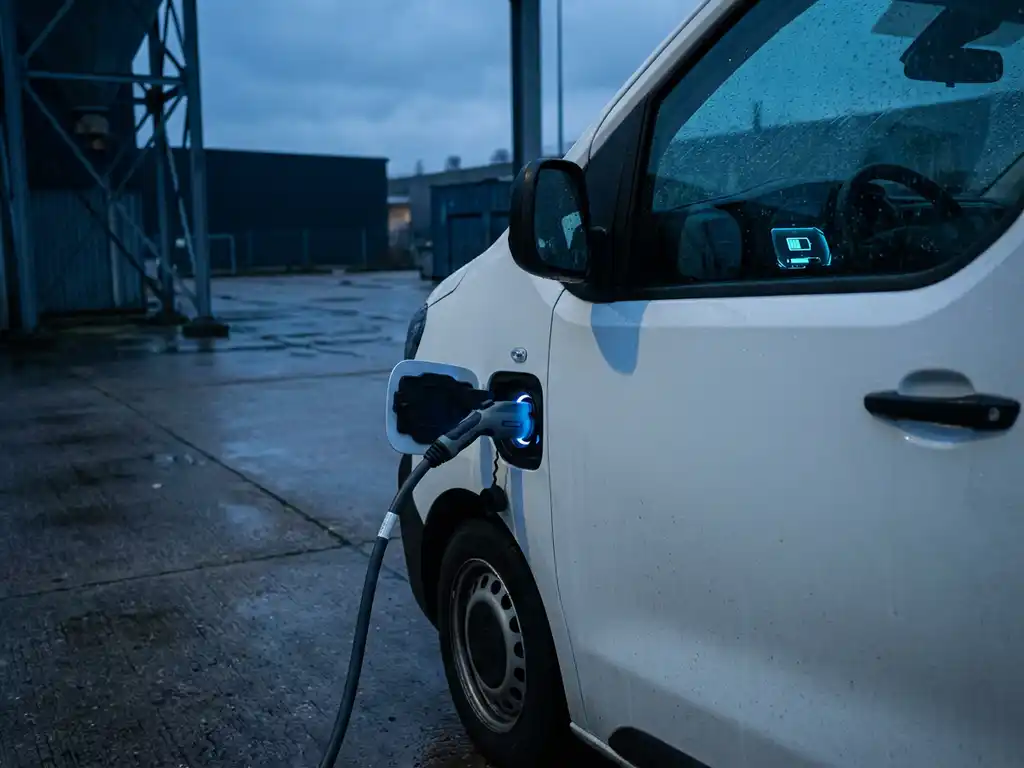
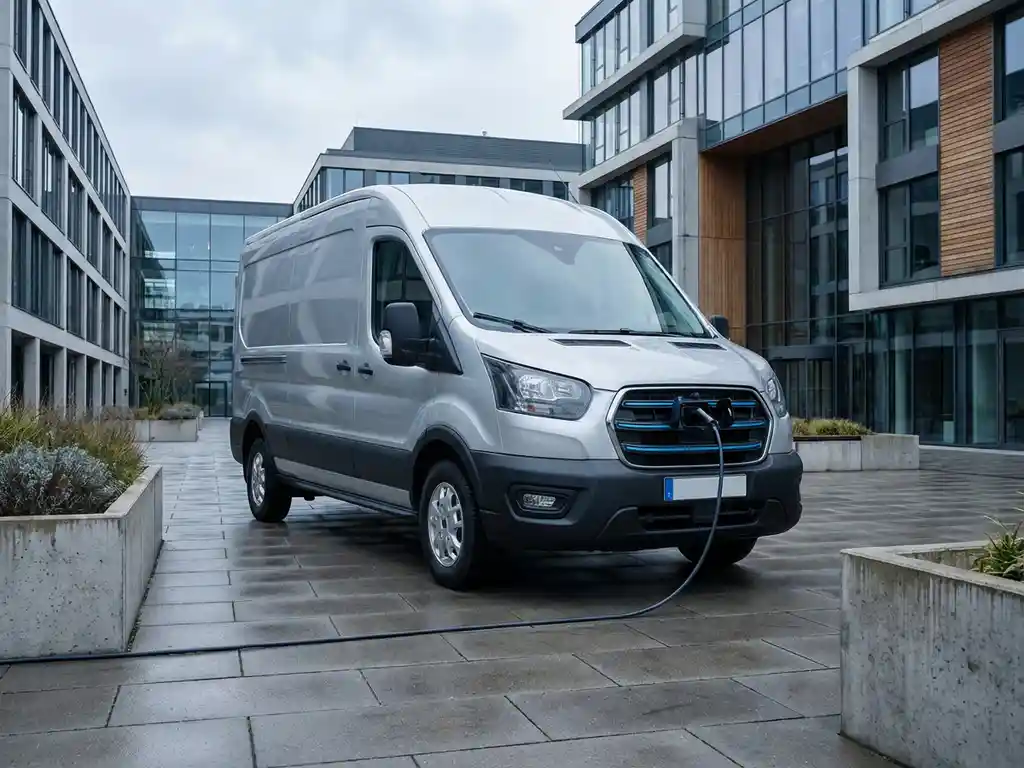
The market for small electric vans is growing rapidly. Models such as the Renault Kangoo E-Tech, Volkswagen Caddy Electric and Citroën e-Berlingo offer a range that is sufficient for many business users. When purchasing an electric commercial vehicle, you can benefit from the MIA and Vamil schemes, and in some cases from grants under the SEBA scheme. The lower fuel and maintenance costs make electric driving financially attractive in the long term.
What should you look out for when buying a second-hand commercial van?
When buying a second-hand commercial van, you should check the service history, the mileage, the condition of the load compartment, the emission class and the previous owner. A van that has been used intensively for business purposes may show more wear and tear than the mileage would suggest. Always ask for a full service history and have a technical inspection carried out.
Technical considerations
- Check the condition of the load compartment for damage and corrosion.
- Ask for the service booklet or the digital service history.
- Have an independent technical inspection carried out.
- Check the MOT status and when the next test is due.
- Check for any previous damage using a vehicle history report.
Tax and administrative audit
When buying a second-hand van for business purposes, it is important to check whether you can still claim back the VAT. If you buy a vehicle from a VAT-registered business, the VAT will be shown on the invoice and you can claim it back. If you buy under the margin scheme, the seller has already paid VAT on the margin and you, as the buyer, cannot reclaim the VAT. This difference has a direct impact on the actual purchase price.
Emission class and future-proofing
More and more local authorities are expanding their environmental zones. A second-hand van with an older emission class may lose access to certain urban areas in a few years’ time. Check the vehicle’s Euro emission class and compare it with the areas where you regularly drive. This will prevent you from facing unexpected costs in two years’ time or having to replace a vehicle you’ve only just bought.
How we can help you buy a commercial van
At Van den Hurk Commercial Vehicles, we help you find the right small van to suit your business, budget and intended use. With over 60 years’ experience in the Helmond region, we know the business market inside out and understand what entrepreneurs need.
Here’s what we do for you:
- Personalised advice on purchasing, financial leasing or operational leasing, tailored to your tax situation.
- A wide range of small vans, including electric models and double-cab vehicles.
- Transparent pricing with no hidden costs, so you know exactly where you stand.
- Used commercial vehicles that have undergone a technical inspection, with full documentation.
- A stock alert service, so that you’re the first to be notified when a vehicle that meets your requirements becomes available.
Would you like to know which small van, registered in your company’s name, is the best choice for your situation? Then please get in touch with us or take a look at our current offer. We’re happy to work with you every step of the way, from the initial advice right through to delivery.