
Can you use a double cab company bus privately?
A double-cab commercial van is a popular choice for entrepreneurs who want to transport both people and materials. But as soon as such a vehicle is also used privately, tax and legal questions arise. Is it actually allowed, and what are the consequences? In this article, we answer the most frequently asked questions about the private use of a double cab company van, so that you, as an entrepreneur, know exactly where you stand.
Whether you are considering buying a small van, a double-cab van lease or already have a vehicle in use: the rules around private use are unclear to many entrepreneurs. We list everything clearly.
What is a double cab company bus?
A double cab commercial bus is a commercial vehicle with two rows of seats and an open cargo box or an enclosed cargo area behind the cab. The vehicle provides space for several people in the front, while maintaining loading capacity. For tax and legal purposes, this type of vehicle falls into a specific category that differs from ordinary passenger cars.
In practice, this often involves a pickup truck or a van with extra seats. Think of vehicles such as the Volkswagen Transporter Double Cab or a Ford Transit with two rows of seats. The vehicle usually has five or six seats and a payload to suit business use. This very combination makes the vehicle attractive to contractors, installers and other entrepreneurs who carry people and materials on a daily basis.
How is a double cab classified?
Tax classification depends on the ratio of cargo space to seating space. The Inland Revenue assesses whether a vehicle qualifies as a van based on specific dimensions. If the cargo space does not meet the specified requirements, the vehicle may qualify as a passenger car, with all the tax consequences that entails. It is therefore wise to always check whether the vehicle has van status when buying or leasing.
Can you use a double cab company bus privately?
Yes, private use of a double cab company bus is allowed, but it has tax consequences. As soon as you use the vehicle for private purposes as well, you have to declare additional taxable income or corporation tax. Avoiding private use is the only way to avoid this addition.
There is no legal rule prohibiting private use of a business vehicle. What the law does regulate is how such use is taxed. If you use the van privately for less than 500 kilometres per year, you do not have to pay an additional taxable benefit. If you exceed that limit, the standard addition of 16% or 22% of the catalogue value applies, depending on the vehicle and the year of purchase.
Does the additional tax rate also apply to electric company cars?
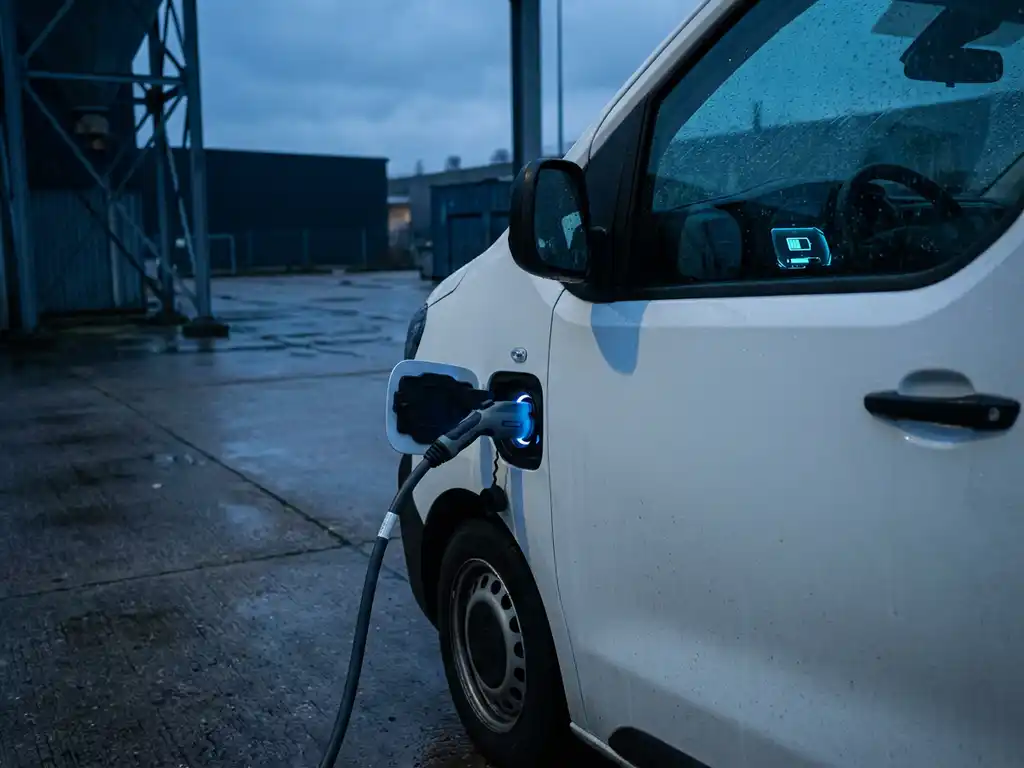
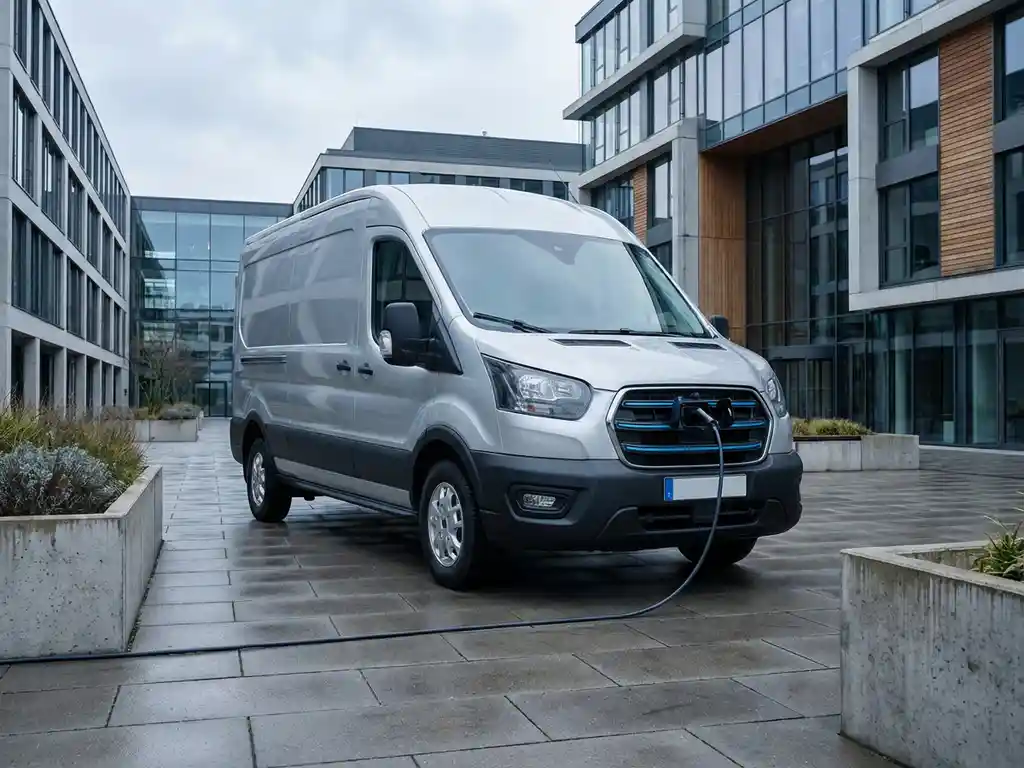
Yes, also when leasing or buying a electric company car an additional taxable benefit applies to private use. However, fully electric vehicles are subject to a reduced addition percentage. This percentage will be gradually brought into line with the standard percentage for conventional vehicles in the coming years. So it pays to take advantage of the lower rate now if you are considering leasing an electric company car.
What are the tax implications of private use?
For private use of a company bus with double cabin, you pay an additional taxable benefit on the catalogue value of the vehicle. This amount is added to your taxable income and you pay income tax on it. The higher your income and the more expensive the vehicle, the more tax you pay per year due to the additional taxable income.
The addition works as follows: suppose the catalogue value of your company van is 40,000 euros and the addition rate is 22%, then 8,800 euros will be added to your taxable income every year. In the highest tax bracket, that quickly means an additional tax amount of more than 3,500 euros per year. This is a hefty cost that many entrepreneurs underestimate.
What if you have already deducted the VAT?
If you have deducted VAT on the vehicle, but also use the vehicle privately, you have to correct part of the VAT deduction. For this, the tax authorities use a flat-rate correction based on private use. This applies alongside the addition to income tax. You therefore have to deal with two separate tax obligations for private use.
Does it matter whether you are a sole trader or a limited company?
Yes, the legal form makes a difference. With a sole proprietorship or vof, the addition is processed directly in your income tax return. In the case of a PLC, a similar arrangement applies via payroll tax, whereby the addition is regarded as wages in kind. In both cases, you pay more tax if you use the van privately without keeping a trip registration.
How do you prove you are not using the bus privately?
You prove that you do not use the bus privately by keeping comprehensive trip records. For each trip, you record: the date, the start address, the end address, the kilometres driven and the purpose of the trip. If the registration shows that you drive less than 500 kilometres privately per year, you do not have to pay an additional taxable benefit.
Trip records must comply with the requirements of the tax authorities. A simple notebook is sufficient in principle, but digital systems or apps provide more security and are easier to check. Keep the registration for at least seven years, as the tax authorities can carry out retrospective checks over that period.
What are common mistakes in trip recording?
Many entrepreneurs make mistakes that invalidate registration. The most common pitfalls are:
- Gaps in registration, meaning not all trips are demonstrably business-related
- A missing starting or ending odometer reading
- No mention of ride purpose
- Filling in afterwards based on memory rather than immediately after the trip
- No link to the actual mileage of the vehicle
An incomplete or unreliable registration may be grounds for the Inland Revenue to still impose the addition, including possible penalties and interest. So make sure you keep consistent and accurate records.
What is the difference between buying and leasing for private use?
When both buying and leasing a double cab company van, the same rules for private use and additional taxable benefit apply. It does not matter to the tax authorities whether you bought or leased the vehicle: as soon as you use it privately, you have to report additional taxable benefit. The difference is in the financial structure and flexibility, not in the tax treatment of private use.
When you buy a small van, you own it and bear all the costs and risks yourself. With operational leasing, you pay a fixed monthly fee and maintenance, insurance and sometimes tyres are included. This gives more overview of your monthly costs. With financial leasing, you are the economic owner and bear the risk for the residual value yourself.
When is leasing more advantageous than buying for private use?
Leasing can be more advantageous if you want to maintain your company's liquidity and do not want to tie up a large capital in a vehicle. Moreover, the lease costs for a company vehicle are tax deductible as business expenses, even if you use the vehicle partly privately. You will pay additional tax on the private use, but the full lease costs remain deductible. In the case of purchase, depreciation is deductible, but the rules are slightly more complex.
For entrepreneurs who want to change vehicles regularly or always drive a new and reliable vehicle, leasing an electric company car is also an interesting option. You will then benefit from the reduced addition rate and have no worries about the residual value or technical condition of the vehicle after a few years.
When is a ban on private use mandatory?
A ban on private use is mandatory if, as an employer, you want to avoid the employee having to pay an additional taxable benefit on the business vehicle. In that case, you conclude a written agreement with the employee in which private use is explicitly prohibited. Without such an agreement, the tax authorities will assume by default that private use is possible and the additional taxable benefit will be imposed.
For the entrepreneur himself, the ban on private use applies if he or she wants to prove that the additional taxable benefit does not apply. In that case, a conclusive trip registration is sufficient. A written ban is not mandatory for the entrepreneur himself, but for employees who are given a business vehicle at their disposal, a written record is necessary to avoid the additional taxable benefit.
How do you record a ban on private use?
You record a ban on private use as follows:
- Draft a written statement stating that the employee is not allowed to use the vehicle privately
- Have both employer and employee sign the statement
- Keep the statement in the company's records
- Provide a system that allows you to monitor usage, such as a trip log or vehicle tracking system
- Submit the declaration to the Inland Revenue if requested to do so
Note that a prohibition on paper is not sufficient if you cannot prove that the prohibition is actually observed. The tax authorities look at the actual situation, not just what is on paper. So always make sure you have demonstrable control over the use of the vehicle.
How we help you choose a commercial double cab van
The rules around private use, additional taxable benefit and trip registration are an obstacle for many entrepreneurs when buying a company bus with double cabin. We understand this and are happy to help you make the right choice, tailored to your situation and use.
With us you will find a wide range of commercial vehicles, both new and used, and with different powertrains. We think with you about:
- The tax classification of the vehicle you have in mind
- The choice between buying, financial leasing or operational leasing
- Options for leasing an electric company car with reduced additional tax rate
- Tailor-made for your specific situation, whether you are a sole trader, SME or fleet manager
Do you have questions about buying a small van, leasing a double cab company van or the tax implications of private use? Then contact us or drop by in Helmond. We will be happy to help you with honest advice and an offer that suits your needs.