
What is the difference between a delivery van and a commercial van?
If you need a commercial vehicle, you’ll soon find yourself faced with a choice: should you go for a van or a minibus? Both vehicles cater to the business market, but they’re designed for very different situations. Whether you want to buy a small van for daily deliveries or, on the other hand, a minibus with double cabin If you’re looking to expand your team, it’s worth making sure you fully understand the differences before making a decision.
In this article, we answer the most frequently asked questions about delivery vans and commercial vans. From driving licences and dimensions to costs and the choice between buying and leasing an electric commercial vehicle: by the end of this article, you’ll know exactly which vehicle suits your situation.
What is a delivery van and what is a commercial van?
A delivery van is a vehicle with an enclosed or open load area, primarily intended for the transport of goods. A people carrier is designed to carry several people, often combined with a load area. The difference therefore lies in the primary purpose: goods versus people.
What exactly is a delivery van?
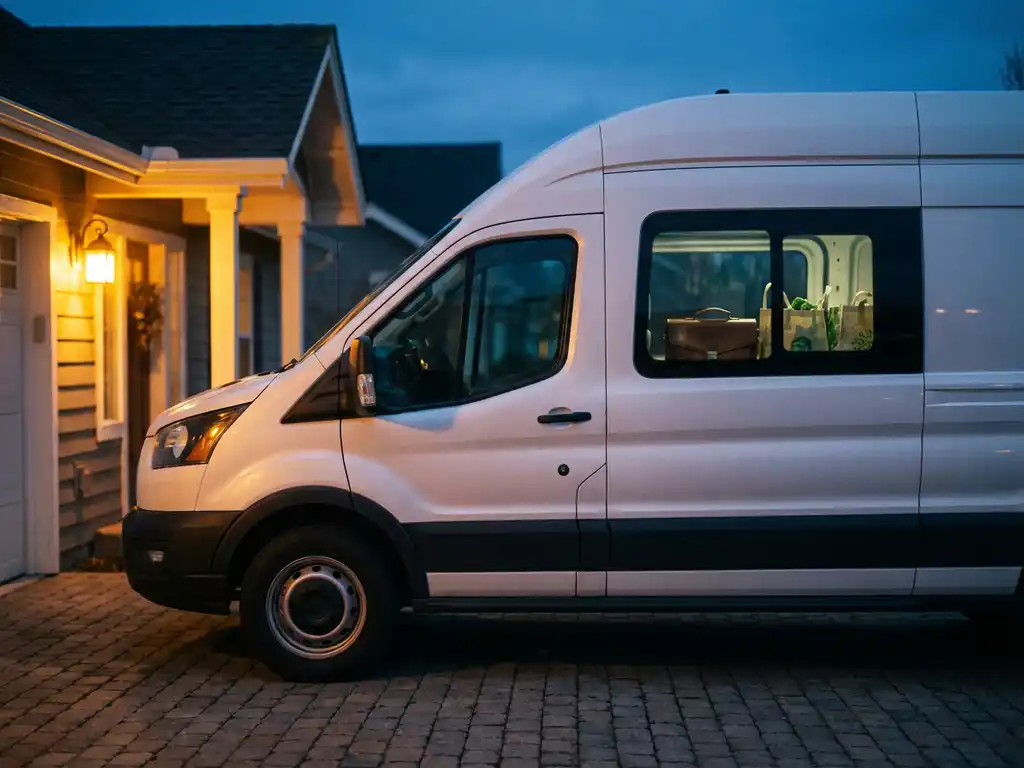
A delivery van, also known as a light commercial vehicle or panel van, has an enclosed load compartment behind the driver’s cab. Examples include well-known models such as the Volkswagen Transporter, Ford Transit or Mercedes-Benz Sprinter. They are designed to transport goods, materials or tools. The load compartment is accessed via rear doors or a side door and has no passenger seats.
Delivery vans come in various sizes: from small city vans to large, high-roof models designed for heavy loads. They are popular with couriers, construction firms, fitters and other businesses that need to transport materials on a daily basis.
What exactly is a company van?
A company van, also known as a multi-purpose vehicle or passenger van, has several seats and is suitable for transporting groups of people. Examples include a minibus for healthcare transport, a coach for group travel or a double-cab van, which can carry both passengers and goods. The double-cab commercial van is a popular choice for businesses where an entire team needs to travel to the work site.
Company minibuses are widely used by healthcare providers, construction firms with larger teams, taxi and transport companies, and businesses that regularly transport staff. The combination of seating and load space makes them versatile, but also requires a different approach when it comes to driving licences and regulations.
What are the main differences in terms of use and application?
The main difference in use lies in their primary purpose: a delivery van transports goods, whilst a people carrier transports people. This determines not only the vehicle’s layout, but also the regulations, the driving licence you need and the costs involved.
Typical uses of a van
Vans are the workhorses of small and medium-sized enterprises. They are used for:
- Parcel delivery and courier services
- Construction, installation and maintenance (please bring your own tools and materials)
- Catering and event logistics
- Refrigerated transport by refrigerated lorries
- Small removals and the transport of bulky goods
The load compartment takes centre stage. You can customise the van to suit your work: with shelves, drawers, refrigeration or a layout tailored to your industry.
Typical uses of a company minibus
A commercial van is designed for passenger transport, whether or not combined with goods. Common uses include:
- Healthcare transport and wheelchair transport
- Group transport for construction crews or installation teams
- Taxi and passenger transport
- School transport and day care
- Company outings and group trips
A double-cab commercial van offers the best of both worlds: you can transport a team whilst still having space to carry materials. This makes them particularly useful for companies in the construction or engineering sectors.
What driving licence do you need to drive a van or a minibus?
For a van weighing up to 3,500 kg, a Category B driving licence is sufficient. For a minibus, the required driving licence depends on the number of seats and the total weight. If you are driving a coach with more than 8 passenger seats, you will need a D driving licence. For vehicles weighing between 3,500 and 7,500 kg, a C1 driving licence is required.
Driving licence for a van
Most delivery vans fall into the category with a maximum authorised mass of up to 3,500 kg. A Category B driving licence is sufficient for these, which virtually every driver already holds. Some heavier vans or vans with a trailer may exceed 3,500 kg. In that case, you will need a BE or C1 driving licence, depending on the combined weight.
Always check the vehicle’s maximum authorised mass (MAM) before getting in. This is stated on the vehicle registration certificate. If you drive a vehicle that is heavier than your driving licence permits, you risk a fine and problems with your insurance.
Driving licence for a minibus
Different rules apply to commercial vans. The required driving licence category depends on two factors: the number of seats and the gross vehicle weight.
- Driving licence B: Vehicles weighing up to 3,500 kg with a maximum of 8 passenger seats
- Driving licence C1: Vehicles weighing between 3,500 and 7,500 kg
- Category D driving licence: Buses with more than 8 passenger seats, regardless of weight
- Driving licence D1: Smaller buses with up to 16 seats
If you use the bus for commercial passenger transport, additional requirements under the Passenger Transport Act also apply. These include a driver’s licence and a medical examination. Always check the current regulations via the RDW (National Road Traffic Authority).
What are the differences in dimensions and load capacity?
Vans and minibuses differ considerably in terms of dimensions and load capacity. Vans are optimised for maximum load space, whilst minibuses sacrifice some of that space for extra seating. On average, a van has a higher load capacity than a comparable minibus.
Dimensions and load capacity of vans
Vans come in three main sizes:
- Small (compact van): Load capacity of approximately 3 to 5 cubic metres, suitable for urban distribution. Examples: Volkswagen Caddy, Citroën Berlingo.
- Medium: Load volume of 6 to 10 cubic metres, the most common category. Examples: Ford Transit Custom, Renault Trafic.
- Large: Load volume of 10 to 17 cubic metres, for heavy loads or large volumes. Examples: Mercedes-Benz Sprinter, Volkswagen Crafter.
The payload ranges from around 600 kg for small city vans to over 1,500 kg for larger models. The length varies from around 4 metres to over 6 metres for the longest versions.
Dimensions and load capacity of commercial vans
Company minibuses are generally larger than vans because of the extra seats. A minibus or double-cab company minibus is between 5 and 8 metres long. The load capacity is lower than that of a comparable delivery van, as part of the weight and space is taken up by the passenger compartment.
A double-cab delivery van usually has 4 to 6 seats at the front and a more limited load space at the rear. This makes the vehicle versatile, but its load capacity is lower than that of a pure goods vehicle with the same external dimensions.
When should you choose a delivery van and when a people carrier?
Choose a delivery van if transporting goods is your main activity. Choose a people carrier if you regularly transport several people, whether or not this is combined with carrying materials. The choice depends on your day-to-day operations, the number of staff you carry and the amount of cargo you transport.
Situations in which a van is the right choice
A delivery van is a good fit for your situation if:
- You transport goods, materials or tools on a daily basis
- Whether you’re driving on your own or with one colleague
- You need the maximum load capacity
- If you want to fit out the van with shelves, loading boards or refrigeration
- You want to buy a small van for city driving and narrow streets
In most cases, a self-employed person in the construction industry or a courier is better off with a good delivery van than a commercial van. The lower purchase price and higher load capacity make this the more practical choice for transporting goods.
Situations in which a company van is the right choice
A company van is the better choice if:
- Transporting your staff to work sites
- You work in healthcare transport or wheelchair transport
- You transport a team of four or more people every day
- You want to transport both people and materials (double cab)
- Offering group transport as a service
For companies in the healthcare, construction or logistics sectors that need to transport teams, a double-cab company van offers a useful combination of passenger comfort and load capacity. It means you don’t need two separate vehicles.
How much does a delivery van or commercial van cost on average?
The price of a van ranges from around 10,000 euros for a second-hand small van to over 60,000 euros for a new large model. A commercial minibus costs more on average: a second-hand minibus starts at around 15,000 euros, whilst new models with specialised fittings can easily cost 80,000 euros or more.
Costs of a delivery van
The price depends on the size, age, brand and model. General guidelines:
- Small, second-hand van: From around 8,000 to 15,000 euros
- Medium-sized van (second-hand): 15,000 to 30,000 euros
- New medium-sized van: 30,000 to 50,000 euros
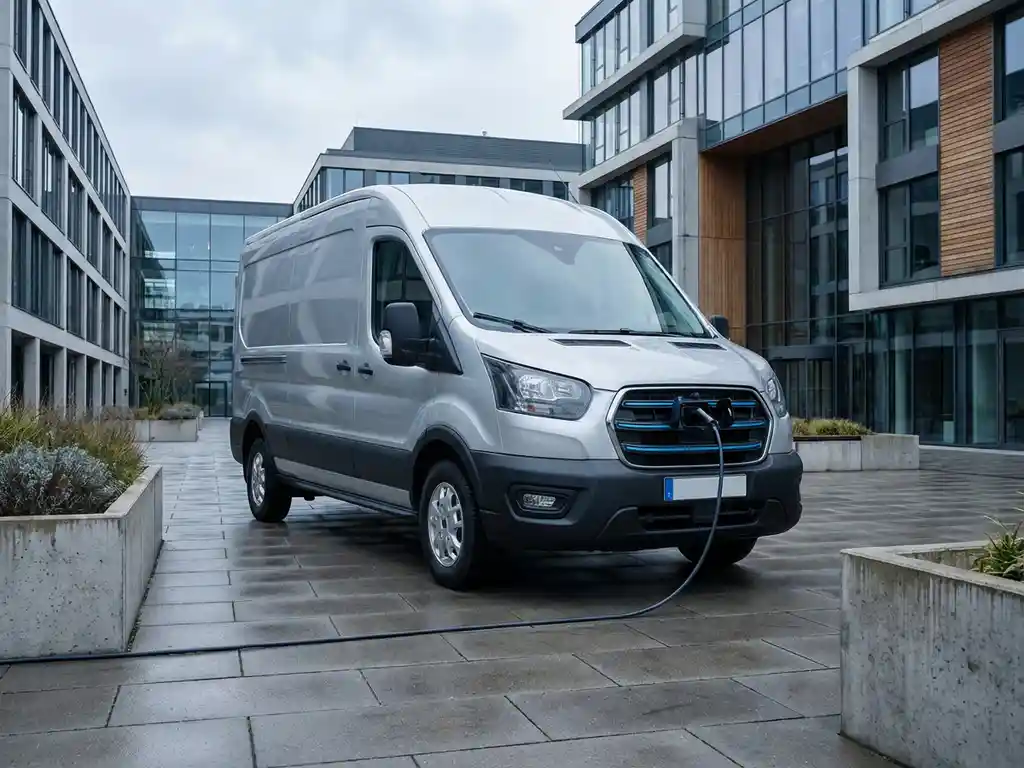
- Electric van (new): 40,000 to 65,000 euros, depending on the model
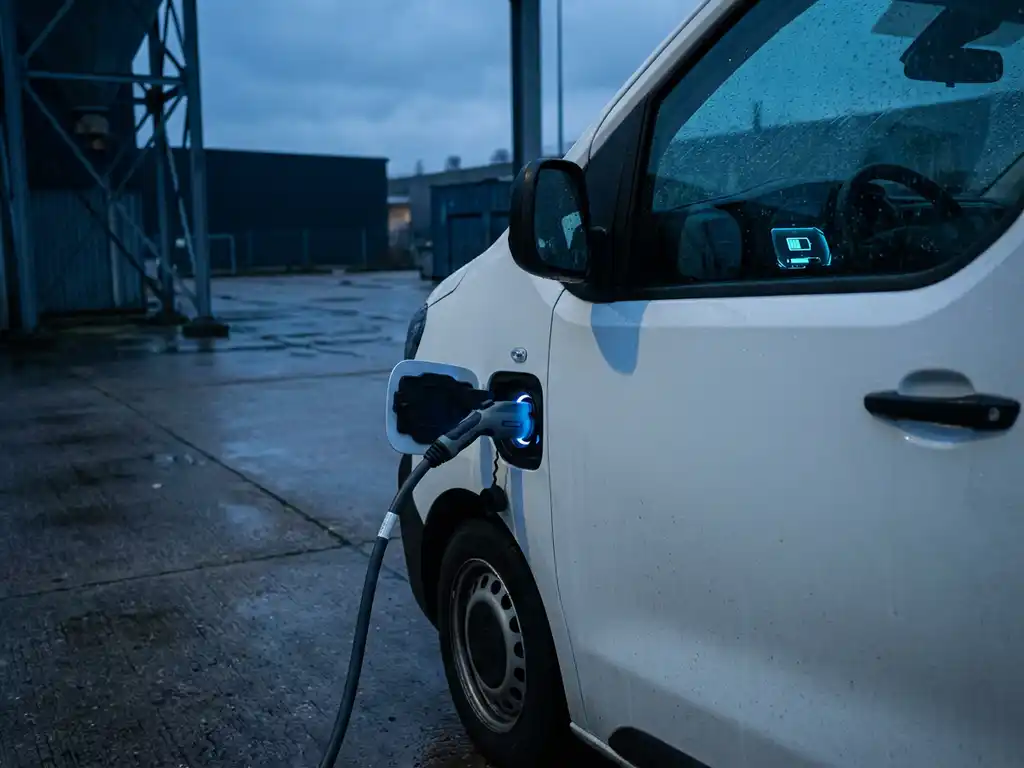
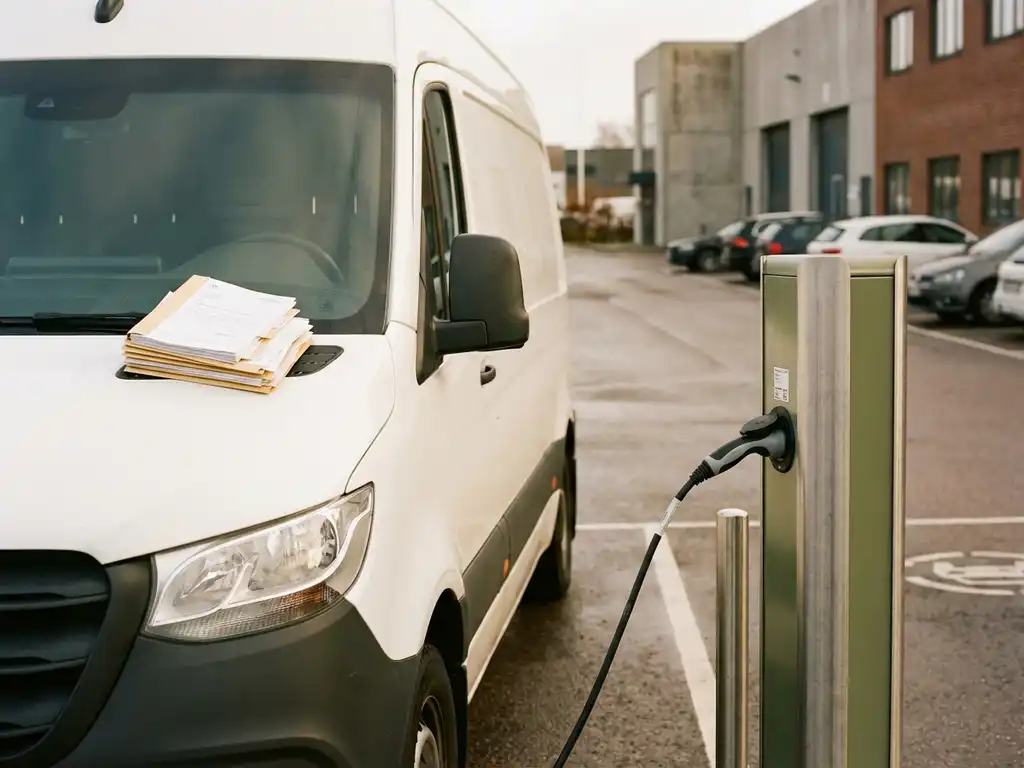
Leasing an electric commercial vehicle is becoming increasingly popular as an alternative to buying. With an operational lease, you pay a fixed monthly amount, and maintenance and insurance are often included. This significantly lowers the barrier to driving an electric vehicle, particularly for SMEs that wish to spread the high purchase price of an electric van over time.
Costs of a company minibus
Commercial vans are generally more expensive than comparable delivery vans due to their more complex layout and larger size. Guide prices:
- Second-hand minibus or commercial van: From 15,000 to 35,000 euros
- New double-cab company van: 40,000 to 70,000 euros
- Special-purpose vehicles (wheelchair-accessible bus, care bus): Can amount to 100,000 euros or more
As well as the purchase price or lease term, you should also take into account insurance, road tax and maintenance. Insurance costs may be higher for commercial vans with more seats. You should therefore always compare the total running costs, not just the purchase price.
How we can help you choose between a delivery van and a people carrier
The choice between a delivery van and a people carrier isn’t always black and white. It depends on the nature of your work, the number of people you carry, the required load capacity and your budget. We’d be happy to help you weigh up your options, drawing on over 60 years’ experience with commercial vehicles in the Helmond and North Brabant region.
What we can do for you:
- Personalised advice based on your business activities and day-to-day use
- A wide range of used and new vans and commercial buses, including electric vehicles, wheelchair-accessible buses and refrigerated vans
- Flexible financing options, including operational leases for electric commercial vehicles
- Help with finding a small delivery van to buy or a double-cab commercial van via our stock alert service
- Transparent prices with no hidden costs
Want to know which vehicle best suits your situation? Contact us or take a look at our current offer. We are happy to think with you.