
What are the most popular electric commercial vehicles available for lease in the Netherlands?
Electric commercial vehicles have become an integral part of Dutch business transport. More and more business owners, self-employed professionals and fleet managers are opting for electric vehicles, and leasing is a popular way to lower the barrier to entry whilst maintaining flexibility. But which models are currently the most popular for leasing, what are the benefits, and what should you look out for?
In this article, we answer the most frequently asked questions about electric commercial vehicle lease in the Netherlands. Whether you’re looking for a small van, a double-cab commercial van or a larger electric van, you’ll find clear answers here to help you make the right choice.
What are electric commercial vehicles and why are they popular?
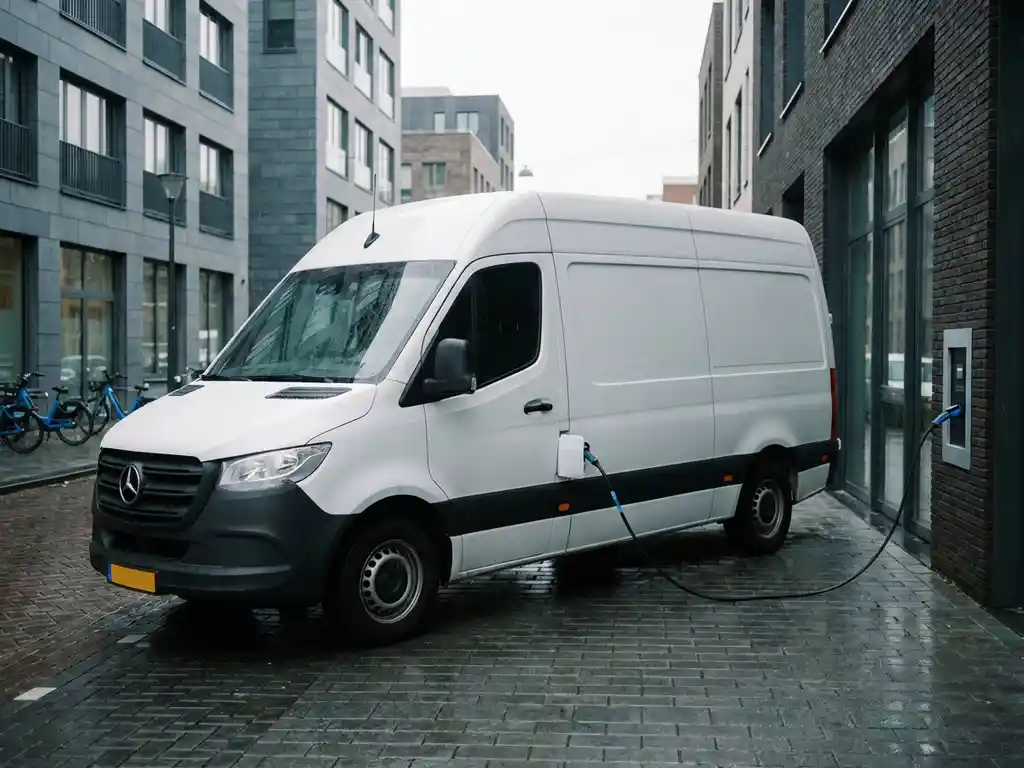
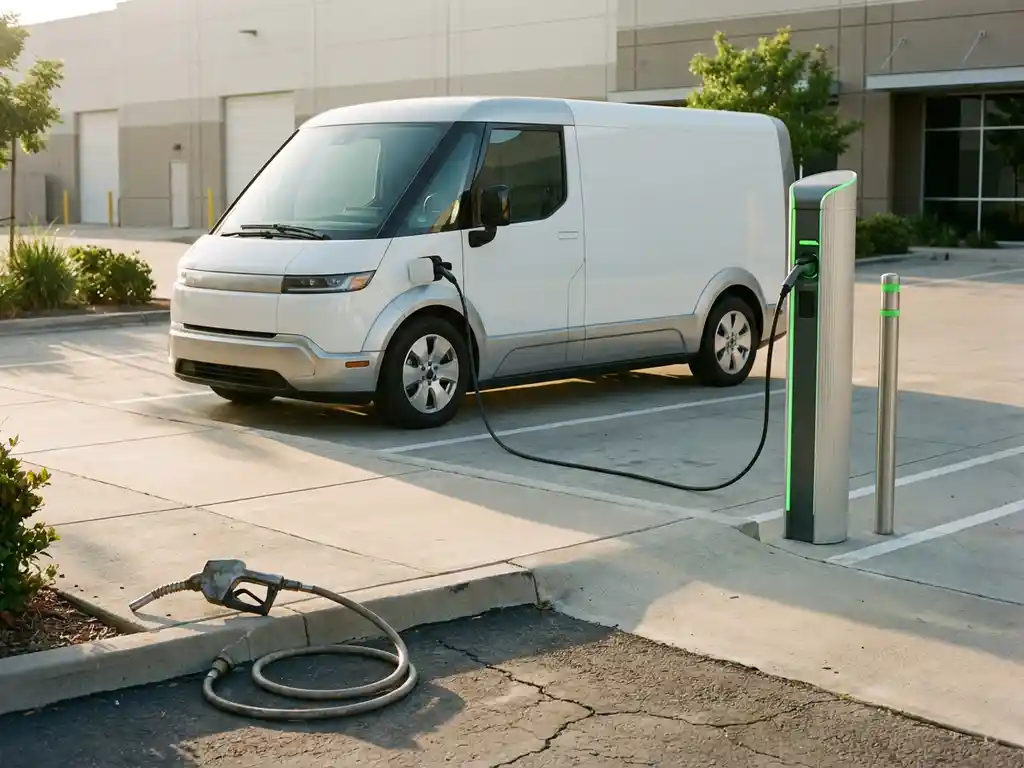
Electric commercial vehicles are vehicles that run entirely on an electric powertrain and are specially designed or fitted out for business use. These include vans, small lorries, double-cab commercial vans and specialised vehicles such as refrigerated lorries. They produce zero emissions, are quieter than diesel vehicles and have lower running costs per kilometre.
The popularity of electric commercial vehicles is growing for several specific reasons. Firstly, more and more city centres and logistics zones in the Netherlands are being designated as zero-emission zones, where only zero-emission vehicles are permitted. Companies that make the switch now will not face future access restrictions. Secondly, running costs for electric vehicles are consistently lower than for diesel or petrol vehicles, which quickly makes a noticeable difference to business operations when used intensively.
Who is opting for electric company cars?
Electric commercial vehicles are relevant to a wide range of businesses. Courier services and parcel delivery companies benefit from the low cost per kilometre in urban areas. Construction firms and installers working in city centres benefit from access to zero-emission zones. Healthcare transport providers and local authority services are opting for electric vehicles because of their quiet operation and sustainable image. And fleet managers at larger organisations are actively working to reduce CO₂ emissions across their fleets.
Which electric commercial vehicles are the most commonly leased in the Netherlands?
The most frequently leased electric commercial vehicles In the Netherlands, these include the Volkswagen ID. Buzz Cargo, the Ford E-Transit, the Mercedes-Benz eSprinter, the Renault Kangoo E-Tech and the Citroën ë-Berlingo. In the small van segment, many business owners also buy or lease the Peugeot e-Partner and its Stellantis counterparts. The choice depends heavily on the required payload, driving range and intended use.
Small electric vans
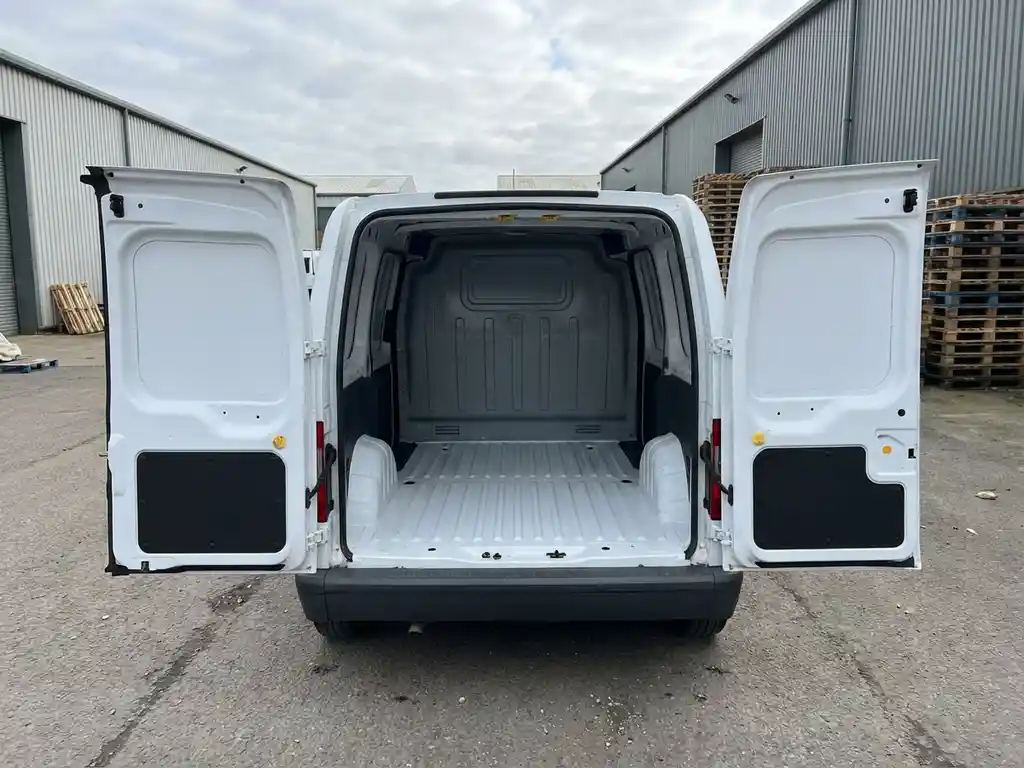
In the small van category, the Renault Kangoo E-Tech, Peugeot e-Partner, Citroën ë-Berlingo and Opel Combo Electric are popular choices. They offer a practical payload of around 600 to 800 kilograms, a range of 275 to 330 kilometres and are compact enough for city driving. For self-employed people and small businesses that drive in and around the city on a daily basis, these are attractive options.
Medium-sized and large electric vans
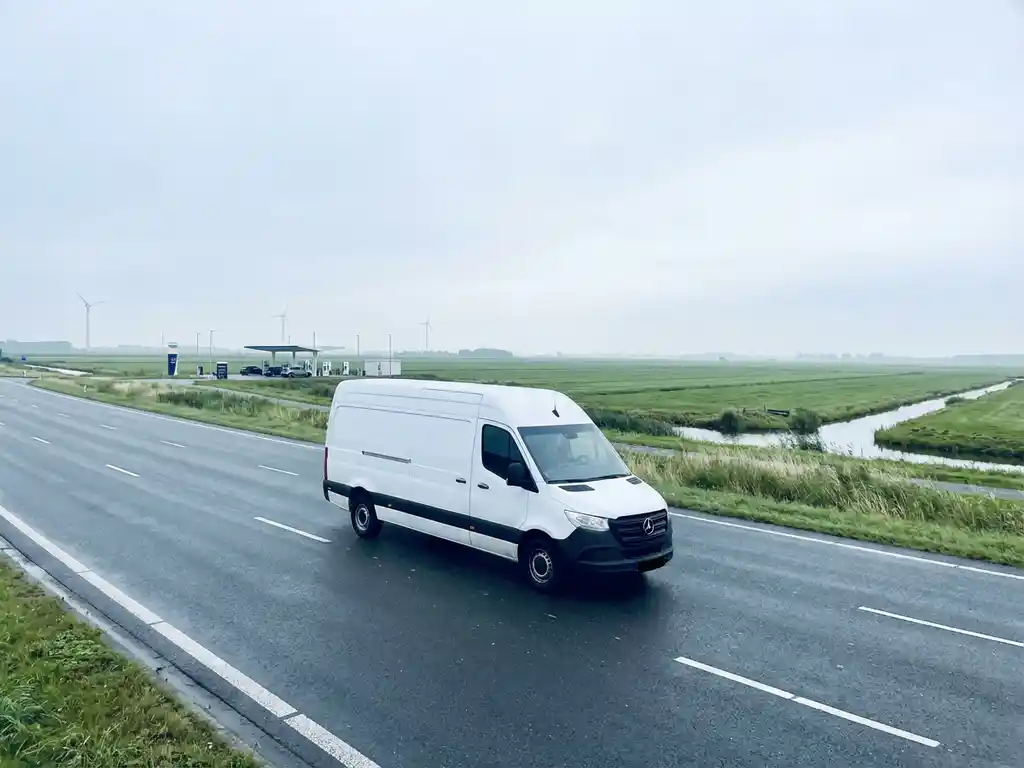
For heavier work, the Ford E-Transit, Mercedes-Benz eSprinter and Volkswagen ID. Buzz Cargo are in high demand. The Ford E-Transit is available in several body styles, including double-cab versions. The Mercedes eSprinter offers a large load capacity and is suitable for businesses with higher loading requirements. The Volkswagen ID. Buzz Cargo combines a modern design with a range of over 400 kilometres, making it attractive to fleet managers who value a professional image.
Electric company minibus with a double cab
The double-cab van The electric vehicle segment is still relatively small, but is growing rapidly. The Ford E-Transit Custom Double Cab and the Volkswagen ID. Buzz are relevant options here. They offer space for several people and a load compartment, making them useful for construction crews, installation firms and service providers.
What are the advantages of leasing electric commercial vehicles rather than buying them?
Leasing electric commercial vehicles has the advantage over buying in that you don’t have to make a large upfront investment, you always drive a modern vehicle, and maintenance costs are often included. Leasing gives you predictable monthly payments and protects you against the vehicle’s depreciation, which is particularly relevant for electric cars as the technology is evolving rapidly.
With an operating lease, you pay a fixed monthly fee that includes maintenance, insurance and, in some cases, a charging card. This makes budgeting easier. What’s more, you don’t have to worry about the residual value at the end of the lease term: that risk lies with the leasing company. For businesses that prefer to use their capital for their core activities, leasing is therefore a logical choice.
Finance lease versus operating lease
With a finance lease, you finance the vehicle and eventually become the owner. Whilst you benefit from tax depreciation allowances, you also bear the residual value and maintenance risks. An operational lease is more like a long-term hire agreement: you drive the vehicle, but do not own it. For most SMEs, an operational lease is the most practical choice because of its simplicity and the fact that it takes all the hassle off your hands.
What subsidies and tax benefits apply to electric company lease cars?
There are several tax benefits for electric company lease cars in the Netherlands. The additional tax liability for fully electric vehicles is lower than for fossil-fuel alternatives, and as a business owner you can gain additional tax benefits through the MIA and VAMIL schemes. In addition, there are local subsidies and schemes offered by local authorities and provincial councils to encourage the use of electric vehicles for business purposes.
MIA and VAMIL
The Environmental Investment Allowance (MIA) and the Voluntary Depreciation Scheme for Environmental Investments (VAMIL) are two schemes that you, as a business owner, can use when purchasing or leasing electric company cars. Under the MIA, you can deduct a percentage of the investment costs from your taxable profit, in addition to the standard deduction. VAMIL gives you the freedom to choose when to depreciate the vehicle, which provides a liquidity benefit. Both schemes apply if the vehicle is included on the Environmental List.
Taxable benefit for electric company cars
A reduced additional tax liability applies to electric passenger cars. Different rules apply to vans classified as delivery vans: these are often excluded from the additional tax liability scheme if they are used exclusively for business purposes. It is advisable to have this checked by a tax adviser on a vehicle-by-vehicle and case-by-case basis, as the rules may vary depending on the vehicle category.
Subsidy for electric company cars (SEBA)
The SEBA grant is specifically intended for the purchase or lease of electric delivery vans by business owners. The scheme has an annual budget and operates on a first-come, first-served basis. It is therefore advisable to check in good time whether funding is still available and whether your vehicle and circumstances are eligible.
What should you look out for when leasing an electric company car?
When leasing an electric company car, you should consider the driving range in relation to your daily routes, the charging infrastructure at and around your business premises, the vehicle’s charging time, and the terms of the lease agreement, such as mileage limits and maintenance. Misjudging the range or charging options can cause problems in practice.
Driving range and everyday use
The stated range of an electric commercial vehicle is based on test conditions. In practice, particularly in cold weather, at high speeds or when driving with a heavy load, the range will be lower. Carefully assess your daily driving pattern: how many kilometres do you drive on average each day, and are there times when you can top up the charge? If you drive more than 200 kilometres a day without access to a charging point, opt for a vehicle with a larger battery pack.
Charging infrastructure
Check whether you can install a charging point at home or at your business premises. Charging at home using a wallbox is the most practical and cheapest way to charge. Public fast chargers are useful when you’re on the move, but are more expensive per kWh. Some lease packages include a charging card or charging solution as part of the contract, which makes management easier.
Lease agreement and terms and conditions
Pay close attention to the mileage limit in your lease contract. If you drive more than agreed, you’ll have to pay a charge for excess mileage. Also check what’s included in the maintenance package: does this cover battery maintenance? What are the terms and conditions in the event of damage? And is a replacement vehicle available whilst your car is being serviced? These are practical questions that will help you avoid any surprises.
How do you find the best electric company car on a lease for your business?
You can find the best electric company car for your business by first assessing your daily usage: how many kilometres do you drive, what do you transport, and in what kind of environment do you work? Then compare models based on range, load capacity and lease price, and request quotes from several providers. Don’t be guided solely by the lowest monthly price; instead, look at the total costs over the lease term.
Start by taking an honest look at your driving habits. If you mainly drive in town, a small van with a range of 250 to 300 kilometres will suffice. If you work at different locations or regularly make longer journeys, you’ll need a vehicle with a larger battery pack and fast-charging capability. Also consider practical matters such as the number of seats: a double-cab commercial van offers greater flexibility if you need to carry staff as well.
Don’t just compare on price
A low monthly lease payment is attractive, but it doesn’t tell the whole story. You should also consider the residual value assessment, the terms of service, the response time in the event of a breakdown, and the option to amend the contract part-way through. Flexibility is useful for growing businesses that want to expand or adapt their fleet quickly.
How we help you lease an electric company car
We understand that choosing an electric lease commercial vehicle raises many questions. At Van den Hurk Commercial Vehicles, we’re here to provide you with practical guidance. With over 60 years’ experience in commercial vehicles and a wide range of stock, including electric vehicles, we’ll work with you to find the best solution for your business.
Here’s what we do for you:
- Personalised advice based on your daily usage and driving habits
- A wide range of electric commercial vehicles, from small vans to double-cab commercial buses
- Flexible leasing and purchase options, tailored to your situation
- Support in applying for grants and tax benefits
- A handy stock alert service, so you are the first to know about new arrivals
Would you like to find out which electric commercial vehicle is best suited to your business? Please get in touch with us or take a look at our current offer. We are happy to help.