
What are the disadvantages of leasing electric company cars?
Leasing an electric company car sounds appealing: lower tax liability, zero emissions and a modern image for your business. But before you sign on the dotted line, it’s wise to fully understand the downsides as well. After all, electric driving isn’t the right fit for every business owner, and a lease contract ties you to a vehicle – and a particular driving style – for several years.
In this article, we answer the most frequently asked questions about the drawbacks of leasing electric company cars. From higher costs to charging issues and limited range: we give you an honest explanation of what to expect, so that you can make an informed choice.
Why is leasing an electric company car more expensive than one powered by fossil fuels?
In most cases, leasing an electric commercial vehicle is more expensive than leasing a comparable diesel or petrol van, as the purchase price of electric vehicles is higher. That higher list price translates directly into a higher monthly lease payment, regardless of the tax benefits you might receive in return.
The battery packs that power electric commercial vehicles remain a costly component of the vehicle. Manufacturers factor these additional costs into the retail price, and leasing companies base their rates on that price. Even with an operational lease, where you return the vehicle at the end of the contract, your monthly instalments contribute towards the depreciation of a more expensive vehicle.
Tax benefits do not always fully offset the costs
The lower additional tax liability for electric cars is a well-known benefit, but for company cars used entirely for business purposes, this additional tax liability often plays a lesser role. Furthermore, tax incentives for electric driving are being phased out gradually. What seems like an attractive tax benefit today may turn out to be less favourable in two or three years’ time, whilst your lease contract is still running.
Add to that any costs for charging infrastructure, and in practice the total running costs of an electric company car are by no means always lower than those of a fossil-fuelled alternative. It is therefore wise to calculate the total cost over the entire lifespan before making a decision.
How far can an electric commercial vehicle travel on a single charge?
Under ideal conditions, most electric commercial vehicles can travel between 200 and 350 kilometres on a single full charge. In practice—with a fully loaded vehicle, in cold weather or when the heating and electronics are used intensively—that range can be considerably lower, sometimes by as much as 30 to 40 per cent.
This is one of the most tangible drawbacks for business owners who travel long distances every day or make multiple journeys without a fixed base. A courier company, an engineer travelling from customer to customer, or a healthcare professional with a busy schedule can quickly reach the limits of the battery pack.
Weight and load have a significant impact on range
At a company bus with double cabin or a more heavily laden van, the driving range decreases particularly quickly. After all, the battery has to power a heavier load, which directly reduces efficiency. Manufacturers usually test the driving range under optimal conditions with an empty vehicle, but in everyday business practice, such conditions are rarely met.
Please also bear in mind that a battery’s driving range decreases over the years. After three to five years of intensive use, the capacity may have decreased noticeably, which means that by the end of a lease contract, you will be driving with a shorter range than at the start.
What are the risks associated with charging infrastructure for businesses?
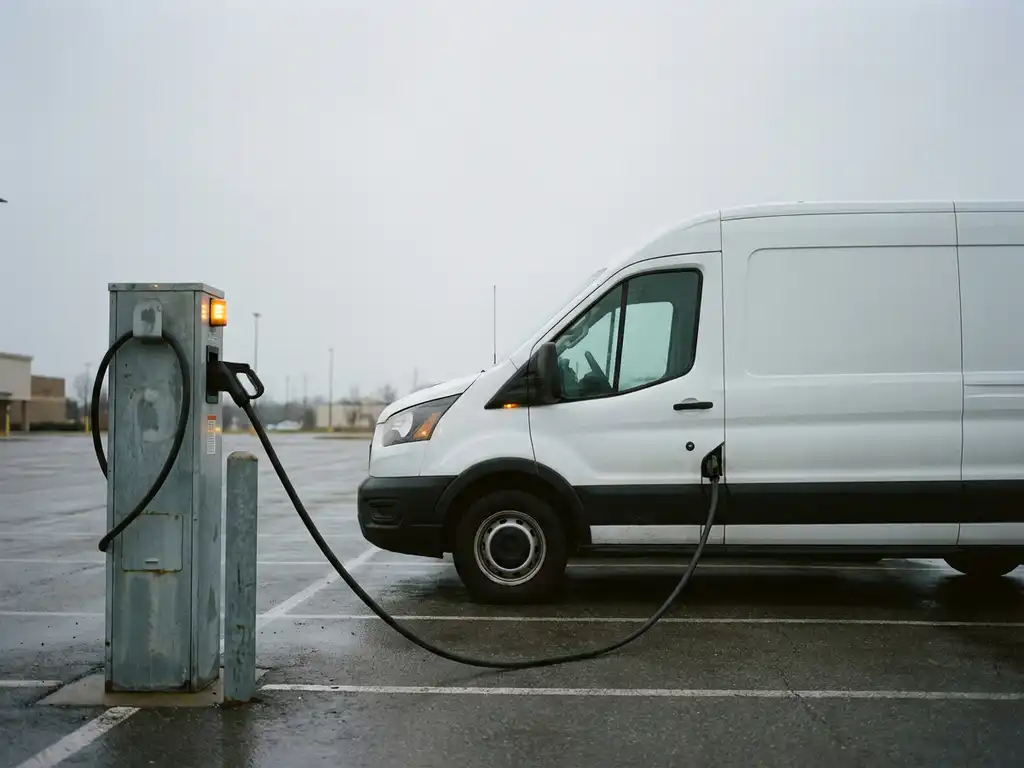
The availability of charging infrastructure is one of the biggest practical risks associated with leasing electric company cars. If you don’t have your own charging point at your business premises, you’re reliant on public charging points, and these aren’t always reliable, fast or available when you need them.
For businesses that set off early and return late, overnight charging on their own premises is the most logical solution. However, installing a charging point involves additional investment costs: a charging point, a higher-capacity mains connection and, in some cases, modifications to the business premises. These costs are not covered by the lease agreement and are entirely at your expense.
Problems with public charging
Public charging points aren’t always available when you need them. Malfunctions, occupied spaces or charging points that aren’t compatible with your vehicle can cause unexpected delays. For a business owner with a tight schedule, these are not just minor annoyances, but real risks to business operations.
Fast charging is an option when you’re on the move, but it too has its limitations. Not every electric commercial vehicle supports high charging capacities, and frequent fast charging can accelerate battery wear and tear. This is important to bear in mind, as with a lease, you may be liable for any additional wear and tear at the end of the contract.
Dependence on energy prices
Electric driving is often presented as cheaper than driving on fossil fuels, but energy prices can fluctuate. Businesses that charge via the public grid or at their premises using dynamic energy contracts may face higher charging costs than expected. This makes calculating running costs less predictable than with a diesel van.
Is an electric company car lease suitable for every business owner?
Leasing electric commercial vehicles is not suitable for every business owner. It is best suited to companies with predictable, relatively short daily routes, a fixed charging point on their own premises, and a business profile where the limited driving range does not pose an operational risk.
For a self-employed person who works locally and charges their van at home in the evening, electric leasing can work very well. But for a logistics company that drives hundreds of kilometres every day, employs several drivers and relies on short charging times, the practical drawbacks quickly outweigh the benefits.
When does it actually fit properly?
Electric commercial vehicle leasing works well provided the following conditions are met:
- You drive less than 150 to 200 kilometres a day.
- You have a dedicated charging point at your business premises or at home.
- You work in a sector where a green image offers a commercial advantage.
- You’ll mainly be driving in urban areas or on short regional journeys.
- You don’t need to load the vehicle heavily every time you drive it.
If you do not meet several of these criteria, it is advisable to give serious consideration to a fossil-fuelled or hybrid option before signing a lease agreement.
What if you’re looking for a small van?
For entrepreneurs looking for a small van For light urban use, leasing an electric vehicle may be an attractive option. In this category, the driving range is often sufficient for a working day, and the charging infrastructure in towns and cities is generally more readily available. However, the same applies here: calculate your total costs realistically and take the vehicle’s specifications into account.
When is a fossil-fuelled or hybrid company car the better choice?
A fossil-fuelled or hybrid company car is a better choice if you regularly drive long distances, have little control over your charging options, or if the longer lease term for an electric vehicle does not fit within your monthly budget. In such cases, diesel and hybrid vehicles offer greater flexibility and predictability.
A diesel van has a longer range, can be refuelled in a matter of minutes and is less dependent on infrastructure. For businesses in the construction, transport or logistics sectors that carry heavy loads or operate on irregular routes, diesel remains the most practical choice in many situations. That may change as the charging infrastructure improves and battery technology becomes cheaper, but for now it is a valid consideration.
Hybrid as an interim solution
A hybrid commercial vehicle combines an internal combustion engine with an electric powertrain, offering greater flexibility. You benefit from lower fuel costs on city journeys and short trips, but you don’t have to worry about range anxiety on longer journeys. For business owners torn between fully electric and fossil-fuelled vehicles, a hybrid can be a sensible intermediate step.
Please note: hybrid vehicles also have their limitations. The electric range of a plug-in hybrid is usually limited to between 50 and 80 kilometres, and if you don’t recharge the battery regularly, you’re effectively driving a heavier fossil-fuel vehicle. That makes the benefit less significant than it seems.
How we help you choose the right commercial vehicle
Choosing between an electric lease and a fossil-fuelled or hybrid company car isn’t always straightforward. It depends on your driving habits, your budget, your charging options and the nature of your work. We’re here to help you weigh up the options in a practical way, without getting bogged down in technical specifications or unclear lease terms.
What we can do for you:
- Honest advice on which type of commercial vehicle suits your usage profile
- A wide range of new and used commercial vehicles, including electric vehicles, hybrids and diesel vans
- Flexible leasing and purchase options, tailored to your business needs
- Personalised support from the initial consultation through to delivery
- Specific vehicles, such as a double-cab van or specialised vehicles for healthcare and transport
Would you like to find out which commercial vehicle is best suited to your situation? Please get in touch with us or take a look at our current offer on the website. We’d be happy to discuss this with you, with no obligation.