
How many people can fit in a double-cab company van?
A double-cab commercial van is a smart choice for many business owners: you can transport both your staff and your equipment in a single vehicle. But how many people can actually fit in such a van, and when should you opt for a double cab rather than a single cab? In this article, we answer the most frequently asked questions about double-cab commercial vans, so you know exactly what to expect.
Whether you’re looking to buy a small van, considering leasing an electric commercial vehicle, or simply want to know what options are available: you’ll find a clear overview here.
What is a double cab company bus?
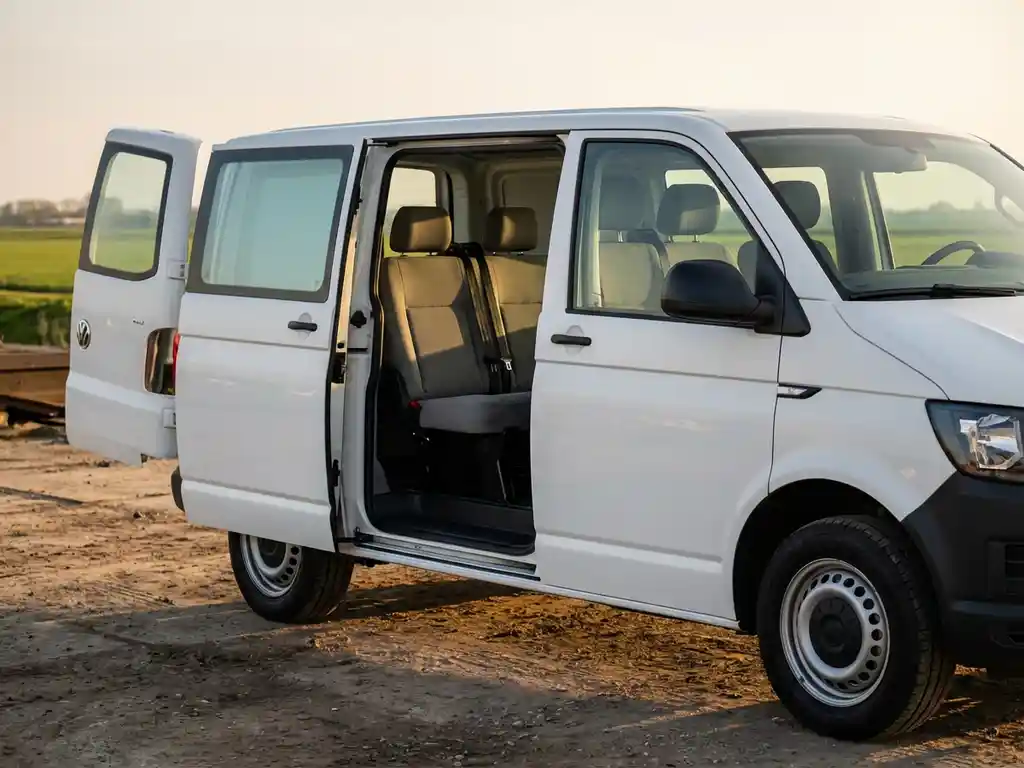
A double-cab commercial van is a van or light goods vehicle in which the cab has been extended to include an additional row of seats behind the driver. This means the vehicle can accommodate several passengers, whilst still retaining a load compartment or open cargo area behind the cab.
The term “double cab” therefore literally refers to the double row of seats in the front section of the vehicle. This distinguishes it from a standard van, where the space behind the driver merges directly into the load area. A double cab combines the best of both worlds: passenger transport and goods transport in a single vehicle.
This type of commercial vehicle is popular in sectors such as construction, installation and landscaping, and among companies that transport several employees to a site every day. The double cabin It makes it possible to transport an entire team together without the need for a separate car.
How many people fit in a double cabin?
A double-cab commercial van usually seats five to six people, including the driver. The standard layout consists of two or three seats in the front row and two or three seats in the rear row, depending on the model and specification.
The most common layout is a 2+3 or 3+3 configuration. In a 2+3 layout, the driver sits next to one front passenger, with three seats in the rear. In a 3+3 layout, there are three seats at the front, including the driver, and three at the rear. This gives a total of six seats.
Have all the seats been type-approved?
Yes, in an official double-cab vehicle, all seats are legally approved and fitted with seatbelts. This is an important point if you’re transporting staff: everyone must be able to travel safely and legally. When purchasing a vehicle, always check the registration certificate to see how many seats are officially registered.
What if you want to carry more people?
If you need to transport more than six people, you’ll soon find yourself looking at minibuses or wheelchair-accessible vehicles. These vehicles are subject to different regulations and are specifically designed for passenger transport. For six people or fewer, a double-cab pick-up is, in most cases, the most practical and cost-effective solution.
Which commercial vans are available with a double cab?
Most major brands in the light commercial vehicle segment offer a double-cab variant. Well-known models include the Volkswagen Transporter, Ford Transit, Mercedes-Benz Sprinter, Renault Trafic, Peugeot Expert and Citroën Jumpy. All these models are available in a double-cab version, often referred to as “DC” or “Double Cab” in the specifications.
The choice of a specific make or model depends on several factors: the required load capacity, the desired engine power, the type of fuel and the budget. Some models are available as standard with a double cab; for others, this is a special specification that must be ordered or sourced separately.
Are there any electric models with a double cab?
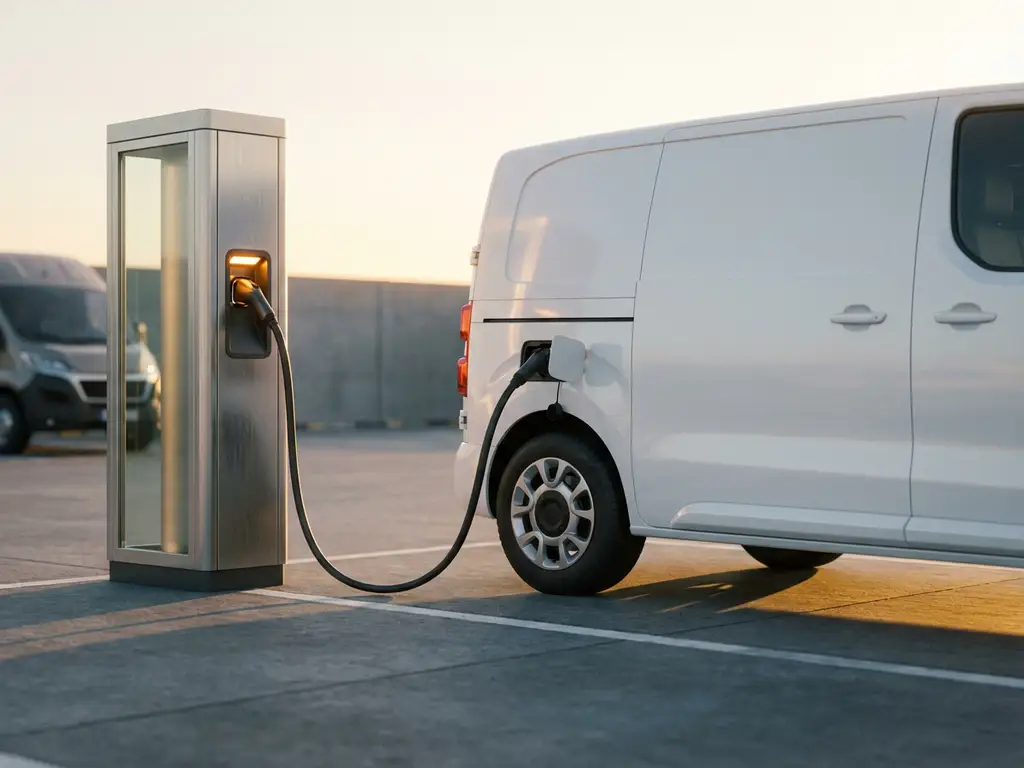
Yes, the range of electric commercial vehicles The market for double-cab vehicles is growing. Brands such as Volkswagen, Ford and Renault now offer electric models in their commercial vehicle ranges. This is a significant development for businesses considering leasing an electric commercial vehicle, particularly given the tax benefits and lower fuel costs in the long term.
The range of electric double-cab pick-ups varies by model and has improved significantly in recent years. For urban use or fixed daily routes, an electric double-cab pick-up is already a viable option in many cases.
What is the difference between a single-cab and a double-cab?
The main difference between a single-cab and a double-cab is the number of seats and the layout of the space. A single-cab can accommodate two to three people and has a maximum load space behind the cab. A double-cab can accommodate five to six people, but as a result has a shorter or smaller load space.
This is a decision you need to make carefully. In a single-cab model, the focus is on goods transport: the entire length behind the driver is available for cargo. In a double-cab model, you sacrifice some of that space for the extra seats.
What is the difference in load capacity?
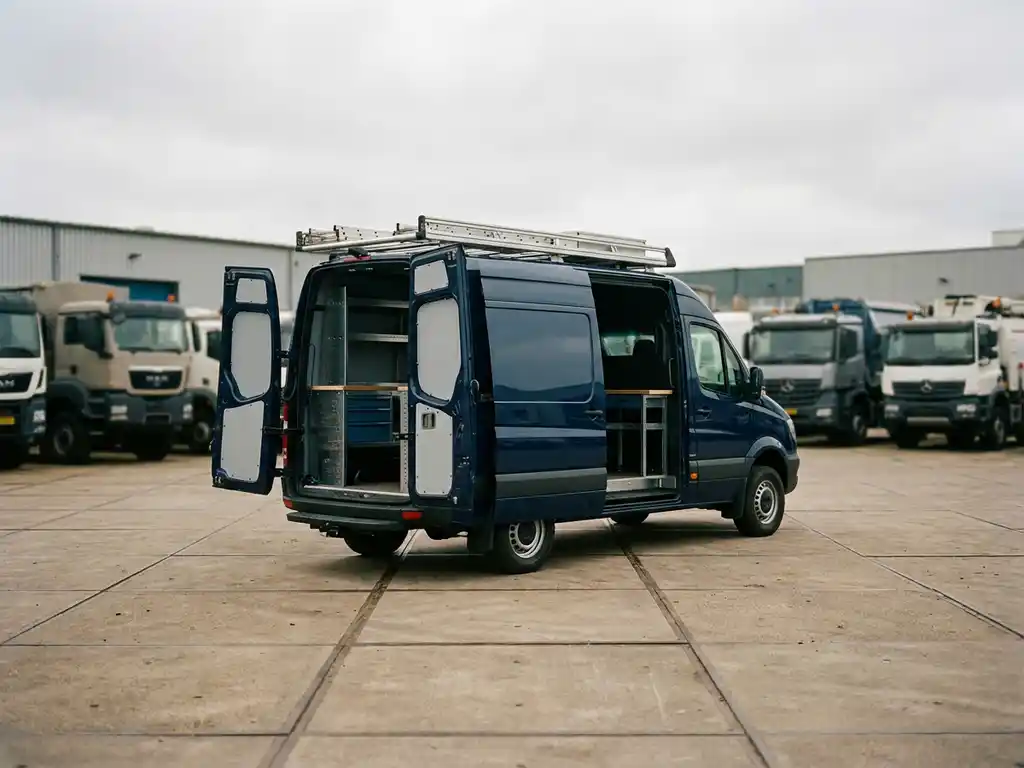
The load space in a double-cab model is smaller than in a comparable single-cab model. Depending on the model, the load area behind the double cab can be considerably shorter. For vans with an enclosed load area, this means fewer cubic metres; for those with an open load bed, the load floor is shorter.
If you want to transport both a large number of people and a lot of equipment, it is a good idea to compare the exact load dimensions for each model. Some manufacturers also offer what is known as a “double cab with a sliding partition”, which allows for flexible use of the space.
Are there any intermediate forms as well?
Yes, in addition to the single and double cabs, there is also what is known as the “extra cab” or “crew cab light”. This is an intermediate variant in which the rear row offers slightly less space than in a full double cab. This version is less common, but can be a useful option if you occasionally carry extra passengers without sacrificing too much load space.
When is a double cab the best choice?
A double-cab pick-up is the best choice if you regularly drive several staff members to a work site together and need to carry equipment or tools. In this case, the vehicle replaces both a car and a van, which helps to keep costs down.
Typical situations where a double cab is a good choice:
- Construction companies that drive a team of four to six people to a building site every day
- Installation companies that transport both staff and materials together
- Landscaping companies with a team and the necessary equipment
- Self-employed people or small businesses who occasionally bring clients or colleagues along
- Companies wishing to streamline their vehicle fleets by consolidating vehicles
A double cab is less suitable if your main priority is transporting large volumes of goods and you rarely carry more than two people. In that case, a single cab is more efficient and cheaper to buy.
Buying or leasing: which is the smarter option?
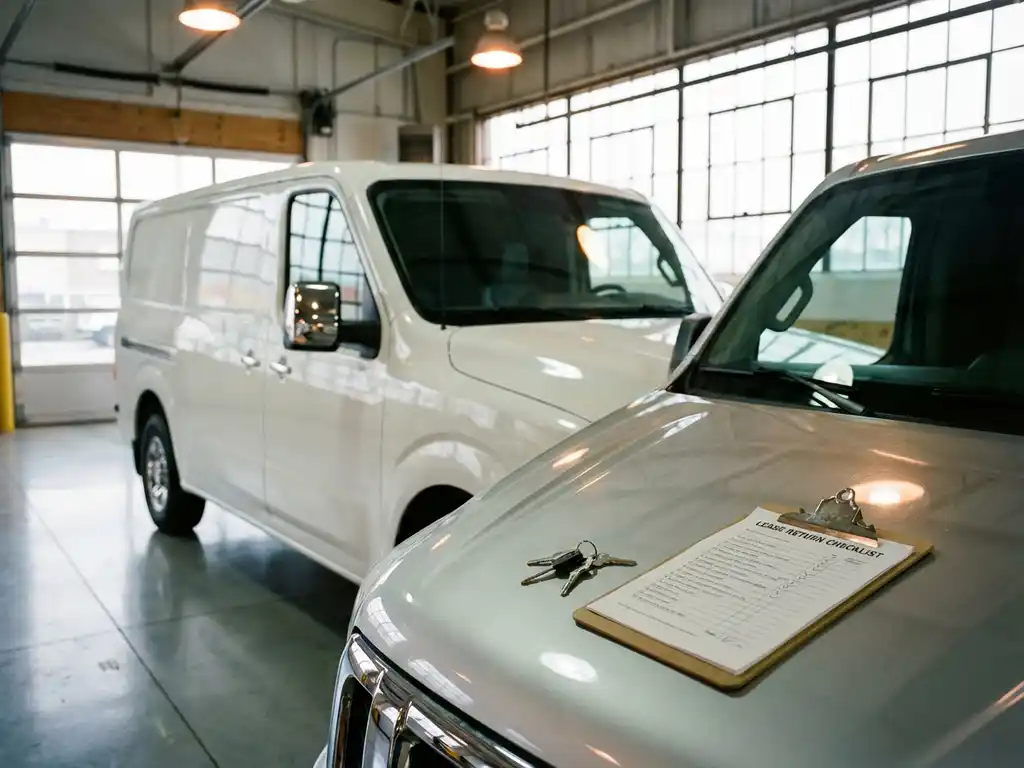
Whether you buy a small van or opt to lease an electric commercial vehicle depends on your circumstances. Leasing offers a fixed monthly cost without a large upfront investment, which is attractive to many SMEs and self-employed people. Buying offers greater flexibility and ownership, but requires a higher initial outlay. Both options have tax advantages and disadvantages, which are best discussed with an adviser.
How we help you choose the right company bus
At Van den Hurk Commercial Vehicles, we’re happy to help you find the right double-cab commercial van, tailored to your work and budget. With over 60 years’ experience in the Helmond and North Brabant region, we know the market inside out.
Here's what we can do for you:
- Personalised advice on which model and cabin layout best suits your situation
- A wide range of used and new commercial vehicles, including double-cab models
- Flexible leasing options for both conventional and electric commercial vehicles
- Transparent prices with no hidden costs
- Support from advice right through to delivery, so you can get on the road quickly
Would you like to know which double-cab commercial vans are currently available? Please get in touch with us or take a look at our current offer on the website. We are happy to think with you.