
Can you buy a small van with financing?
Buying a small van is a big step for many entrepreneurs and sole traders. You want the right car for your job, but you also don't want to take a large sum out of your company's coffers all at once. Fortunately, there are several ways to finance a small van, so you spread the cost and keep your cash flow healthy. In this article, we answer the most frequently asked questions about financing a small van, from the basics to choosing between leasing and buying.
Whether you are looking for a compact van for small deliveries, a double-cab van for your team, or even want to lease an electric company car: financing opens doors that would otherwise remain closed. We explain step by step what to expect.
What is financing for a small van?
Financing for a small van is an arrangement where you pay the purchase price of the vehicle not in one lump sum, but in instalments spread over an agreed period. You drive the van immediately, while paying off the cost monthly through a loan, hire purchase or a lease form.
For entrepreneurs, this is a practical solution as your working capital remains available for other business expenses. Instead of a large one-off investment, you plan the expense ahead and know exactly what you will spend each month. This makes it easier to budget and grow without one purchase putting pressure on your finances.
Financing is not only available for new vehicles. In many cases, you can also get a financing arrangement when buying a used small van, provided the vehicle meets certain age and mileage criteria.
What forms of financing are there for a van?
There are four common forms for financing a van: a business car loan, hire purchase, financial lease and operational lease. Each form has different implications for ownership, tax and monthly costs, so the best choice depends on your situation and requirements.
Corporate car loan
With a business car loan, you borrow an amount from a bank or lender and pay it back in fixed monthly instalments. You own the van directly. This gives you the most freedom, but also means you bear the full risk of depreciation. The interest is tax-deductible as a business expense.
Hire purchase
Hire purchase works similar to a loan, but you only become the legal owner of the van after you have paid the final instalment. During the term, the car is in the financier's name. This offers the lender more security, which sometimes makes hire purchase easier to obtain for start-ups.
Financial lease
With financial leasing, you pay a fixed monthly amount for the use of the van, where you can take over the car at the end of the term for a residual value. You carry beneficial ownership and are responsible for maintenance and insurance. The car is on your balance sheet, which can have tax advantages.
Operational lease
Operational lease is an all-in-one solution where you pay a fixed monthly price that includes maintenance, insurance and sometimes tyres. You never own the van. At the end of the contract, you hand in the car. This is popular with companies that don't want the hassle of management and always want to drive an up-to-date vehicle. For leasing a electric company car operational lease is a widely chosen option because of its predictable monthly costs.
What are the conditions for van financing?
The terms for financing a van vary from provider to provider, but there are some standard criteria to consider. Consider your business status, creditworthiness, the age of the vehicle and the term of the contract.
Company status and creditworthiness
Financiers want to know whether you as an entrepreneur can bear the monthly expenses. They look at your income, any debts and how long your business has been operating. Start-ups sometimes find it harder to get financing, but there are providers that specifically target SMEs and the self-employed segment.
Age and mileage of the van
With used vehicles, lenders often put a cap on age and mileage. A small van up to five to seven years old with reasonable mileage is still financeable in most cases. Older vehicles or those with high mileage are sometimes considered too risky, although this varies from provider to provider.
Down payment and own contribution
Some forms of financing require a down payment, also known as an equity contribution. This lowers the amount to be financed and therefore your monthly expenses. A down payment of ten to twenty per cent is common, but not always mandatory. With hire purchase and financial lease, a down payment is more often standard than with operational lease.
What does financing a small van cost per month?
The monthly cost of financing a small van depends on the purchase price, the term, the interest rate and the residual value, if any. As a rough guide, for a small van of around €15,000 to €25,000, you can expect monthly costs of between €250 and €550 for a 48- to 60-month term, depending on the type of financing chosen.
Factors determining the monthly price
- Purchase price: The higher the price of the van, the higher the monthly payments.
- Duration: A longer maturity lowers the monthly cost but increases the total interest cost.
- Interest: The interest rate varies between providers and depends on your credit profile.
- Residual value: With leasing, a residual value is built in. The higher the residual value, the lower the monthly charge.
- Down payment: A higher down payment immediately reduces the amount to be financed.
Electric van: higher purchase price, lower running costs
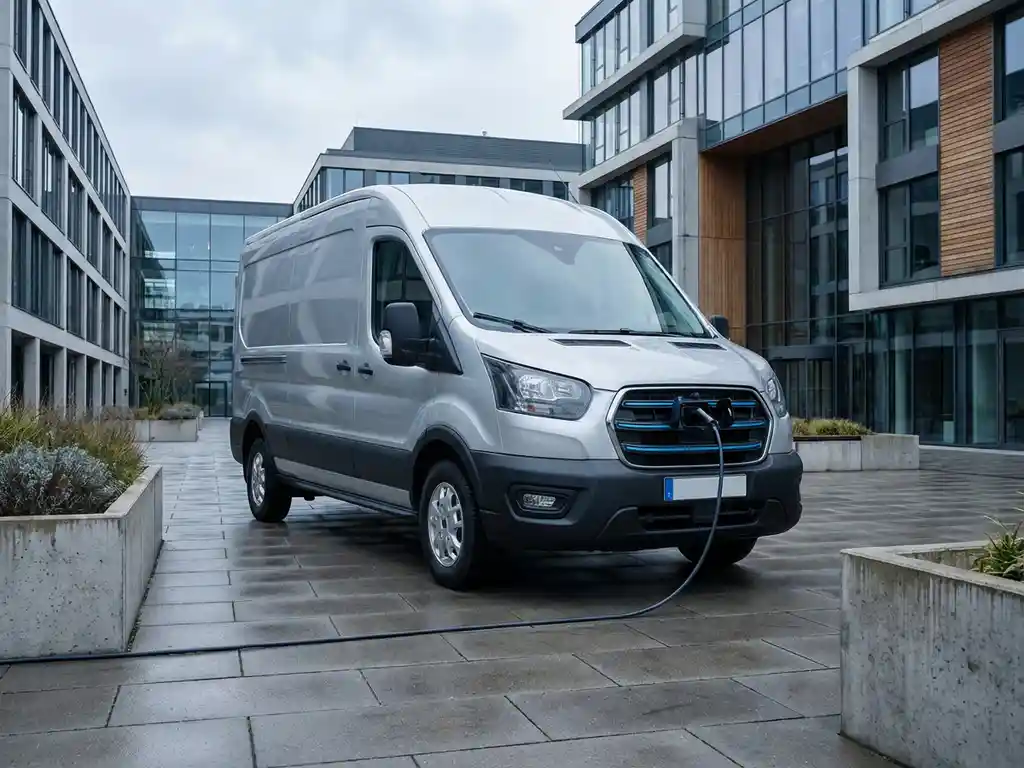
When leasing an electric commercial vehicle, monthly costs are often slightly higher due to the higher purchase price of the vehicle. On the other hand, fuel and maintenance costs are significantly lower. Over the full term, an electric van can therefore still be more advantageous than a comparable diesel variant.
Leasing or buying with a loan: which is smarter for a van?
Whether leasing or buying with a loan is smarter for a van depends on your priorities. Do you want ownership, maximum flexibility and possibly build up residual value? Then buying is a better fit. Do you want fixed monthly costs, no worries about maintenance and always drive an up-to-date vehicle? Then leasing is more attractive.
Advantages of buying with a loan
- You build up ownership and can sell the van later.
- You have no mileage limitation.
- You can decide when to sell or trade in the car.
- Interest is usually tax deductible.
Advantages of leasing
- Fixed and predictable monthly costs, including any maintenance and insurance.
- You do not tie equity to the vehicle.
- At the end of the contract, you will drive a new or newer van.
- With operational leasing, the car is not on your balance sheet, which can have advantages for your financial reporting.
For a double-cab company bus that you use intensively, operational leasing can be especially attractive. The maintenance and risks lie with the leasing company, while you concentrate on your work. Do you use the van less intensively or do you eventually want to keep it? Then a loan or hire purchase is often the better choice.
Where can you buy a small van with financing?
You can buy a small van with financing from specialist commercial vehicle dealers, leasing companies or through banks and independent financiers. The best option is a dealer who has both a wide range and can guide financing solutions, so you arrange everything in one place.
Many business owners choose a regional dealer with a large stock, because there you can see the car, test drive it and discuss financing directly. Online platforms also offer options, but often lack the personal guidance that is valuable in business purchases. Especially if you have specific requirements, such as an electric van or a dual-cab vehicle, a specialist will help you make the right choice.
When choosing a provider, pay attention to the following points:
- Does the dealer have a large and diverse stock of commercial vehicles?
- Does the dealer offer multiple forms of finance, such as hire purchase, financial lease and operational lease?
- Is personal advice available even after the purchase?
- Are the prices transparent and without hidden costs?
- Does the dealer have experience with your type of business or sector?
How we help you finance a small van
At Van den Hurk Bedrijfswagens, we are happy to help you find and finance the right small van. With more than 60 years of experience in the Helmond and North Brabant region, we know the business market inside out. We offer a large and diverse range, from compact vans and double-cab vans to electric commercial vehicles, and we will guide you through every step of the purchase process.
What we can do for you:
- Personal advice on which van best suits your work and budget.
- Understanding the different forms of financing, including hire purchase, financial lease and operational lease.
- Transparent prices with no surprises afterwards.
- Guidance on the funding application so that you have clarity quickly.
- A large stock of vehicles available immediately.
Want to know what the options are for your situation? Contact us or drop by in Helmond. We are happy to think along with you and make sure you hit the road with a suitable van and financing plan that suits your business.