
Which small van has the smallest turning circle?
Buying a small van for city work or narrow streets? Then turning radius is one of the most practical specifications to look out for. Yet this fact is rarely at the top of the list when buying a commercial vehicle, even though it makes a big difference on a daily basis for drivers manoeuvring in busy urban environments.
In this article, we answer the most frequently asked questions about the turning radius of small vans. Whether you want to buy a small van for city logistics, are thinking about an electric company car lease, or just want to know which model is the most pleasant to drive in town: here you will find concrete answers.
What is a turning circle and why is it important in vans?
The turning circle of a van is the diameter of the circle the vehicle describes when it makes a full turn with the steering wheel fully engaged. The smaller the turning circle, the more manoeuvrable the vehicle. For vans, it typically ranges between 10 and 14 metres, depending on the size and wheelbase.
For drivers who drive daily in city centres, residential areas or on industrial sites with narrow passages, a small turning circle is not a luxury, but a practical necessity. Think of parcel deliverers who have to turn in cul-de-sacs, plumbers who park in narrow alleys, or caregivers who have to manoeuvre at residential care centres.
What determines the turning radius of a van?
Several technical factors determine how small a vehicle's turning circle is:
- Wheelbase: the distance between the front and rear axles. The shorter the wheelbase, the smaller the turning circle.
- Steering angle of the front wheels: the further the front wheels can turn, the more manoeuvrable the vehicle.
- Body width: Wider vehicles typically require a greater turning radius to keep the rear bumper clear.
- Implementation: a van with an extended wheelbase or double cab almost always has a larger turning circle than the standard version.
Understanding these factors will help you, when comparing models, immediately see which vehicle best suits your daily driving environment.
Which small vans have the smallest turning radius?
Small vans with the smallest turning circles tend to be compact models with a short wheelbase. The Renault Kangoo, Citroën Berlingo, Peugeot Partner and Ford Transit Courier are among the most manoeuvrable in their class, with turning circles often around 10.5 to 11.5 metres.
Below is an overview of well-known small vans and their typical turning radius:
- Renault Kangoo: approximately 10.8 metres (short wheelbase)
- Citroën Berlingo / Peugeot Partner: approximately 11.0 to 11.3 metres
- Ford Transit Courier: approximately 10.5 to 11.0 metres
- Volkswagen Caddy: approximately 11.0 to 11.5 metres
- Opel Combo Cargo: approximately 11.0 metres
The Ford Transit Courier and Renault Kangoo are known to be particularly agile for their payload. This makes them popular with city delivery drivers and small business owners who drive in busy environments on a daily basis. Please note that exact values may vary depending on the year of manufacture and engine variant. Always consult the technical specifications of the specific model you are considering.
What is the difference between short and long wheelbase on the same models?
Many small vans are available in short and long wheelbase versions. The long version offers more cargo space, but it also has a larger turning circle as a result. That difference can easily be 1 to 1.5 metres. If manoeuvrability is a priority, it is best to opt for the shortest available wheelbase of the desired model.
How does the turning radius differ between a small and large van?
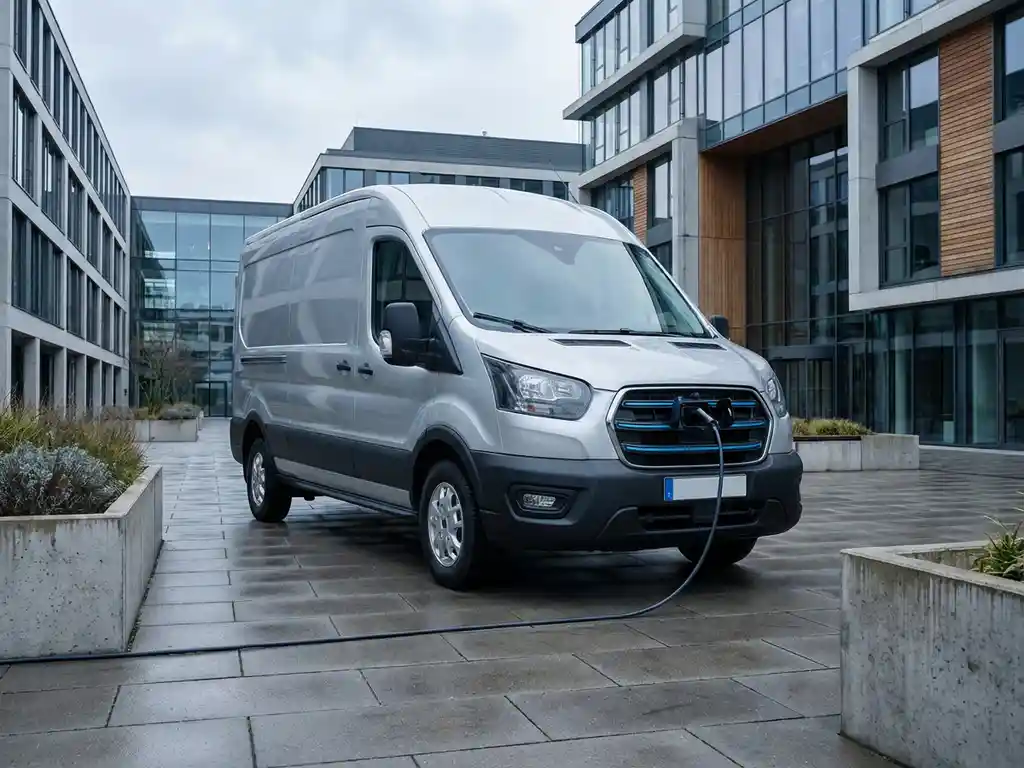
The difference in turning circle between a small and large van is significant. On average, a small van has a turning circle of 10.5 to 12 metres, while larger models such as the Ford Transit or Mercedes Sprinter come out at 13 to 14.5 metres or more. That is a difference of 2 to 4 metres, which has major implications in practice.
In urban environments, a larger turning circle means you have to cross more often to make a turn. This takes time, increases the risk of damage and makes driving in narrow streets stressful. For drivers who drive in the city every day, this is a strong argument for choosing a smaller model.
When is a large van the better choice anyway?
A larger turning circle is a disadvantage in the city, but outside the city or on industrial estates it hardly plays a role. If you need a lot of cargo space, transport heavy goods or drive regularly on motorways, the advantages of a larger van outweigh the disadvantage of the wider turning circle. So the choice depends heavily on your daily driving profile.
Which van is best suited for city driving?
For city driving, the Renault Kangoo and Ford Transit Courier are excellent choices. They combine a small turning circle with compact dimensions, an uncluttered driving position and enough cargo space for most urban occupations. Both models are also popular with self-employed workers and small businesses that need flexibility and manoeuvrability.
Besides the turning circle, there are more factors that make a van suitable for urban use:
- Exterior dimensions: a narrower and shorter vehicle fits more easily in parking spaces and narrow streets.
- Sightlines: good lateral and rear visibility helps with manoeuvring.
- Parking aid or camera: More and more compact vans come with a reversing camera and sensors as standard or as an option.
- Low-speed ride comfort: In the city, you drive a lot in traffic jams or stop-and-go traffic, so a smooth clutch and good steering feel are nice.
- Access to environmental zones: More and more cities operate environmental zones. A clean engine or electric drive prevents problems.
The Volkswagen Caddy also deserves a mention. This model offers a good balance between manoeuvrability, driving comfort and cargo capacity and is loved by entrepreneurs who drive both in town and on the highway.
Does an electric small van have a different turning circle?
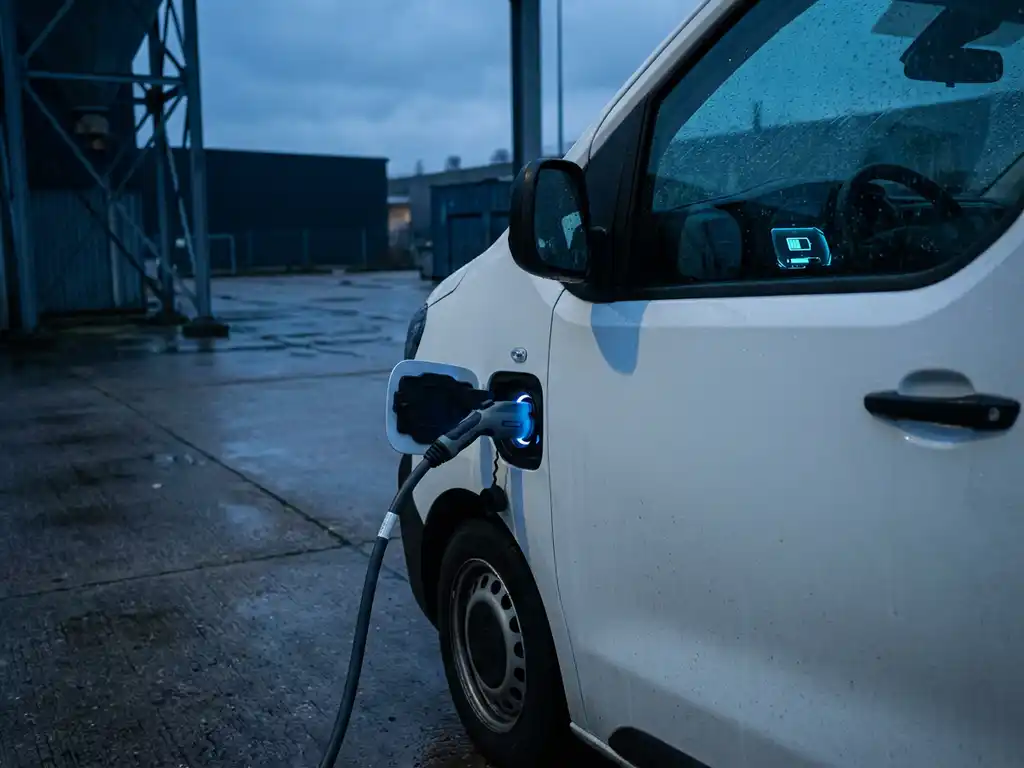
A electric small van in most cases has a similar turning circle to its fuel-driven counterpart. The turning circle is determined by the physical structure of the vehicle, not by the type of drive train. However, the placement of the battery can affect the wheelbase and thus indirectly the manoeuvrability.
Take the Renault Kangoo E-Tech Electric as an example. This model has a similar wheelbase to the regular Kangoo and therefore a similar turning circle. The same goes for the Citroën e-Berlingo and the Peugeot e-Partner. These electric variants are designed on the same platform as the fuel versions, so driving dynamics and manoeuvrability are almost identical.
Are there advantages of an electric van for urban use?
Yes, and they are not small. An electric company car lease is becoming increasingly attractive for companies that drive around town every day for several reasons:
- Access to environmental zones without restrictions
- Lower fuel costs compared to diesel or petrol
- Less maintenance due to simpler driveline
- Tax advantages for business use, such as additional taxable benefit or investment deduction
- Quiet and smooth ride, pleasant in stop-and-go traffic
Range is an issue, but for urban routes of 100 to 200 kilometres per day, the current generation of electric small vans can be used well. However, charging facilities at the fixed location are a requirement.
What should you look out for when choosing a small van?
When choosing a small van, don't just pay attention to the turning radius, but to a combination of factors that together determine whether the vehicle suits your job. Start with your driving profile: do you mainly drive in town, on the motorway, or both? That determines which specifications carry the most weight.
Here are the main points of interest:
- Cargo space and payload: how many cubic metres and how many kilograms should the vehicle be able to carry?
- Turning radius and manoeuvrability: Do you drive on narrow streets or industrial estates with limited space?
- Fuel type: diesel, petrol, hybrid or electric? Each choice has implications for cost, taxation and access to city centres.
- Wheelbase: choose the short or long version, depending on your charging needs and driving environment.
- Implementation: a standard van, a double-cab van or a special body, such as a refrigerated truck?
- Budget and form of funding: purchase, financial lease or operational lease?
- Maintenance history on used vehicles: Always ask for the service history and have a technical inspection carried out.
A double-cab commercial van is a good choice if you want to transport both passengers and goods, but bear in mind that this type usually has a longer wheelbase and thus a larger turning circle. Weigh this against your daily needs.
How we help you find the right small van
At Van den Hurk Bedrijfswagens, we help you make the right choice, based on your specific situation. Whether you want to buy a small van for daily use in the city, are considering leasing an electric commercial vehicle, or are looking for a double-cab commercial van for mixed use, we think along with you.
Here's what we can do for you:
- Personalised advice based on your driving profile and activities
- Large stock of used and new commercial vehicles, including electric models
- Flexible financing options: purchase, financial lease or operational lease
- Transparent prices with no hidden costs
- A handy stock alert service, so you are the first to know about new offers
With over 60 years of experience in the Helmond and North Brabant region, we know the market and what entrepreneurs need. Contact us or view our current offer online. We will be happy to help you find the van that best suits your business.