
Which small van fits best in a car park?
Buying or leasing a small van is one thing, but whether that van will actually fit in a car park is a question many business owners ask too late. Especially if you regularly drive in city centres, visit clients with underground car parks or need to be in shopping areas, the height of your van can make the difference between convenient and unusable. In this article, we answer the most frequently asked questions about small vans and car parks so you can make a smart choice.
Whether you are looking for an electric commercial vehicle on lease, a double-cab commercial van or just a compact cargo space for everyday use, the dimensions of your vehicle play a bigger role than you might expect. We take you step by step through everything you need to know.
What is the maximum height in an average car park?
The maximum height in an average car park in the Netherlands is 2.0 to 2.1 metres. This is the most common clearance height in older and urban car parks. Newer garages often use a slightly wider dimension of 2.2 to 2.4 metres, but this varies greatly by location and year of construction.
It is important to note that the height indicated on the sign at the entrance is the maximum permitted height, including any roof racks, aerials or other protruding parts. If you drive a vehicle that sits exactly on the limit, you are taking a risk. In practical terms, keep at least a 10-centimetre margin to the indicated clearance height.
Car parks at hospitals, shopping centres and office buildings in city centres regularly have a limited headroom of just 1.9 metres. This also applies to some older car parks in historic city centres. If you are an entrepreneur driving in such environments on a daily basis, the height of your van is one of the first things to check when purchasing.
Which small vans fit in a car park?
Small vans that fit into a standard car park have a maximum height of around 1.9 to 2.0 metres. Popular models that typically fall within this are the Volkswagen Caddy, Renault Kangoo, Ford Transit Connect (low roof version), Citroën Berlingo and the Peugeot Partner. These vehicles are specifically designed for use in urban environments.
Models that are car park-friendly as standard
The Volkswagen Caddy has a standard height of about 1.84 metres, making it one of the most car park-friendly small vans. The Renault Kangoo and Citroën Berlingo are in a similar category, with heights between 1.80 and 1.90 metres in the standard version. These models are popular with couriers, installation companies and self-employed workers who regularly work in the city.
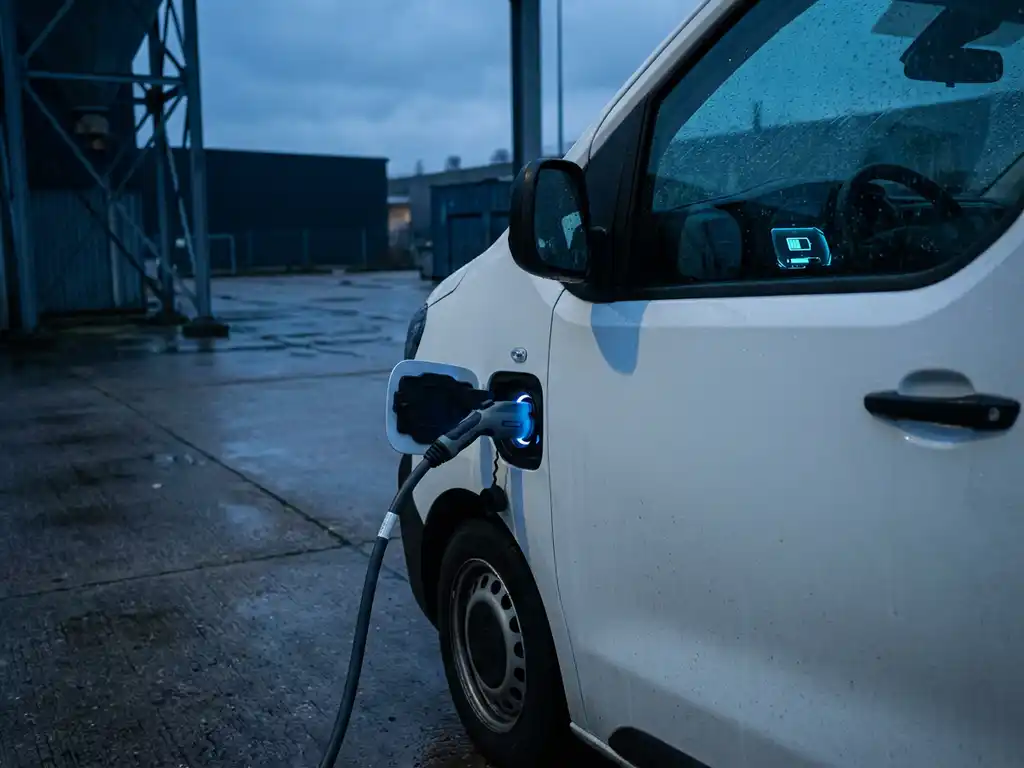
Electric versions of these models, such as the Renault Kangoo E-Tech or the Citroën ë-Berlingo, sometimes have a slightly greater height than their fuel-driven counterparts due to the battery packs under the floor. The difference is usually small, but it is wise to check the exact measurements before buying a electric company car into the lease.
Models that just don't fit
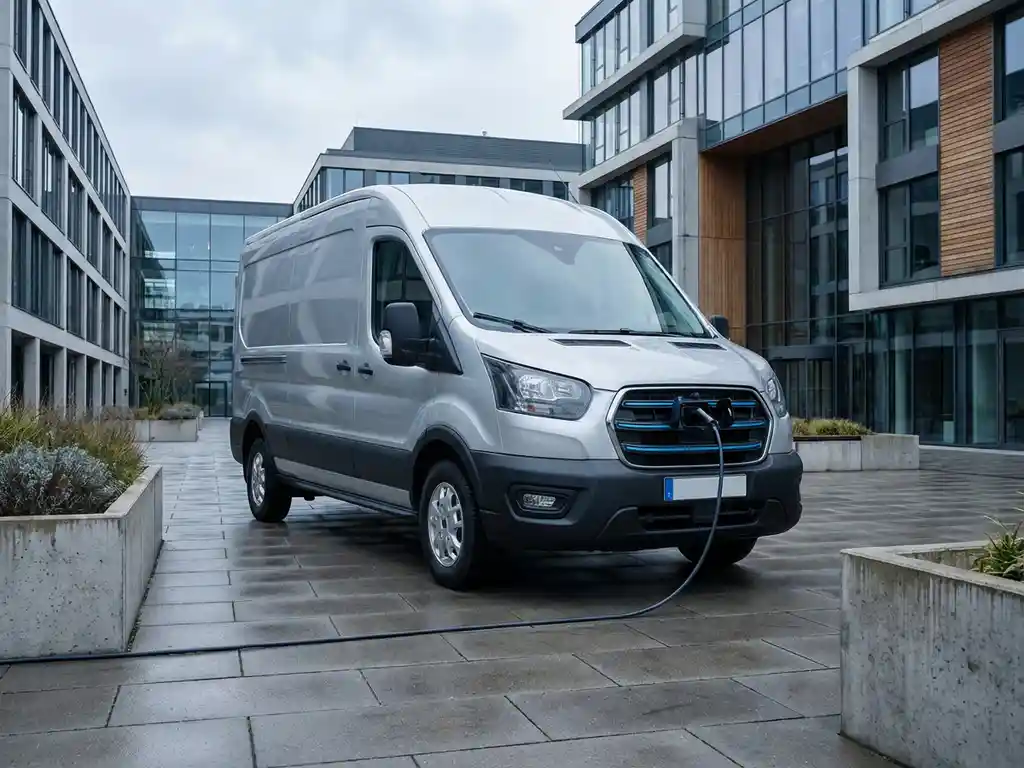
Larger (compact) vans, such as the Ford Transit Custom, Volkswagen Transporter or Mercedes-Benz Vito, quickly exceed 2.0 metres in standard configuration. Especially in the high roof version, these vehicles end up at 2.3 to 2.5 metres, making them unsuitable for most urban car parks.
What are the exact dimensions to look out for?
When choosing a small van for use in car parks, there are three dimensions that count: the overall height of the vehicle, the width including wing mirrors and the overall length. Height is the most limiting feature, but width also plays a role with narrow lanes and pillars in car parks.
- Height: Always check the overall height, including any roof rails, aerials or solar panels. The factory value given is the vehicle's bare height.
- Width: The width including wing mirrors can be up to 2.2 metres for compact vans. In narrow car parks, this is relevant.
- Length: Small vans range in length from around 4.2 to 4.8 metres. Check the minimum parking space length in the garages you visit.
- Loadspace height: When loading and unloading goods in a car park, also pay attention to the internal height of the loading space and the door opening at the rear.
A practical tip: use the technical specifications in the vehicle documentation and not the rounded marketing figures. Manufacturers sometimes round down for marketing purposes, while the actual size may be just slightly larger due to sealing rubbers, roof rails or other additions.
What is the difference between a low and high roof version?
The difference between a low and high roof version of a small van is in the internal cargo area height and hence the overall vehicle height. A low roof version has an internal height of around 1.25 to 1.40 metres, while a high roof version rises to 1.60 to 1.90 metres. This directly affects whether the vehicle will fit in a car park.
When do you choose a low-roof version?
A low roof version is the best choice if you regularly drive in cities and use car parks. You have less cargo space height, but you gain flexibility in where you can park. For entrepreneurs who mainly transport flat or smaller goods, such as tools, electronics or documents, the low roof version is often more than enough.
The overall external height of a low roof version is between 1.80 and 1.95 metres for most small vans. With that, you can fit into almost all car parks in the Netherlands, including the more strictly sized urban garages.
When do you choose a high roof version?
A high roof version is useful if you want to work standing up in the cargo area, for example as a mechanic or if you transport large, upright goods. The overall external height then rises to 2.1 to 2.3 metres, blocking access to many car parks. This is a deliberate trade-off: more loading comfort versus fewer parking options in the city.
Some manufacturers also offer a medium roof option, called a medium roof or raised roof, which offers a middle ground between loadspace height and overall vehicle height. This can be a smart option if you want to combine both comfort and accessibility.
When is an electric small van the smartest choice?
An electric small van is the smartest choice if you drive daily in or around city centres, have to deal with environmental zones and have a predictable daily driving range of up to 200 to 300 kilometres. Electric driving saves on fuel costs and makes your vehicle suitable for areas where internal combustion engines will soon, or already, be unwelcome.
Benefits of an electric company car in the city
Electric vans have zero emissions, making them suitable for city centres with zero-emission zones. More and more Dutch municipalities are introducing this policy, and for entrepreneurs who already choose an electric company car on lease now, it is a smart investment in the future. Moreover, electric vehicles tend to require lower maintenance due to the smaller number of moving parts.
Another advantage is that electric vans are quieter, which is relevant for early deliveries in residential areas or with customers who appreciate silence. For care transporters or couriers working in residential areas, this is a concrete advantage in day-to-day operations.
Considerations for electric vans and car parks
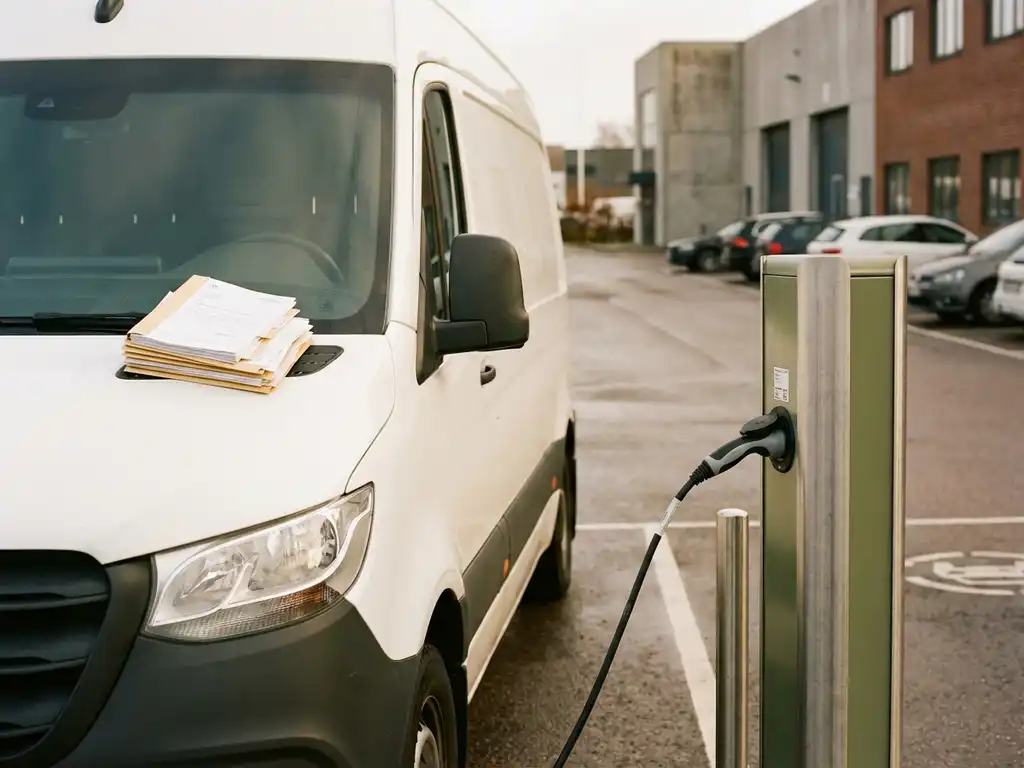
Some car parks do not allow electric vehicle charging due to fire safety regulations, or they have limited charging infrastructure. Check in advance whether the garages you use regularly offer or allow charging facilities. This is a practical point to factor into your decision when choosing an electric company car for lease.
It is also worth noting that in some electric models, the under-floor battery reduces the load space height slightly compared to the fuel version. This is model-dependent and it pays to compare the specifications of the electric model separately with those of the conventional version.
How to choose the right small van for your business?
You choose the right small van by starting with your daily driving profile and loading needs, and only then looking at make and model. Ask yourself the following questions: do I drive in the city every day? Do I need to be able to get into car parks? How much cargo space do I need? Do I want to buy or lease? And will an electric variant suit my driving range?
If you regularly drive in city centres and use car parks, a low roof version of a compact van with a height under 2.0 metres is the safest choice. If you want a double-cab van for transporting both people and goods, pay extra attention to height, as double cab versions are often slightly higher due to the extra seating space and roof construction.
- Always check the exact outside height in the technical specifications, not in the marketing brochure.
- Be aware of roof rails, antennas or other protruding parts that increase height.
- If in doubt, ask for a test drive or visit a showroom to physically measure the vehicle.
- Compare the low and high roof versions of the same model side by side to get the trade-off right.
- Think ahead: if environmental zones are extended in your working area, an electric version is already relevant now.
A lease construction offers extra flexibility if you are not yet sure which vehicle suits your business best. With an operational lease, you will always drive an up-to-date and well-maintained vehicle, without any major upfront purchase costs.
How we help you find the right small van
With us you will find a large stock of small vans, both new and used, including electric models and double-cab vehicles. Specifically, we help you make the right choice for your situation. We do this as follows:
- We give you honest advice on which models fit within the height restrictions of your work locations.
- We compare low and high roof versions side by side, so you can see exactly what the advantages and disadvantages are for your charging needs.
- We offer flexible leasing options, including electric commercial vehicle on lease, tailored to your budget and driving profile.
- We think about the future: environmental zones, charging infrastructure and the growth of your fleet.
- Through our stock alert service, you will receive a notification as soon as a vehicle matching your criteria becomes available.
With more than 60 years of experience in the Helmond and North Brabant region, we know the business market inside out. Contact us or view our current stock online and find out which small van best suits your business and working area.