
Can you lease an electric company car without your own charging point?
More and more business owners are opting to lease an electric commercial vehicle, but a frequently asked question is: what do you do if you don’t have your own charging point? Whether you’re buying a small van, a commercial minibus with double cabin Whether you’re leasing or switching to an all-electric fleet, the issue of charging is always a factor. Fortunately, there are more options than you might think.
In this article, we answer the most frequently asked questions about driving an electric car without your own charging point. From practical charging solutions to costs and contract options: here you’ll find everything you need to make an informed decision.
Can you lease an electric company car without a charging point?
Yes, you can lease an electric company car without your own charging point. Having your own charging point is handy, but by no means a requirement. Many business owners charge their vehicles using public charging points, charging stations at petrol stations or charging infrastructure on their business premises. As long as you have a workable charging strategy, having your own charging point is optional.
The question is not so much whether it’s possible, but whether it’s practical enough for your specific situation. A self-employed driver who follows a fixed route every day and charges at home or at the company in the evening has different needs to a fleet manager with several vehicles that are on the road all day. It’s all about planning and understanding your daily mileage and available charging times.
The Netherlands now has one of the densest charging networks in Europe. Public charging points are easily accessible in urban areas and on industrial estates. For businesses in regions such as North Brabant, including Helmond and the surrounding area, coverage is, in most cases, sufficient to operate without their own charging point.
How do you charge an electric company car if you don’t have your own charging point?
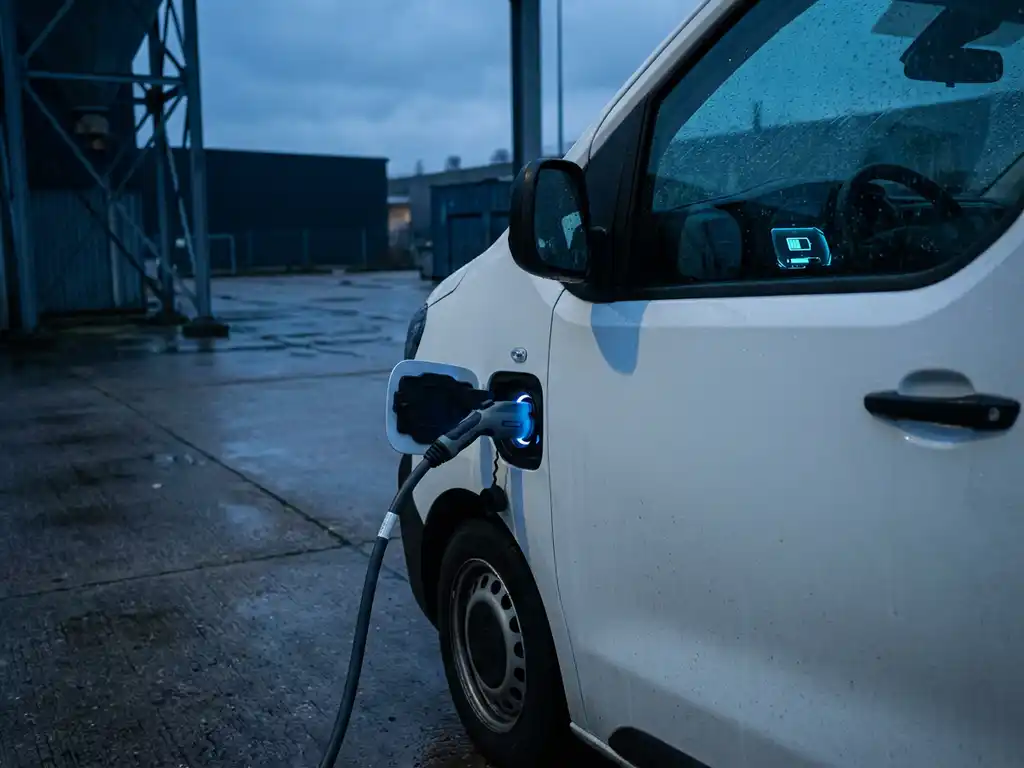
If you don’t have your own charging point, you have three main options: public charging points, roadside fast chargers and charging on company premises using an existing power supply. Which option works best depends on your driving habits, your vehicle’s range and how flexible your schedule is.
Public charging points
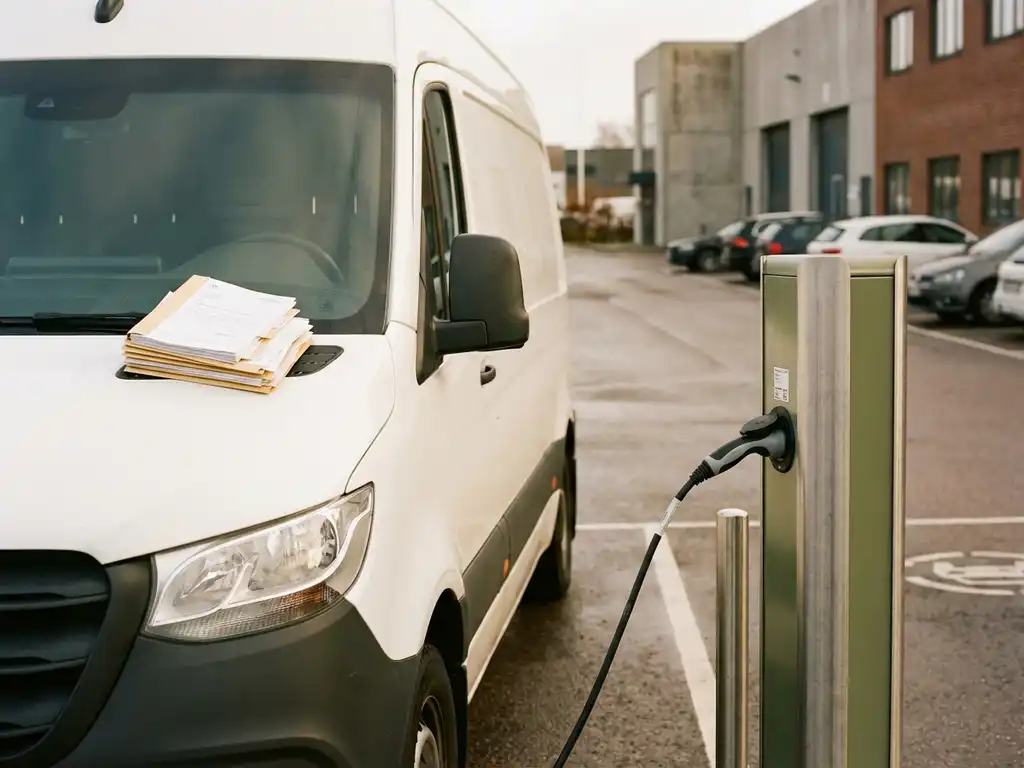
Public charging points are the most accessible option. Using providers such as Allego, Fastned or charging cards from energy suppliers, you can charge your electric company car at a wide network of locations. Many business parks, multi-storey car parks and shopping centres now have charging points available.
For everyday use, this works best if your vehicle can be charged overnight or during work breaks. A small electric van with a range of 200 to 300 kilometres usually only needs to be fully charged once or twice a week, depending on your driving habits.
Fast chargers on the way
Fast chargers, also known as DC fast chargers, charge your vehicle considerably faster than standard AC charging points. You can charge a large proportion of the battery in 20 to 45 minutes. This is ideal if you’re travelling long distances or need your vehicle to be ready quickly. You’ll find these fast chargers increasingly often along motorways and at larger petrol stations.
Charging on company premises via a mains socket
If you have access to a standard socket or a heavy-duty industrial socket on your business premises, you can also use this to charge your vehicle. This is slower than using a dedicated charging point, but for vehicles that are parked overnight, this is a perfectly good solution. Do make sure, however, that you have the electrical installation checked for suitability and safety.
How much does it cost to charge your car if you don’t have your own charging point?
Charging without your own charging point is generally more expensive per kilowatt-hour than charging at home or using your own charging point. On average, you pay more at public charging points than when charging at home, and fast chargers are usually even more expensive due to their higher power output and infrastructure costs. The exact costs vary by provider and location.
Having your own charging point or home connection offers the lowest cost per kilometre, especially if you’re on a business electricity contract or use off-peak electricity rates. With public charging, you pay per kilowatt-hour or per minute, depending on the provider. This can make a noticeable difference over the course of a year, particularly for a double-cab company van or a heavier vehicle with a larger battery.
How can you keep charging costs under control?
There are a few ways to keep costs under control:
- Use a charging card or app that combines multiple networks to ensure clear billing
- Plan your charging sessions at locations with lower rates, such as supermarket car parks or local authority charging points
- Choose a lease contract that includes charging costs or a charging budget in the monthly fee
- Monitor fuel consumption per vehicle using a journey log system or fleet management software
For fleet managers who operate multiple electric vehicles, it is worth putting a structured charging strategy in place. Minor adjustments to the schedule can significantly reduce overall charging costs.
Does a lease contract also provide a solution for charging?
Yes, more and more leasing companies are offering charging solutions as part of the lease agreement. These range from a charging card for public networks to a fully managed package that also includes the installation of a charging point at your home or business. It depends on the type of lease contract and the provider.
With an operating lease for an electric company car, you can often opt for an all-inclusive package. In addition to the monthly lease payment, this includes insurance, maintenance and, in some cases, a charging allowance. This gives you, as a business owner, clarity on your fixed monthly costs, with no surprises later on.
Finance lease versus operating lease
With a finance lease, you are responsible for arranging the charging infrastructure and covering any additional costs yourself. With an operating lease, the leasing company has greater scope to bundle additional services. For business owners who want everything taken care of, an operating lease is therefore often the more attractive option.
When taking out a lease agreement, always ask explicitly about the charging options. Some providers work with charging point installers and can include this as a bespoke solution. That way, you don’t have to arrange things with separate parties yourself and you know exactly where you stand.
When is a private charging point actually the better choice?
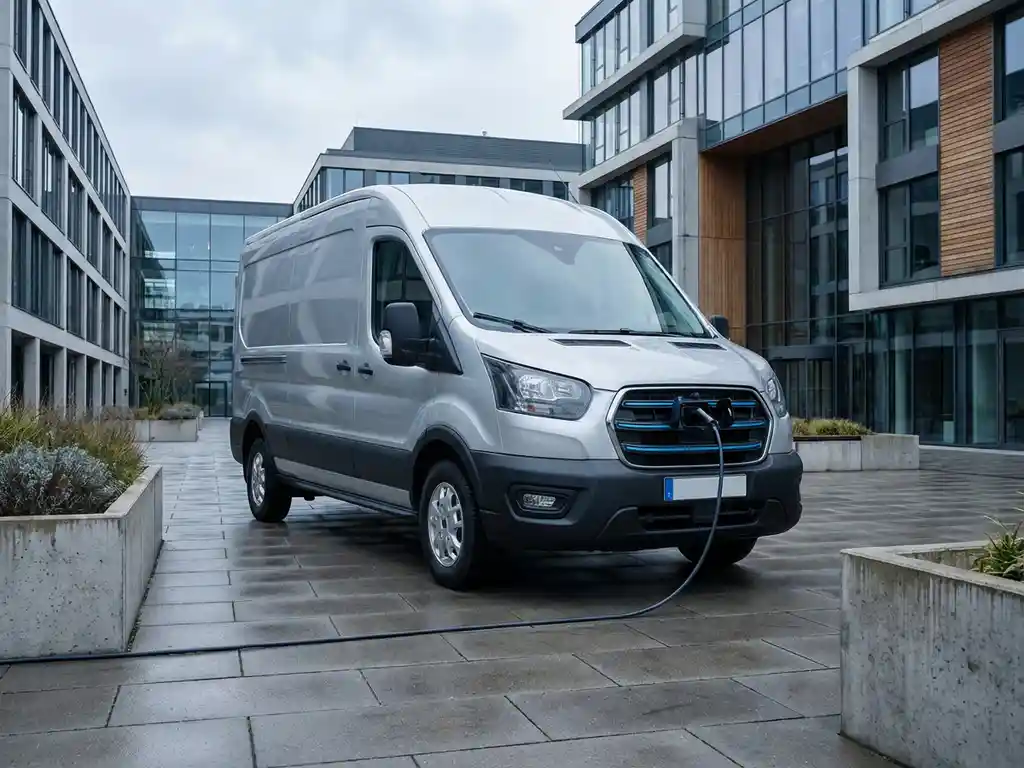
Having your own charging point is the better choice if you drive long distances every day, operate several electric vehicles, or if the public charging infrastructure in your area is limited. A private charging point is also a sensible investment if you want to reduce your charging costs in the long term or have complete control over availability and charging times.
For a self-employed person with a single small van that is parked at home in the evenings, a home charger quickly pays for itself. For a company with a fleet of five or more vehicles, having its own charging point on the premises is almost always more cost-effective than relying on public charging facilities on a regular basis. The payback period depends on consumption, energy costs and any subsidies.
Grants and tax incentives
In the Netherlands, there are schemes that make purchasing a charging point financially attractive. The ISDE grant (Investment Grant for Sustainable Energy) may, in some cases, apply to business charging points. In addition, you can claim the cost of purchase and installation as business expenses. It is worth having this properly investigated in advance by a tax adviser or your leasing partner.
The additional tax liability for electric commercial vehicles is lower than for fossil-fuel vehicles, which has a positive impact on overall running costs. Combine that with cheap charging via your own charging point, and the business case for electric driving quickly becomes compelling.
How we can help you lease an electric commercial vehicle
At Van den Hurk Commercial Vehicles, we’re happy to help you find the right electric commercial vehicle, whether you’re looking to buy a small van, lease a double-cab commercial van, or switch to a fully electric fleet. We understand that the issue of charging is a barrier for many business owners, which is why we actively work with you to find practical solutions that suit your situation.
What we can do for you:
- Advice on suitable electric commercial vehicles from our ample stock, including vehicles with a long range
- An understanding of the different types of lease and the charging solutions available under each
- Advice on choosing between a purchase, a finance lease or an operating lease
- A personalised consultation on your driving profile and the corresponding charging strategy
- Information on tax reliefs and grants that may apply
Would you like to find out which electric commercial vehicle is best suited to your business, even if you don’t have your own charging point? Please get in touch or pop into our office in Helmond for a no-obligation chat. We’d be happy to help you find the right solution.