
How do you choose between different battery types for electric commercial vehicles?
When choosing the right battery for your electric utility vehicle, you look at three main factors: the battery type (lithium-ion, LFP or NMC), the capacity needed for your daily trips and your charging capabilities. The choice depends on your business activities, budget and lifetime expectations. Each battery type has its own advantages in terms of safety, cost and performance.
What are the main battery types for electric commercial vehicles?
The three main types of batteries in electric commercial vehicles are lithium-ion (Li-ion), lithium-iron phosphate (LFP) and nickel-manganese-cobalt (NMC). Each type has specific properties that determine which type best suits your operations and budget.
Lithium-ion batteries are the most widely used technology and offer a good balance between performance and cost. They have a high energy density, which means you store more energy in a compact space. This results in a longer driving range without extra weight.
LFP (lithium iron phosphate) batteries are known for their safety and long life. They are less prone to overheating and last longer than other types. The downside is a lower energy density, which means you get less far per kWh. For commercial vehicles that drive short distances daily and charge often, LFP batteries are often the best choice.
Nickel-manganese-cobalt (NMC) batteries offer the highest energy density and greatest driving range. They are ideal for commercial vehicles travelling long distances. The cost is higher and they require more careful handling in terms of temperature and charge cycles.
How do you determine what battery capacity you need for your business?
You calculate the required battery capacity by calculating your daily mileage multiply by 1.5 to 2 for a safety margin. A commercial vehicle driving 150 kilometres a day needs a battery that offers at least 225 to 300 kilometres of range under realistic conditions.
Start by keeping track of your current ride patterns for a month. Note down the longest daily distance and add 50% for unforeseen trips and seasonality. Electric commercial vehicles consume 20 to 25 kWh per 100 kilometres on average, depending on weight, weather and driving style.
Factors influencing energy consumption include outside temperature, use of heating or air conditioning, load weight and driving style. In winter, consumption may be 20 to 30% higher due to the use of heating and reduced battery performance at low temperatures.
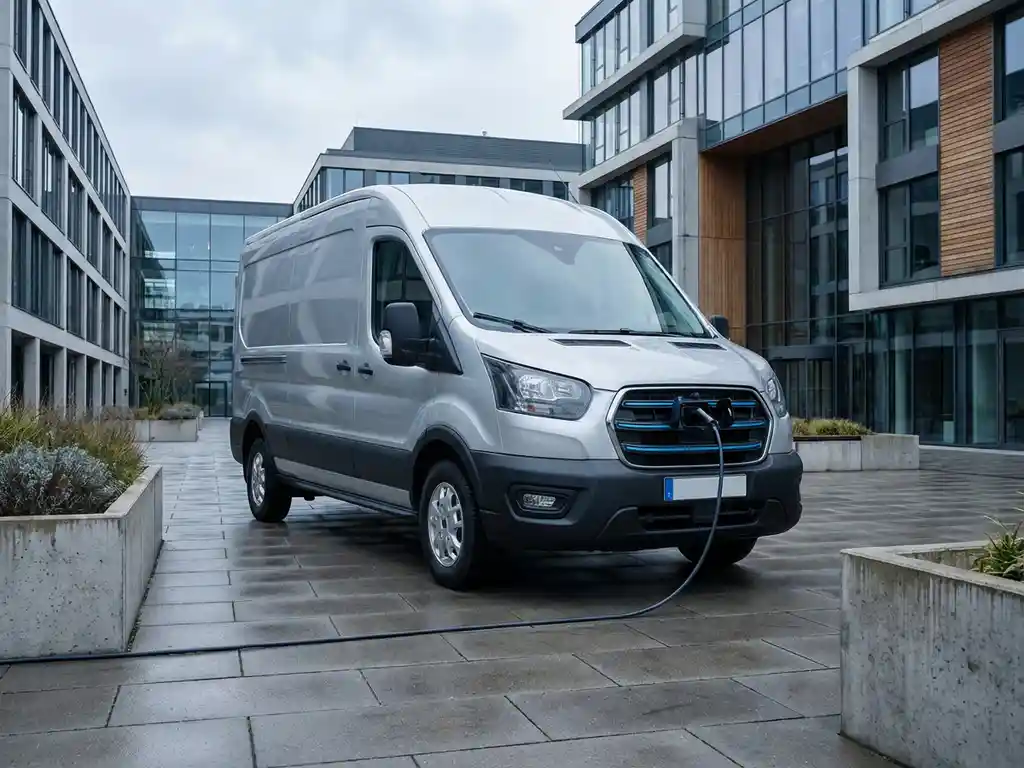
Also consider your charging options. If you can charge every evening on your premises, you need less battery capacity than if you rely on public charging stations. A smaller battery means lower purchase costs and faster charging.
What is the difference between fast charging and regular charging for commercial vehicles?
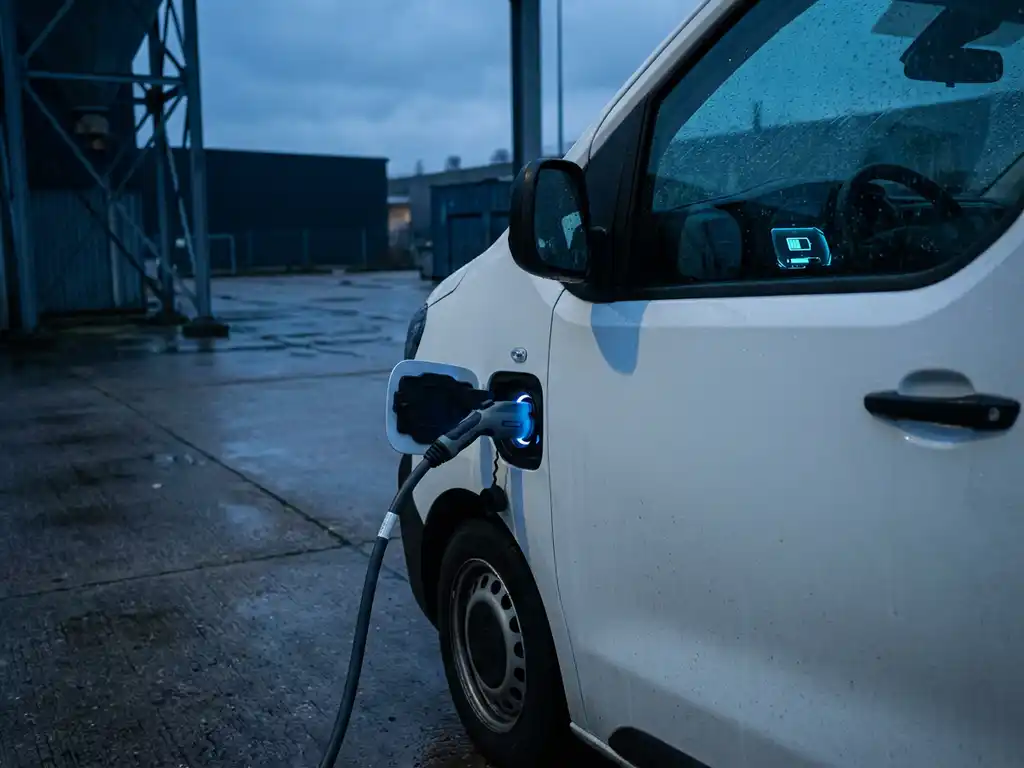
Fast charging (DC) uses direct current and charges your commercial vehicle from 20% to 80% in 30 to 60 minutes. Regular charging (AC) uses alternating current and takes 4 to 8 hours for a full charge, but is less demanding on the battery and cheaper to use.
AC charging is done via ordinary sockets or wall boxes with a capacity of 3.7 kW to 22 kW. This is the standard method of charging on your premises at night. The charging speed is lower, but this suits your vehicles’ rest periods perfectly.
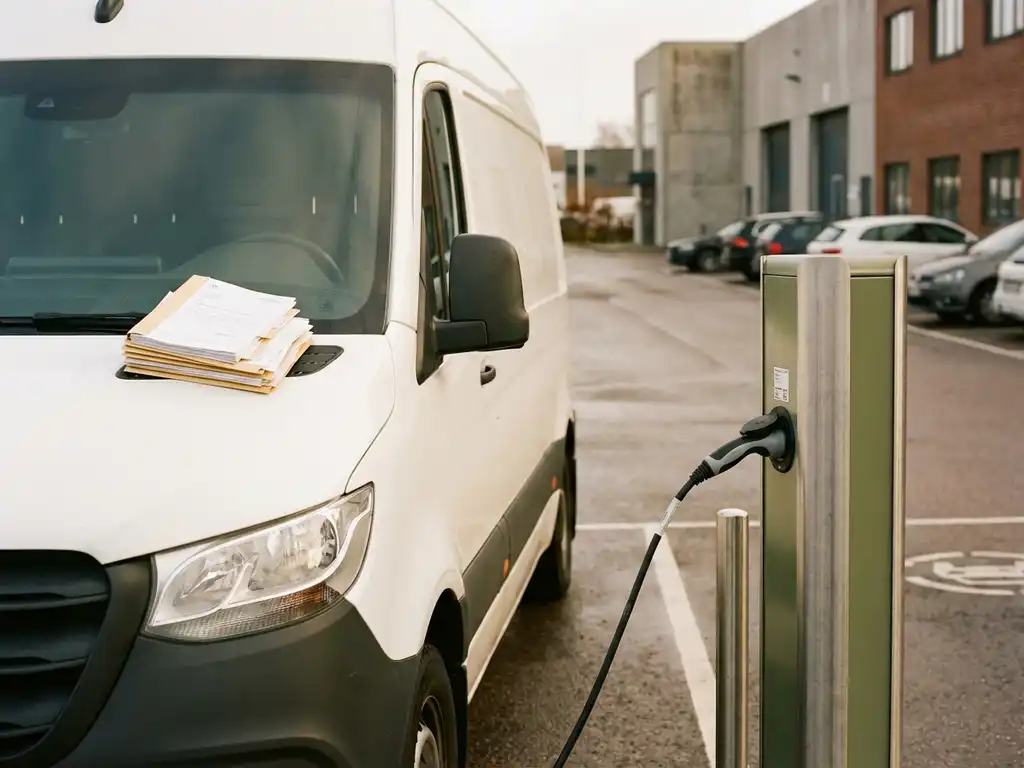
DC fast charging is found along motorways and in cities, with outputs ranging from 50 kW to 350 kW. It is useful for long trips or when you need to get back on the road quickly. Frequent fast charging can shorten battery life, so use it only when really necessary.
For planning your operations, it is important to know that fast charging is more expensive per kWh. Regular charging on private property often costs half of what you pay at fast charging stations. Combine both methods: regular charging for everyday use and fast charging for exceptional situations.
How long does a battery in an electric utility vehicle last?
A battery in an electric utility vehicle lasts on average 8 to 12 years or 150,000 to 300,000 kilometres, depending on the battery type and use. After this period, the battery still has 70 to 80% of its original capacity, which is often sufficient for many applications.
Longevity depends on several factors. Temperature plays a big role: extreme cold or heat accelerates ageing. Charging habits are also important. Regular charging between 20% and 80% prolongs the service life, while frequent completely empty or full charging makes the battery wear out faster.
The number of charging cycles largely determines service life. A modern commercial vehicle battery can handle 1,500 to 3,000 full charge cycles before its capacity decreases noticeably. In daily use, this means 4 to 8 years, but through smart charging you can extend this period.
To best maintain your battery, preferably park the commercial vehicle in a garage at moderate temperatures. Do not leave the battery empty for weeks and avoid regular charging to 100% unless you need the full range. Most modern commercial vehicles have battery management systems that automatically help optimise charging cycles.
How Van den Hurk helps with electric commercial vehicles
We will help you make the right choice for your specific business situation. We combine our experience of more than 60 years in the commercial vehicle industry with up-to-date knowledge of electric vehicles and battery technology.
Our support for electric commercial vehicles includes:
- Personal advice on the right battery type and capacity for your driving patterns
- Extensive stock electric commercial vehicles of various brands and capacities
- Flexible leasing options to match rapid developments in electric mobility
- Guidance on the switch, including advice on charging infrastructure and tax benefits
- Transparent pricing and honest information on maintenance costs and expected service life
We take the time to understand your current business operations and advise which battery and which electric utility vehicle is best suited to your activities. Contact us for a personal discussion about the options for your business.