
Which electric commercial vehicles have the fastest charging time?
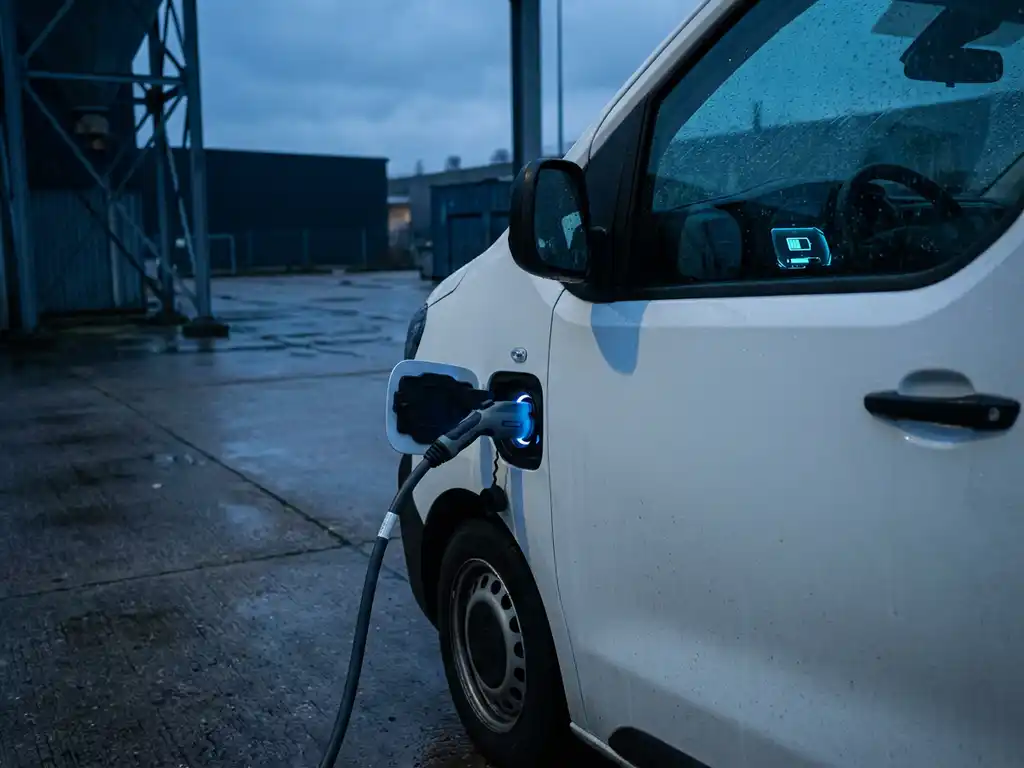
The fastest charging times are found with electric commercial vehicles such as the Mercedes eSprinter (10-80% in 42 minutes), Volkswagen ID. Buzz Cargo (35 minutes) and Ford E-Transit (34 minutes). The charging speed depends on the charging capacity of your vehicle, the type of charging station and the battery temperature. For everyday use, it is important to consider both fast-charging options and your normal charging pattern.
What actually determines the charging speed of an electric utility vehicle?
The charging speed of electric commercial vehicles is determined by five key factors that combine to create the final charging time. Battery capacity and charging technology are the biggest influencing factors on how quickly you can get back on the road.
Your battery capacity determines how much energy can be stored. A larger battery will charge slower than a smaller one, even if it has more power. Your commercial vehicle's charging technology is just as important. Modern vehicles can charge faster thanks to better battery management systems.
Temperature also plays a big role. In cold weather, batteries charge slower because chemical processes are slower. In winter, your charging time can be as much as 30% longer. Your battery status also matters: going from 10% to 80% is faster than going from 80% to 100%, because the charging speed decreases as the battery gets fuller.
The charging infrastructure ultimately determines your maximum charging speed. An ordinary socket charges much slower than a fast charger. Even if your commercial vehicle can charge 150 kW, you are limited to 50 kW if the charging station cannot handle that.
Which electric commercial vehicles are charging fastest right now?
The Mercedes eSprinter, Volkswagen ID. Buzz Cargo and Ford E-Transit are among the fastest-charging electric commercial vehicles. These vehicles charge from 10% to 80% battery capacity in 30-45 minutes at a fast charger. Practical loading times vary by vehicle category and use.
Among small vans, the Volkswagen ID. Buzz Cargo scores best with a charging time of about 35 minutes (10-80%) at 170 kW DC fast charging. The Peugeot e-Partner and Citroën ë-Berlingo follow with about 45 minutes at 100 kW charging.
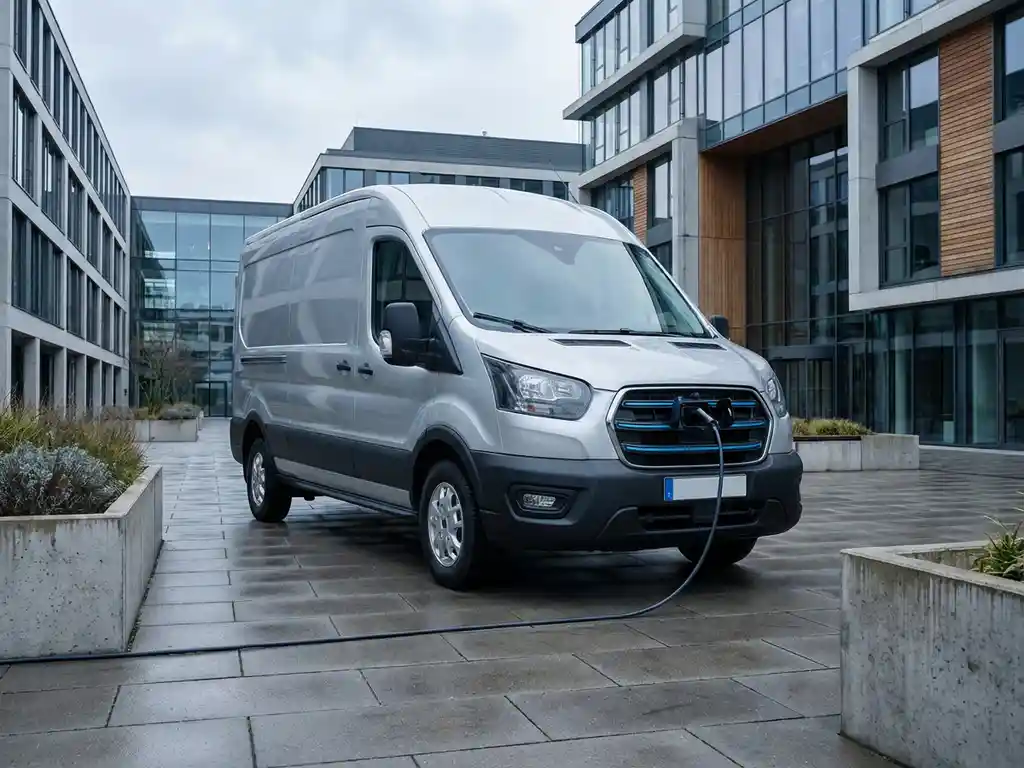
For medium-sized commercial vehicles, the Ford E-Transit Custom is a fast charger with 34 minutes for 10-80% at 125 kW. The Mercedes eVito charges slightly slower, but is still competitive with around 40 minutes at 110 kW DC charging.
Large bucket trucks like the Mercedes eSprinter reach 10-80% in about 42 minutes at 115 kW charging. The Iveco eDaily has similar performance. These times are for optimal conditions with a modern fast charger and a battery at the right temperature.
What is the difference between AC charging and DC fast charging for commercial vehicles?
AC charging you use at home or in the office for slow charging during the night, while DC fast charging on the go provides quick top-ups during breaks. AC charging is cheaper and better for your battery, DC fast charging is practical for long trips and when under time pressure.
AC charging works via alternating current and usually goes up to 22 kW, sometimes 43 kW. This is perfect for your daily routine: you plug in your company car in the evening and start the next morning with a full battery. Charging takes 6-8 hours for an empty battery, but that doesn't matter if you don't drive anyway.
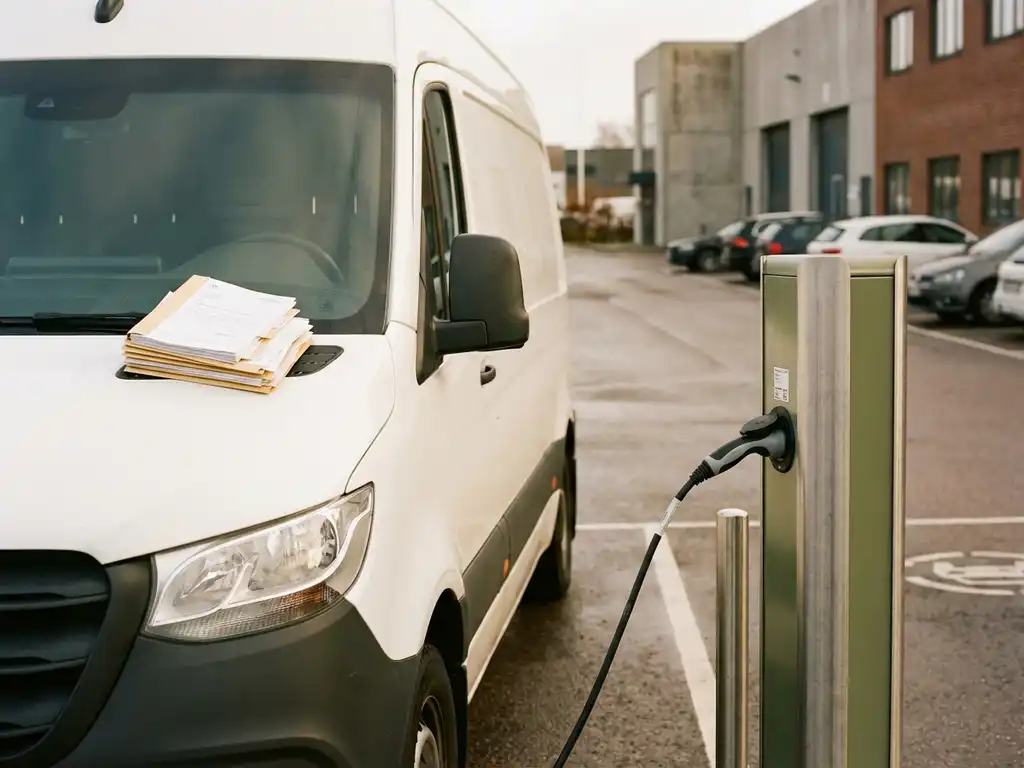
DC fast charging uses direct current and can deliver up to 350 kW, depending on your vehicle. You use this at motorway service stations or during work breaks. In 30-45 minutes, you have enough energy for the rest of your working day. It is more expensive per kWh and puts more strain on your battery.
For your daily operations, combine both methods. AC charging at your fixed location keeps your costs down and ensures a full battery every morning. DC fast charging is used only when you need to cover more kilometres than your battery range allows, or when you don't have time for slow charging.
How to choose the right electric utility vehicle for your charging needs?
First determine your daily mileage and compare it with the practical range of electric commercial vehicles. Choose a vehicle whose battery 20-30% has more range than you drive on average. Charging infrastructure and downtime determine what loading speed you really need.
If you drive less than 150 kilometres daily and can charge at night, a commercial vehicle with AC charging up to 11 kW will suffice. For longer distances, you need fast-charging capabilities of at least 50 kW, preferably 100 kW or more.
Take a realistic look at your available charging infrastructure. Do you have your own charging station at the office? Then you can opt for a vehicle with a smaller battery and slower charging. Do you need to charge often on the road? Then choose a company vehicle that can charge quickly and is compatible with many charging networks.
Your downtime capabilities also matter. Can you charge during lunch breaks or customer visits? Then you need less fast-charging capacity. Do you work in an industry where every minute counts? Then invest in a vehicle with the fastest charging capabilities.
Budget considerations also come into play. Vehicles with faster charging options often cost more but save time. Calculate what an hour of waiting time will cost you and compare this with the extra cost of faster charging.
How Van den Hurk helps with electric commercial vehicles
We help you switch to electric commercial vehicles with personal advice that suits your specific charging needs and work patterns. With over 60 years of experience in commercial vehicles, we understand that the choice of electric driving needs to be well thought through.
Our support includes:
- Tailored advice on your daily mileage and charging options
- Extensive range electric commercial vehicles of different brands
- Flexible leasing options to suit your budget
- Support for charging infrastructure planning
- Transparent information on costs and practicalities
We take the time to understand your situation and only recommend vehicles that really suit you. From small vans to large cargo vans, we will help you make the right choice for your business.
Wondering which electric company car best suits your charging needs? Contact us for a personal discussion about the possibilities.