
How long does the battery life of electric commercial vehicles last?
The battery of an electric commercial vehicle lasts 8 to 15 years on average, depending on usage and maintenance. Most batteries retain 70-80% of their capacity after 150,000 to 300,000 kilometres. Factors such as charging habits, driving style and temperature determine how long your battery performs optimally. With proper care, you can extend its life considerably.
What actually determines how long an electric utility vehicle's battery lasts?
The life of your battery depends on four main factors: how you charge, how you drive, the temperatures in which you drive and how well you maintain the battery. Loading habits have the greatest impact on battery life.
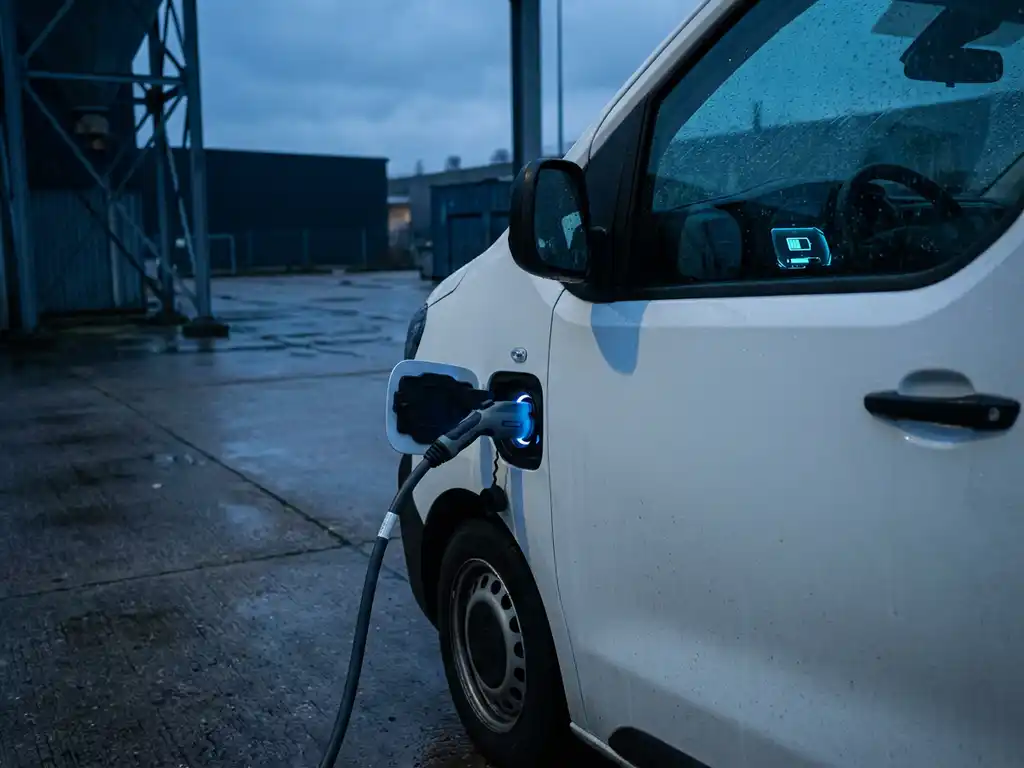
Frequent fast charging up to 100% stresses the battery more than slow charging up to 80%. The ideal charging zone is between 20% and 80% capacity. If you make short trips daily and can charge at home, use a regular charging station instead of fast chargers.
Temperature also plays a big role. Extreme cold and heat accelerate the ageing of battery cells. In winter, you temporarily lose range, but structural damage occurs mainly from prolonged exposure to temperatures above 35°C or below -10°C.
Your driving style also affects battery life. Aggressive acceleration and hard braking require a lot of energy and strain the battery. Use regenerative braking whenever possible and drive evenly to conserve battery life.
How many kilometres can you expect from the battery of an electric utility vehicle?
A modern battery in electric commercial vehicles lasts between 150,000 and 300,000 kilometres before replacement is necessary. This equates to 8 to 15 years of use for most companies. Lithium-ion batteries in newer vehicles perform better than older generations.
The expectation varies by usage pattern. Delivery companies with daily 100+ kilometres and many stops are more likely to see capacity loss than those with weekly long trips. Taxis and courier companies often replace batteries after 200,000 kilometres, while mixed-use mechanics often reach 250,000+ kilometres.
Battery capacity also determines lifespan. Larger batteries (75+ kWh) last longer because they are less deeply discharged per trip. Smaller batteries (40-50 kWh) are used more intensively and may need replacement sooner.
Most manufacturers provide an 8-year warranty on the battery, maintaining at least 70% capacity. After this period, the battery will still function for years, but with a more limited range.
When should you replace your electric utility vehicle battery?
Replace your battery when the capacity drops below 70% or when the range hinders your daily work. Recognisable signals are noticeably shorter trips between charging sessions, longer charging times and unexpected capacity loss while driving.
Practical indicators for replacement are a range that is 30% shorter than when purchased, charging times that are 50% longer than normal, or irregular battery indicators on the dashboard. If you need to drive 200 kilometres daily but still only reach 150 kilometres, replacement becomes sensible.
Economically, replacement is interesting if the reduced efficiency costs you more than a new battery. Calculate the extra charging costs, lost working time due to frequent charging and any missed customers due to a reduced range.
Some batteries can be repaired by replacing defective modules. This costs less than complete replacement, but offers no long-term guarantee. Let a specialist determine whether repair or replacement is more economical.
How can you extend the battery life of your electric utility vehicle?
Extend battery life by smart charging, moderate driving and protecting the battery from extreme temperatures. Load between 20% and 80% for daily use and avoid fully empty or fully charged when not needed.
Concrete tips for longer battery life:
- Use a regular charging station (11 kW) at home instead of fast chargers
- Plan your rides so you don't fall below 10% capacity
- Park indoors or in the shade in extreme temperatures
- Use air conditioning and heating during charging
- Drive forward and use regenerative braking
During prolonged downtime (holidays, seasonal work) leave the battery on 50% and check the charge monthly. Completely empty or full batteries during downtime accelerate ageing.
Manufacturer's software updates can improve battery management. Install these updates in time to benefit from optimisations. Some updates improve charging strategy and temperature control.
How Van den Hurk helps with electric commercial vehicles
We will help you make the right choice in electric commercial vehicles and support you with practical advice on battery performance and maintenance. With more than 60 years of experience, we understand the specific needs of entrepreneurs switching to electric driving.
Our service for electric commercial vehicles includes:
- Personal advice on battery capacity and range for your operations
- Transparent information on maintenance costs and battery guarantees
- Flexible leasing options that can cover battery replacement
- Practical tips for optimal battery use and cost savings
- Support charging solutions and tax benefits
Want to know which electric utility vehicle suits your business and how to make the best use of the battery? Contact us for personal advice on your situation. We will help you make an informed choice that suits your operations and budget.