
What electric commercial vehicles are available for logistics?
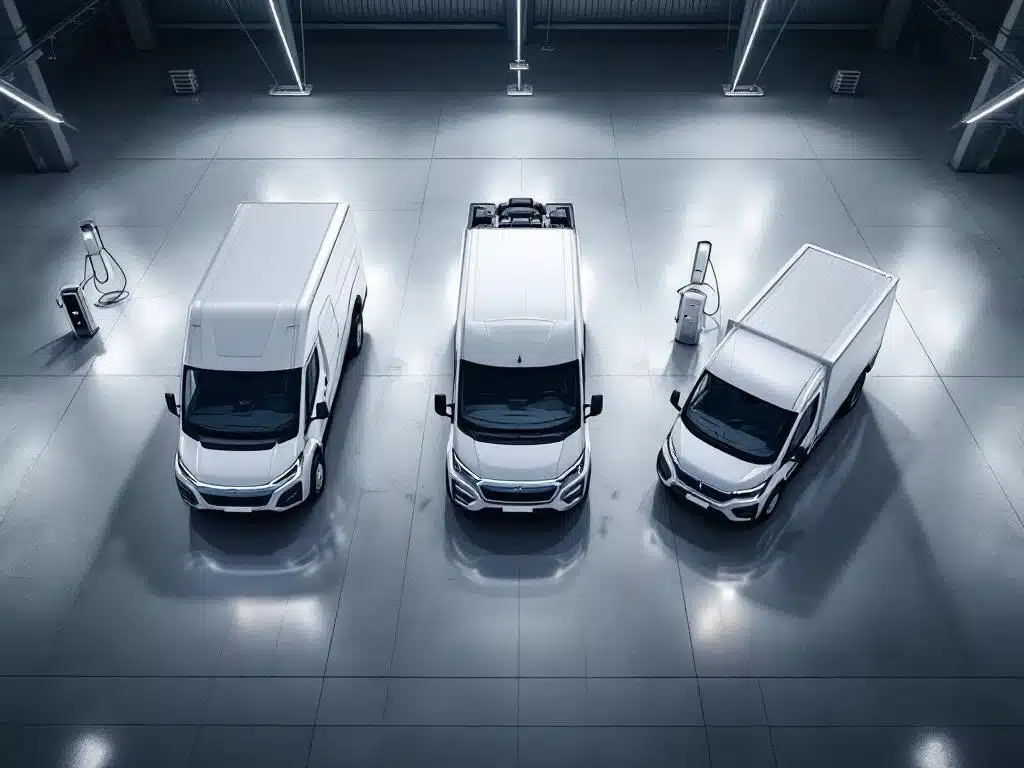
For logistics companies, several electric utility vehicles are available that perfectly suit transport needs. The Ford E-Transit, Mercedes eVito and Volkswagen e-Crafter offer excellent loading capacities and reliable range for daily routes. These vehicles combine practicality with lower operating costs and access to environmental zones, making them ideal for modern logistics operations.
What are the best electric commercial vehicles for logistics companies?
The Ford E-Transit is at the top for logistics applications with a load volume of up to 15.1 m³ and a payload of up to 1,758 kg. This model offers a range of about 317 kilometres and is available in different configurations, from closed vans to customised chassis.
The Mercedes eVito targets medium-sized logistics needs with a 6.6m³ cargo volume and a range of up to 421 kilometres. This vehicle excels in urban distribution and offers excellent manoeuvrability for tight loading and unloading sites.
For heavier transports, the Volkswagen e-Crafter a strong option with a load capacity of up to 10.7 m³ and a payload of up to 1,720 kg. The range of about 173 kilometres makes this vehicle suitable for regional distribution.
Other interesting options include the Renault Master E-Tech Electric and the Iveco eDaily, both of which offer specific advantages for different logistics applications. These models stand out for their robust construction and reliability in commercial environments.
How many kilometres can you drive with an electric company car?
The range of electric commercial vehicles varies between 150 and 400 kilometres, depending on the model and battery capacity. The Mercedes eVito achieves up to 421 kilometres, while models such as the Volkswagen e-Crafter reach around 173 kilometres.
Several factors significantly affect your actual range. Cold weather conditions can reduce range with 20-30%, as the battery works less efficiently and requires energy for cabin heating. A full charge increases energy consumption, especially with frequent stopping and starting in urban environments.
Your driving style has a direct impact on range. Smooth acceleration and anticipatory braking can improve range by 15-25%. Make the most of regenerative braking by releasing the throttle early at traffic lights and intersections.
Practical tips for maximum range: plan routes with loading breaks, avoid unnecessary weight in the cargo space and use eco-driving modes when available. Pre-heating the cabin while charging saves battery capacity on the road. Allow a safety margin of 20% in route planning to accommodate unexpected circumstances.
What does it cost to charge an electric company car?
Home charging costs around €0.08-€0.12 per kilometre, while public fast chargers cost €0.15-€0.25 per kilometre. A full charge for a Ford E-Transit costs around €15-20 at home, compared to €50-70 for a full diesel tank.
You will realise the biggest cost savings by charging smartly. Especially charge at home or at work with your own charging stations, where you can take advantage of preferential rates. Many energy suppliers offer special business rates for electric driving, with lower costs during off-peak hours.
Public charging stations have different tariff structures. AC chargers (up to 22 kW) usually cost €0.25-€0.35 per kWh, while DC fast chargers can cost €0.45-€0.65 per kWh. Subscriptions at charging networks often reduce these tariffs significantly.
Comparison with diesel shows clear advantages: where a diesel company car costs €0.15-€0.20 per kilometre in fuel, electric driving stays under €0.12 per kilometre when charged at home. Over 30,000 kilometres a year, this saves €900-€2,400 in fuel costs. Add to this the lower maintenance costs for the total cost benefit.
What charging capacity do electric commercial vehicles have?
Electric commercial vehicles offer similar charging capacities to their diesel equivalents, although the battery and electric components sometimes take up space. The Ford E-Transit retains 15.1 m³ cargo volume, identical to the diesel version, with a payload of up to 1,758 kg.
Weight distribution does differ due to battery placement. Electric commercial vehicles often have a lower centre of gravity due to batteries in the floor, which improves driving stability but can limit the maximum payload weight. The Mercedes eVito offers 6.6 m³ of cargo space with a payload of up to 1,226 kg.
For logistics planning, this means that you may have to arrange routes differently. Whereas with diesel you might make one heavy trip, with electric you might better opt for two lighter trips within range. This requires rethinking charging strategies and route optimisation.
Practical implications for daily operations: always check the combination of weight and volume when loading. Electric commercial vehicles often reach their weight limit before the cargo space is full, especially when transporting heavy goods. Plan loading stops strategically in your routes and take into account the longer ‘refuelling stops’ for recharging compared to diesel refuelling.
How Van den Hurk helps with electric commercial vehicles
We guide your transition to electric commercial vehicles completely, from initial advice to implementation in your fleet. Our expertise will help you make the right choice to suit your specific logistics needs and growth plans.
Our concrete support includes:
- Personal advice on the most suitable electric model for your transport needs
- Flexible financing with leasing options to suit your business operations
- Practical guidance in route planning and charging infrastructure
- Transparent cost comparison between electric and diesel for your specific situation
- Aftercare and maintenance to make your electric utility vehicle perform at its best
With over 60 years of experience in commercial vehicles and an extensive range of electric models from top brands such as Ford, Mercedes and Volkswagen, we make sure you are confident in your choice. Our local presence in Helmond means personal service and quick support when you need it.
Want to know which electric company car is the perfect fit for your logistics challenges? Contact us for a no-obligation discussion about your options and the benefits of electric driving for your business.