
Where can you charge electric commercial vehicles?
You can charge electric commercial vehicles in four main locations: at home, at work, at public charging stations and at fast-charging stations. Home charging is usually the cheapest and most convenient for everyday use, while fast-charging stations are ideal for longer trips. The best choice depends on your driving habits, budget and available facilities.
Where is the best place to charge your commercial electric vehicle?
The best charging location for your electric utility vehicle depends on your daily driving pattern and business situation. Home charging is often the most practical option because you can charge at night at low rates. You will always have a full battery when you leave in the morning.
Charging at work is becoming increasingly popular, especially if your employer installs charging stations. This comes in handy if you don't have your own parking space at home or if you work long hours. Many companies offer this as an extra service to their employees.
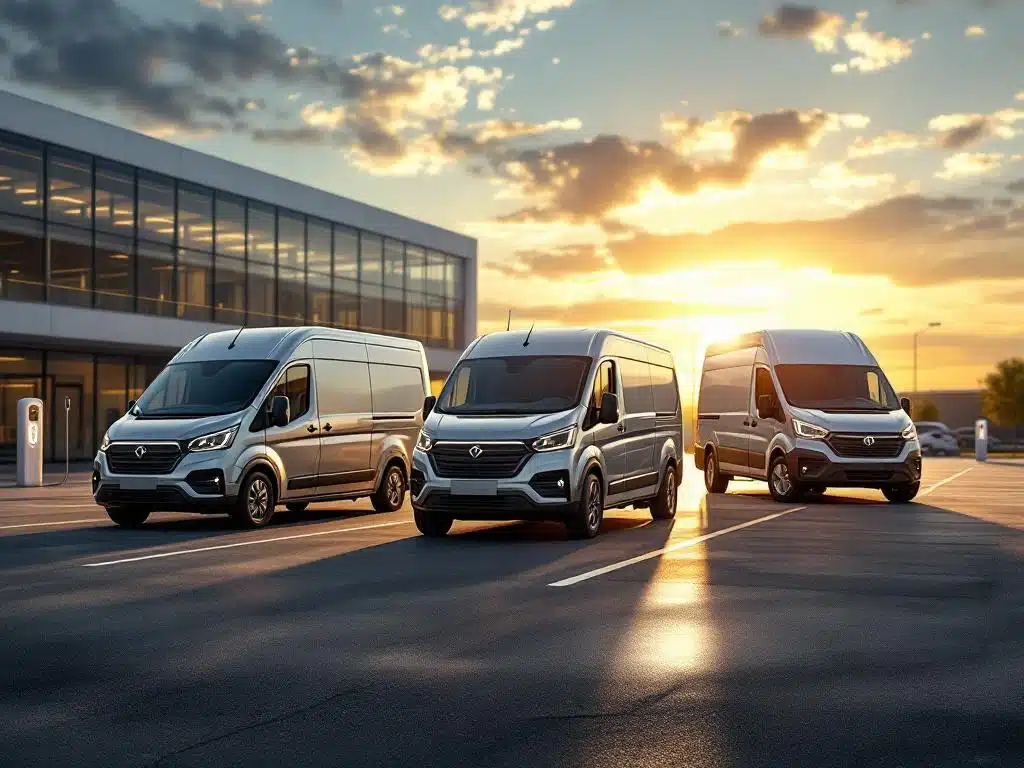
Public charging stations can be found in shopping centres, car parks and along roadsides. They are useful for interim recharging during work trips or errands. The charging speed varies from slow to semi-fast charging.
Fast charging stations are perfect for long trips. In 20-30 minutes, you can charge your company vehicle for 80%. You find them mostly along motorways and at petrol stations. For daily use, they are less suitable because of the higher cost.
What does it cost to charge your electric utility vehicle?
Charges vary considerably by location and time of day. Home charging is usually the cheapest, costing between €0.20 and €0.30 per kWh. With a night tariff, this can even drop to €0.15 per kWh. For an average commercial vehicle, this means around €8 to €12 for a full charge.
Public charging stations often charge €0.35 to €0.50 per kWh, plus sometimes start-up costs or parking fees. A full charge then costs €15 to €25. Some providers have subscriptions with cheaper rates.
Fast charging stations are the most expensive, with prices ranging from €0.50 to €0.70 per kWh. A quick charge from 80% costs €20 to €35, partly offset by the time savings on long trips.
Tips to save costs: use night rates at home, find employers offering free charging, choose charging passes with preferential rates and plan fast charging only for necessary moments. Charging apps help you find the cheapest stations nearby.
How to find the right charging station for your electric commercial vehicle?
Choosing the right charging station starts with determining your daily mileage. Do you drive less than 100 km per day? Then an ordinary 3.7 kW home charging station will suffice. For more kilometres, you need a faster charger of 7.4 kW or 11 kW.
Check which plug type your commercial vehicle has. Most new commercial electric vehicles use type 2 plugs for AC charging and CCS for DC fast charging. Older models sometimes still have CHAdeMO connectors.
For home installation, look at the available power capacity. An 11 kW charging station requires three-phase power. Have an electrician check whether your meter box can handle this. Single-phase connections limit you to 3.7 kW charging.
Smart charging stations offer additional benefits, such as setting charging times for cheap night tariffs, monitoring via apps and access management. For business use, these features are often worth the extra cost as they help control costs.
What are the advantages of home charging versus public charging?
Home charging offers the most convenience and the lowest cost. You leave every morning with a full battery, without having to plan extra stops. The investment in your own charging station pays for itself through lower charging costs, especially with night-time tariffs.
The biggest advantage is the time savings. No waiting at occupied charging stations or searching for working stations. You just charge while you sleep, when you are not using the car anyway. For business use, this means more efficiency.
Public charging has the advantage of flexibility. You are not dependent on one location and can charge wherever it is convenient during work visits. This is ideal if you don't have a fixed home base or visit many different locations.
Disadvantages of public charging include higher costs, possible waiting times and dependence on working charging stations. Sometimes stations break down or are occupied, which can disrupt your schedule. For regular users, home charging is therefore usually the better choice.
How Van den Hurk helps with electric commercial vehicles
We understand that switching to electric commercial vehicles raises questions about charging, range and practicalities. That is why we offer complete support in your choice of electric commercial vehicles. Our experience of more than 60 years will help you make the right decision.
Our service includes:
- personal advice on which electric company car suits your driving style
- explanation of charging options and range calculations for your specific situation
- support in finding suitable charging solutions, at home and on the road
- flexible leasing options that make the switch to electric driving affordable
- transparent information on costs, subsidies and tax benefits
With our large stock of electric commercial vehicles from brands such as Volkswagen, Ford and Mercedes-Benz, you will always find a vehicle to suit your business needs. We will take the time to explain all your options to help you make an informed choice. Contact us for a no-obligation chat about electric commercial vehicles and find out how we can help you get ahead.