
What are electric commercial vehicles?
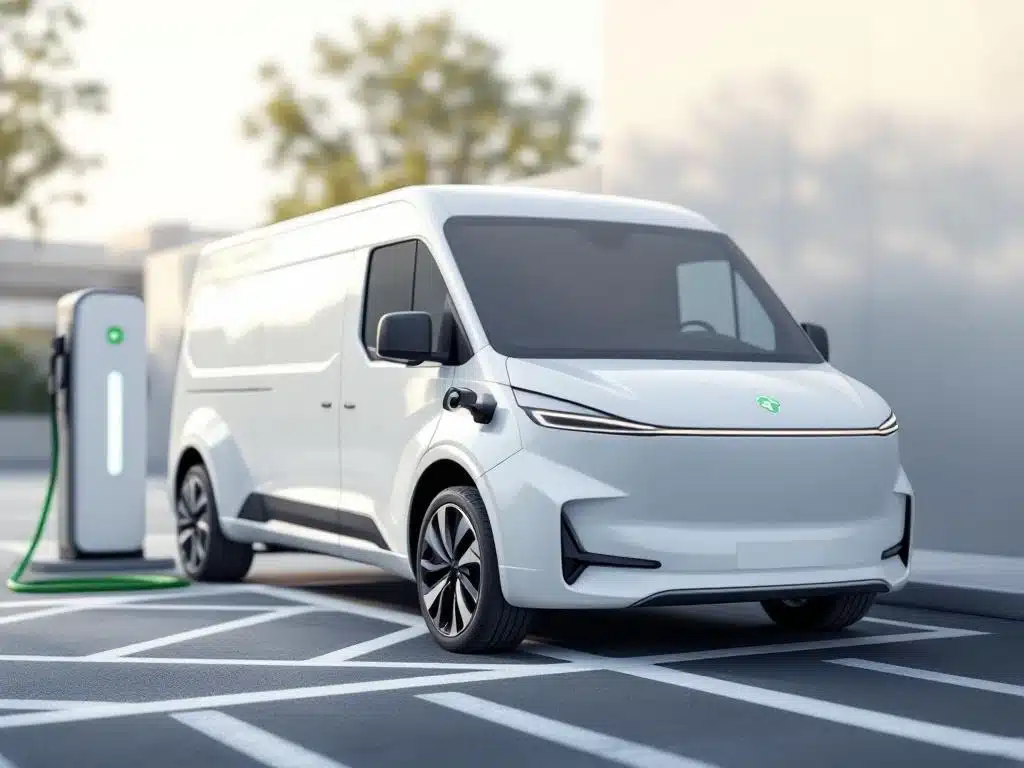
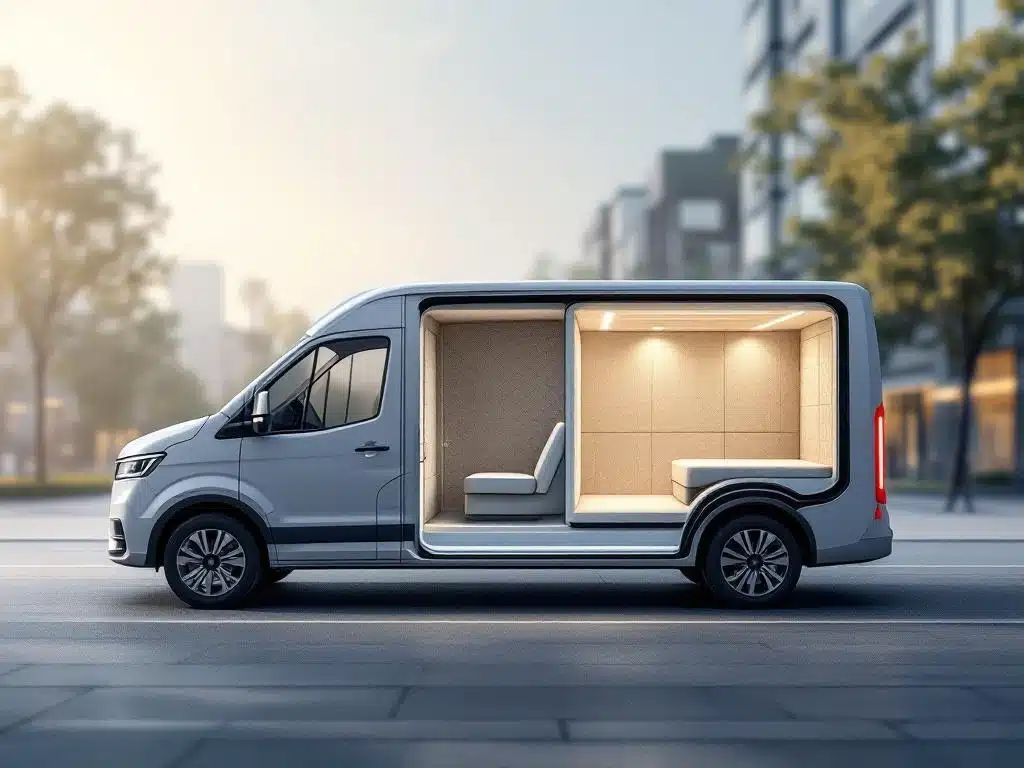
Electric commercial vehicles are vehicles that run entirely on battery power instead of diesel or petrol. They have an electric motor and a rechargeable battery that provides energy for propulsion. These commercial vehicles offer the same practical space and loading capacity as traditional models, but with lower operating costs, less maintenance and access to environmental zones. They are suitable for most business applications within cities and regions.
What makes an electric commercial vehicle different from an ordinary van?
The biggest difference is in the drive: electric commercial vehicles have a electric motor which is powered by a battery, while traditional commercial vehicles use an internal combustion engine that burns diesel or petrol. This technical change has major implications for how you use and maintain the vehicle.
The electric motor operates much quieter and has instant torque available from standstill. This ensures smooth acceleration and comfortable driving, especially in the city. You don't need a gearbox, which makes driving easier.
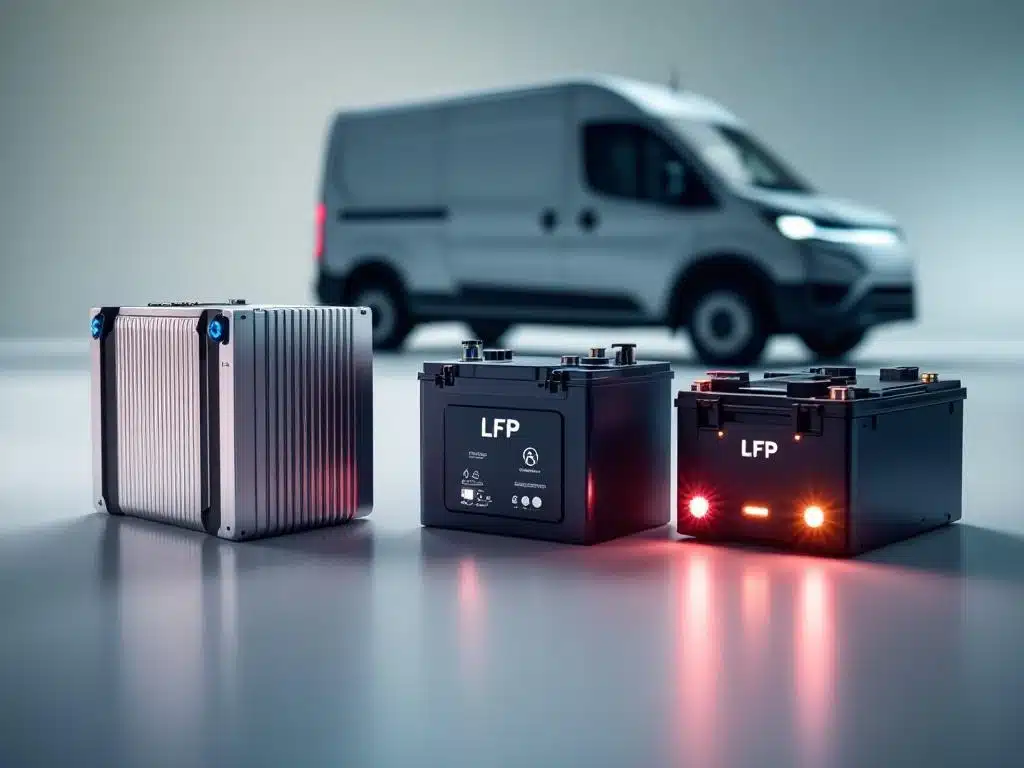
Maintenance also varies considerably. Electric commercial vehicles have far fewer moving parts. You don't have to change oil, air filters and brakes wear less due to regenerative braking. However, you do have to factor in battery maintenance and battery replacement after several years of heavy use.
For everyday use, this means planning around charging rather than refuelling. You usually charge at night at your business premises or home, which is different from the quick refuelling at a petrol station.
How many kilometres can you drive with an electric company car?
Most modern electric commercial vehicles have a range of 200 to 400 kilometres on a full battery. This varies by brand and model, with larger batteries giving more range but also being more expensive to buy.
Your actual range depends on several factors. Cold weather can reduce range by 20-30%, as the battery works less efficiently and you use the heater. Highway driving consumes more energy than city driving, and a heavily loaded vehicle has a shorter range than an empty bus.
For most business applications, this range is more than sufficient. The average company car drives 100-150 kilometres per day, which is well within the range of electric models. If you regularly drive long distances, you can fast charge on the go, although this will affect your schedule.
It is wise to monitor your daily mileage before switching. That way, you will know what battery capacity you need and whether electric driving is practical for your operations.
What is the real cost of an electric company car?
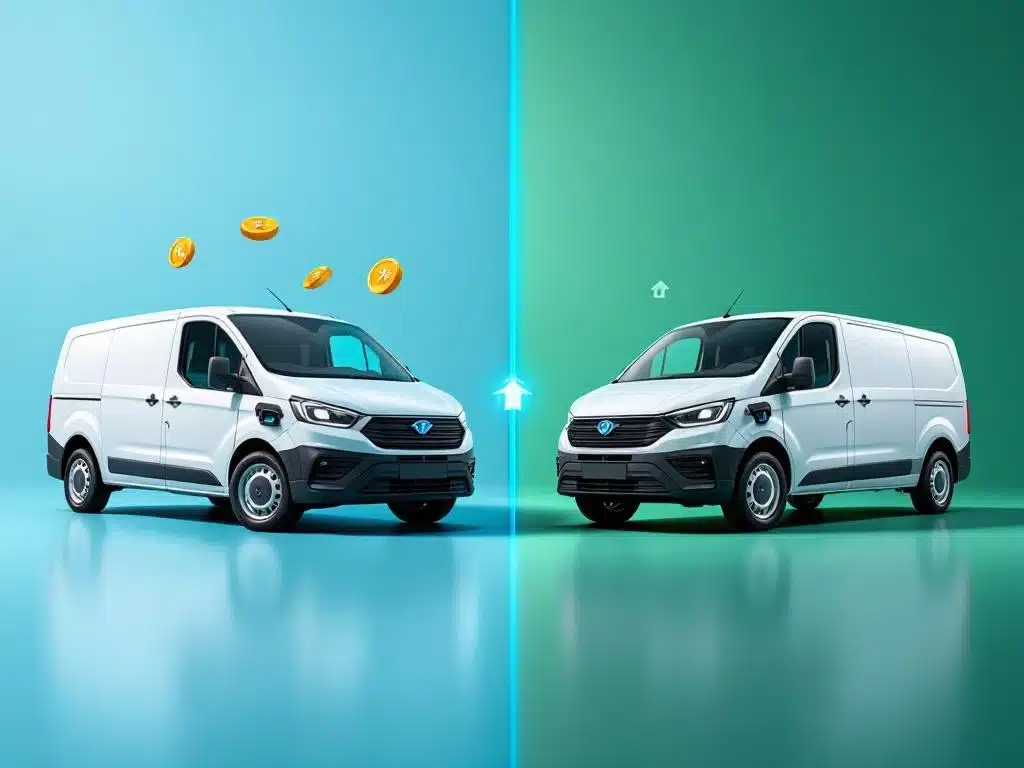
Electric commercial vehicles have higher purchase costs than comparable diesel models, but lower operating costs through cheaper energy and less maintenance. Since January 2025, tax breaks and the BPM levy on diesel vehicles make the difference smaller.
The purchase price is often 20-40% higher than diesel, depending on the model. This is offset by lower costs per kilometre. Electricity is cheaper than diesel and you save on maintenance, such as oil changes, filter changes and exhaust systems.
Fiscally, there are several advantages. You pay no BPM upon purchase, you have a lower additional taxable benefit for private use and you can deduct the full purchase price as an entrepreneur. You also have access to environmental zones where diesel vehicles are increasingly banned.
Over its entire lifespan of 5-7 years, the total cost is often similar to or lower than diesel, especially if you do a lot of mileage. The battery may need to be replaced after 8-10 years, which is a big cost in used vehicles.
How long does it take to charge an electric company car?
Charging takes 30 minutes to 12 hours, depending on the charging method and battery size. At home at a regular wall socket, it takes the longest, while fast chargers on the go are much faster but also more expensive.
For daily use, you usually charge at night on your premises with an 11 kW charging station. This fills an empty battery in 4-8 hours, ideal if your vehicle returns every evening. An ordinary wall socket also works, but takes 8-12 hours for a full charge.
On the road, you can fast charge at public 50-150 kW charging stations. These charge your battery to 80% capacity in 30-60 minutes. Useful for longer trips, but more expensive than charging at home and you have to plan your route around available charging points.
In practice, you plan charging around your working day. If your vehicle returns with 40% battery in the evening, it will be full the next morning. This requires different planning than refuelling, but fits well with regular operations with fixed routes.
How Van den Hurk helps with electric commercial vehicles
We help you switch to electric commercial vehicles with personal advice, flexible leasing options and a growing range of electric models. With our 60 years of experience, we understand that every entrepreneur has different needs.
Our offer includes:
- Extensive stock electric commercial vehicles of different brands
- Flexible leasing arrangements tailored to your cash flow
- Personalised advice on range, charging options and total costs
- Transparent prices with no hidden costs
- Support in applying for grants and tax benefits
We take the time to understand your business situation. How many kilometres do you drive? What charging options do you have? What is your budget? Based on this, we recommend the best electric model for your specific needs.
View our current stock of electric commercial vehicles or contact us for personal advice. We will be happy to help you take the step towards sustainable company mobility that suits your business.