
Which electric commercial vehicles have the largest cargo space?
The Ford E-Transit currently has the largest cargo space among electric commercial vehicles, with up to 15.1 cubic metres of cargo volume. Other toppers include the Mercedes eSprinter (up to 11 cubic metres) and the Iveco Daily Electric (up to 17 cubic metres, depending on the version). Your choice depends on your daily loading needs and the type of goods you transport.
Which electric commercial vehicles have the largest cargo volume?
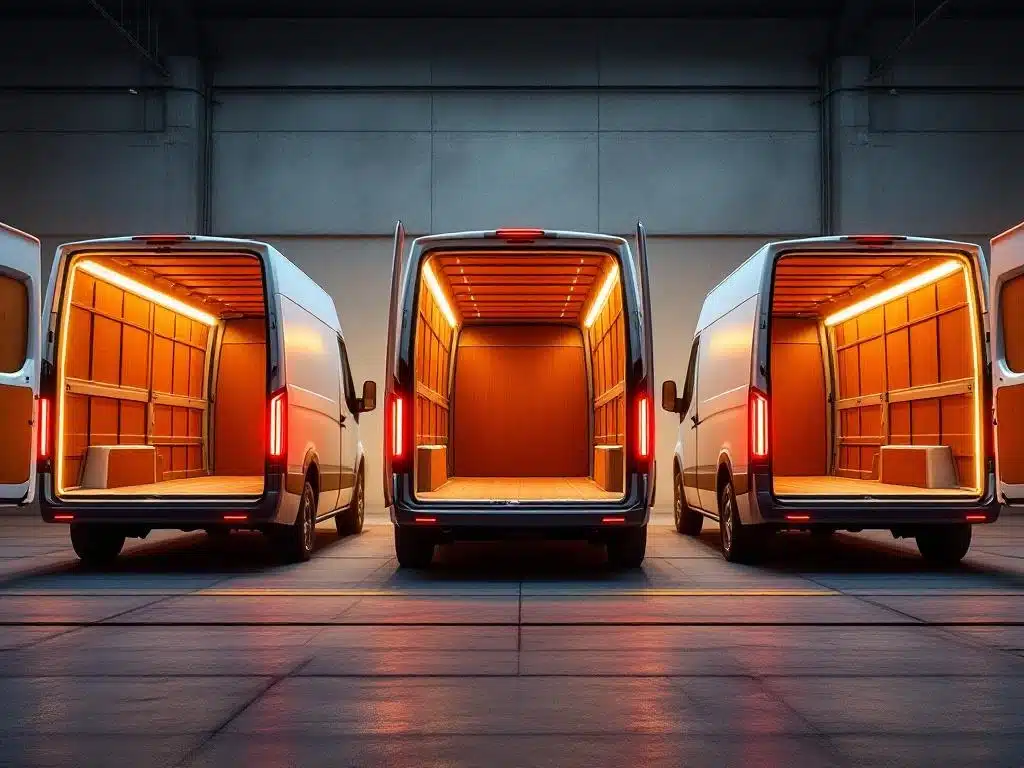
The Ford E-Transit offers the largest cargo volume in the electric utility vehicle market, with three lengths available. The longest version (L4) delivers up to 15.1 cubic metres of cargo space and a maximum payload weight of 1,758 kg. The cargo area is completely flat as the batteries are placed under the floor.
The Mercedes eSprinter comes second with up to 11 cubic metres of cargo volume in the long version. This model offers a loading length of up to 3,665 mm and a loading height of 1,787 mm. The maximum load weight is around 1,045 kg, depending on the battery capacity chosen.
The Iveco Daily Electric can offer up to 17 cubic metres of cargo volume in certain configurations. This makes it technically the largest, but the availability of this version is limited. Standard versions offer between 10 and 14 cubic metres of cargo space.
Other models with ample load capacity include the Volkswagen e-Crafter (10.7 cubic metres), the Renault Master E-Tech (8 to 13 cubic metres) and the MAN eTGE (10.7 cubic metres). These models all offer practical solutions for different transport needs.
How does cargo space differ between different electric vans?
Compact electric vans such as the Volkswagen e-Caddy and the Ford E-Transit Custom offer 3 to 6 cubic metres of cargo space. Medium-sized models such as the Mercedes eVito and the Renault Kangoo E-Tech provide 6 to 9 cubic metres. Large electric commercial vehicles start from 10 cubic metres of cargo volume.
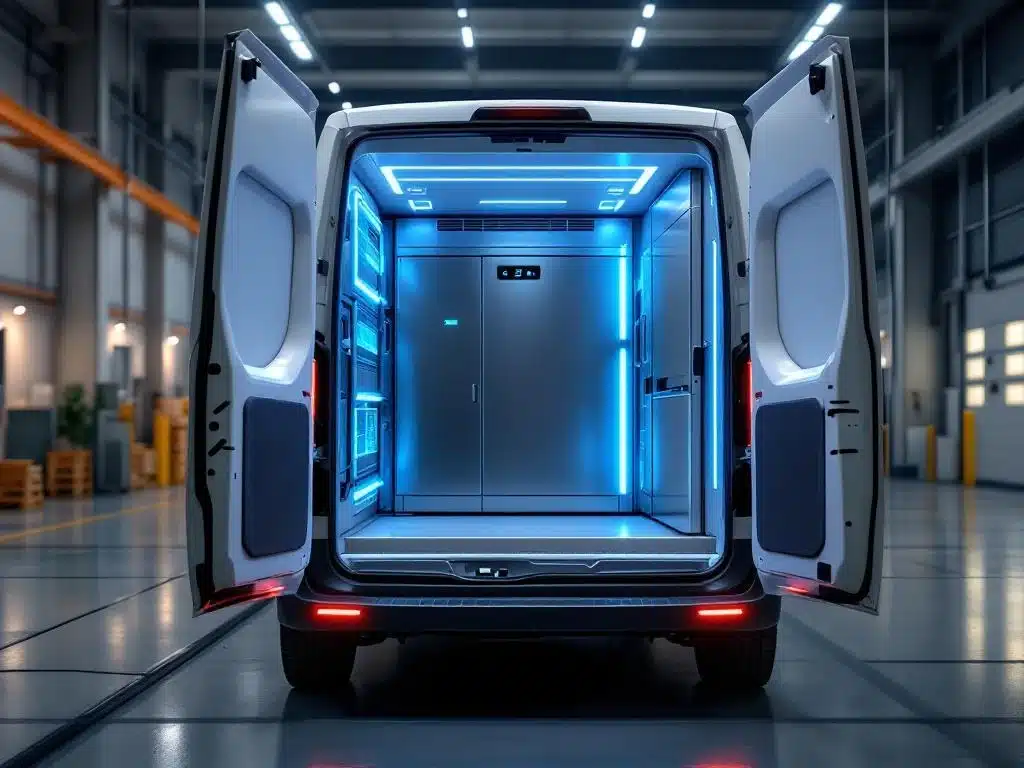
Battery placement significantly affects the load space. Modern electric commercial vehicles have batteries integrated under the floor, keeping the cargo space flat. Older designs sometimes placed batteries in the cargo space itself, which took up usable space.
There are practical differences in layout between brands. Ford focuses on maximum cubic metres, while Mercedes pays more attention to practical load openings and accessibility. Iveco offers the most configuration options, from high roof to extra-long versions.
The shape of the cargo area also varies by brand. Some models have a higher cargo box but narrower width, while others opt for a lower but wider layout. This affects what goods you can practically carry, regardless of the overall volume.
What do you need to know about charging capacity in electric commercial vehicles?
The battery weight of electric commercial vehicles reduces the maximum allowable load weight by 300 to 700 kg compared to diesel versions. For example, a Ford E-Transit has 500 kg less load capacity than the diesel variant due to the weight of the battery packs.
The maximum permissible weight remains 3,500 kg for most commercial vehicles, but the empty weight is higher because of the batteries. This means you can load less weight even though the physical space is the same. Always check the technical specifications for the exact load weight.
Weight distribution works differently in electric models. Underfloor batteries provide a lower centre of gravity, which improves stability. This partly offsets the disadvantage of less payload weight, especially when driving with a load.
Practical tips for optimal use: distribute heavy items evenly in the cargo area, place the heaviest weight above the rear axle and consider the effect of extra weight on your driving range. Every 100 kg of extra load reduces range by about 5-10%.
Which electric commercial vehicle is best for your business?
For daily transports of up to 5 cubic metres, a compact electric van such as the Volkswagen e-Caddy or the Renault Kangoo E-Tech will suffice. These models are agile in the city and have enough range for local trips of up to 200 kilometres a day.
Companies that regularly transport large items benefit from models with large load openings and high cargo spaces. The Ford E-Transit and the Mercedes eSprinter offer rear doors that open fully and side doors for easy access.
For long distances, choose a model with large battery capacity, even if it means less payload weight. The Mercedes eSprinter and the Ford E-Transit offer battery options of up to 90 kWh for a range of more than 300 kilometres under favourable conditions.
Specific sectors have their own requirements. Courier services often opt for medium-sized models with many options for cargo space layout. Construction companies benefit from robust models with a high loading weight. Catering companies prefer models with flat loading decks for easy loading and unloading.
How Van den Hurk helps with electric commercial vehicles
We help you switch to electric commercial vehicles with personal advice on cargo space, range and practical applications. Our experience with different makes and models ensures you make the right choice for your specific transport needs.
Our service includes:
- Practical comparison of load volumes and specifications between different models
- Advice on optimal battery capacity for your daily trips
- Flexible leasing options to suit your business growth
- Support in calculating total cost of ownership
- Help in planning charging infrastructure for your business
With more than 60 years of experience in commercial vehicles, we understand that switching to electric driving requires careful planning. We take the time to analyse your current transport patterns and find the electric commercial vehicle that fits perfectly with your daily practices.
Want to know which electric commercial vehicle offers the best cargo space for your situation? Contact us for a no-obligation discussion about the possibilities. We will be happy to help you make the right choice for sustainable company mobility.