
How do you calculate the energy costs of electric commercial vehicles?
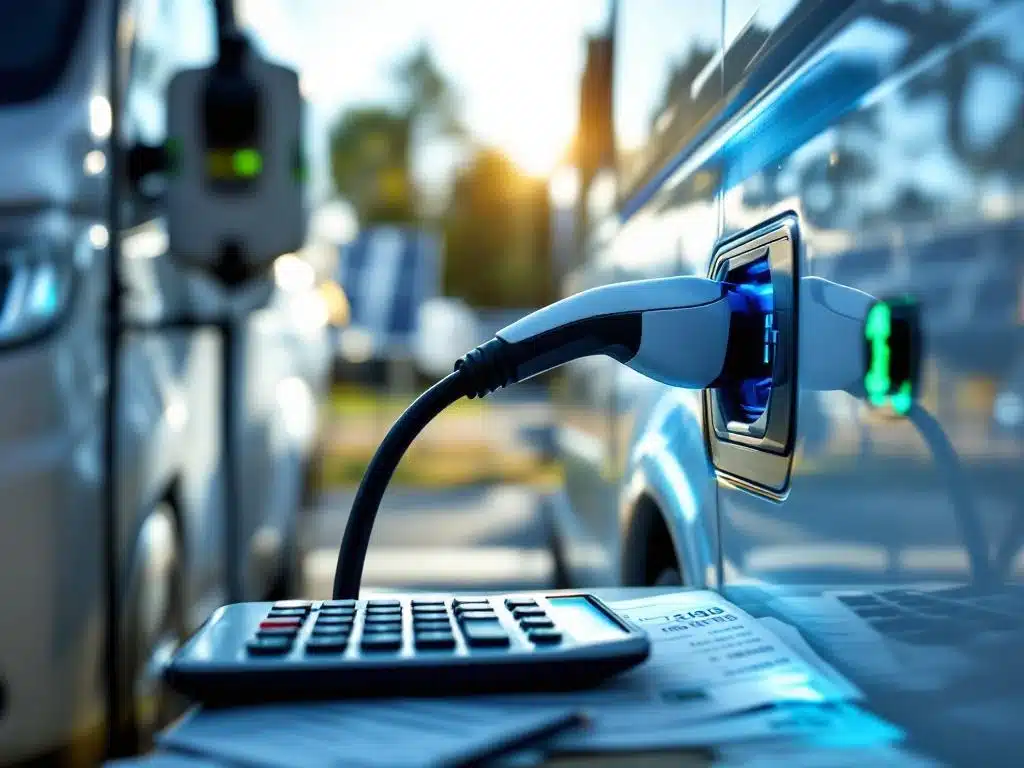
You calculate the energy cost of electric commercial vehicles by multiplying the consumption (kWh per 100 km) by your electricity price per kWh. An average electric company car consumes 20-25 kWh per 100 km. At a power price of €0.30 per kWh, you pay around €6-7.50 per 100 km. The total cost depends on your charging method, driving behaviour and vehicle type.
What determines the energy cost of an electric utility vehicle?
The energy cost of your electric utility vehicle is determined by five key factors: battery capacity, consumption per 100 km, power tariffs, charging methods and your driving behaviour. Together, these elements determine your total energy bill.
Battery capacity determines how much energy your vehicle can store, usually between 40 and 100 kWh for commercial vehicles. A larger battery means more range, but also higher charging costs per full charge. Consumption varies between 18 and 30 kWh per 100 km, depending on the type of commercial vehicle.
Power tariffs vary widely by supplier and time of day. Night rates are often 30-40% cheaper than daytime rates. Your charging method also matters a lot: home charging usually costs €0.25-0.35 per kWh, public charging stations €0.35-0.50 per kWh and fast chargers €0.45-0.65 per kWh.
Your driving behaviour directly affects consumption. Aggressive acceleration, high speeds and lots of air-conditioning use can increase consumption by 20-30%. In contrast, economical driving with regenerative braking can significantly reduce your consumption.
How do you calculate the cost per kilometre for electric driving?
The calculation is simple: divide consumption (kWh per 100 km) by 100 and multiply by your electricity price per kWh. This formula gives you the exact cost per kilometre for electric driving.
Practical example: your electric company car consumes 22 kWh per 100 km and you pay €0.30 per kWh. The calculation then becomes: (22 ÷ 100) × €0.30 = €0.066 per kilometre, or 6.6 cents per kilometre.
For daily use, you can calculate this into monthly costs. At 1,500 km per month, this comes out to €99 in energy costs. Compare this to a diesel company car, which at €1.50 per litre and 7 litres per 100 km comes out to €10.50 per 100 km, or 10.5 cents per kilometre.
Allow for variations in your consumption. In winter, consumption may be 15-25% higher due to heating and reduced battery efficiency. In summer, air conditioning causes 5-15% extra consumption.
What is the difference between home charging and public charging in terms of cost?
Home charging is usually 30-50% cheaper than public charging. At home, you pay your own electricity tariff (€0.25-0.35 per kWh), while public charging stations cost €0.35-0.50 per kWh and fast chargers €0.45-0.65 per kWh.
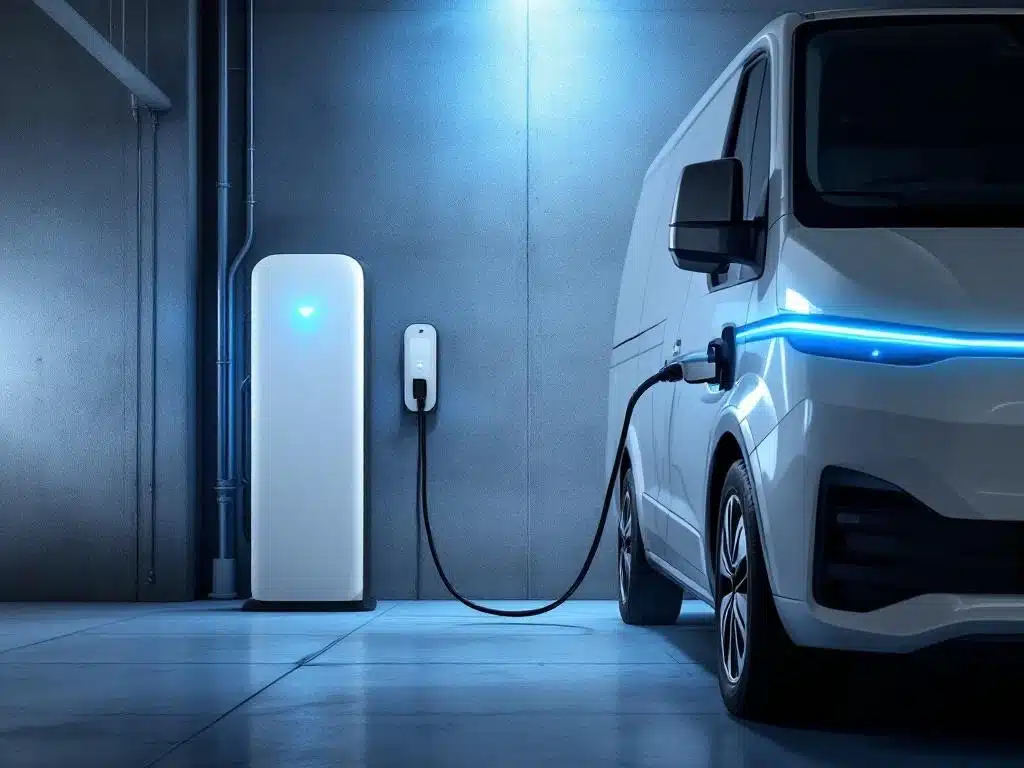
When charging at home, you can benefit from night rates, which are often around €0.20-0.25 per kWh. This means that a full 60 kWh charge at home at night costs €12-15, while the same charge at a public charging station would cost €21-30.
Public charging stations use different tariff structures. Some charge per kWh, others combine it with time or starting charges. Fast chargers are the most expensive, but charge your vehicle in 30-45 minutes, ideal for on the road.
For cost optimisation, it is best to charge 80% at home and only charge publicly when necessary. Many companies also install charging stations at the workplace, which often works out cheaper than public options. Plan your trips so that you make maximum use of cheap charging moments.
What factors influence the energy consumption of your electric utility vehicle?
Weather conditions, driving style, load, climate control, terrain type and speed all have a direct impact on the energy consumption of your electric utility vehicle. These factors can make the difference between economical and costly driving.
Weather conditions play a big role. Cold temperatures (below 5 °C) can increase consumption by 20-30% because the battery works less efficiently and you need more energy for heating. Hot days (above 25 °C) increase consumption by 10-15% due to air conditioning.
Your driving style makes a lot of difference. Quiet acceleration and anticipatory driving can 15-25% save energy. Make the most of regenerative braking by releasing the throttle early. High speeds increase consumption exponentially: 120 km/h instead of 100 km/h can cost 25% more energy.
Load and terrain are also important. A fully loaded commercial vehicle consumes 10-20% more energy. Hilly terrain increases consumption, but with smart route planning you can benefit from regenerative braking when going downhill. Use eco mode whenever possible and plan your routes efficiently to avoid unnecessary mileage.
How Van den Hurk helps with electric commercial vehicles
We will help you get a complete overview of all energy costs before you make a electric company car purchase. Our experience of more than 60 years in the commercial vehicle industry enables us to give you realistic advice on what electric driving means for your business.
Our concrete support includes:
- Personal advice on energy costs based on your driving behaviour and routes
- Help in choosing the most cost-efficient electric utility vehicle for your situation
- Information on charging solutions and associated costs
- Overall cost summaries in which we compare electric to diesel
- Support in finding suitable charging infrastructure
We understand that switching to electric driving requires careful consideration. That is why we take the time to go through your specific situation and give you a realistic picture of all the costs. Contact us for personal advice on electric commercial vehicles and find out what savings are possible for your business.