
Which electric commercial vehicles have the best driving characteristics?
The best electric commercial vehicles combine sufficient driving range for your daily routes with practical charging times and reliable performance. Models such as the Mercedes eSprinter, Ford E-Transit and Volkswagen e-Crafter each offer different strengths depending on your specific work and driving habits. The choice depends on factors such as your daily mileage, charging capabilities and the type of work you do.
What are the main driving characteristics to look out for?
With electric commercial vehicles, four features determine your daily work performance: driving range, charging time, charging capacity and driving behaviour. These factors determine whether an electric commercial vehicle is practical for your specific situation.
The driving range tells you how many kilometres you can drive before having to recharge. For most businesses, a range of 200-300 kilometres is sufficient for daily operations. Think of local deliveries, service calls or transport trips within the region.
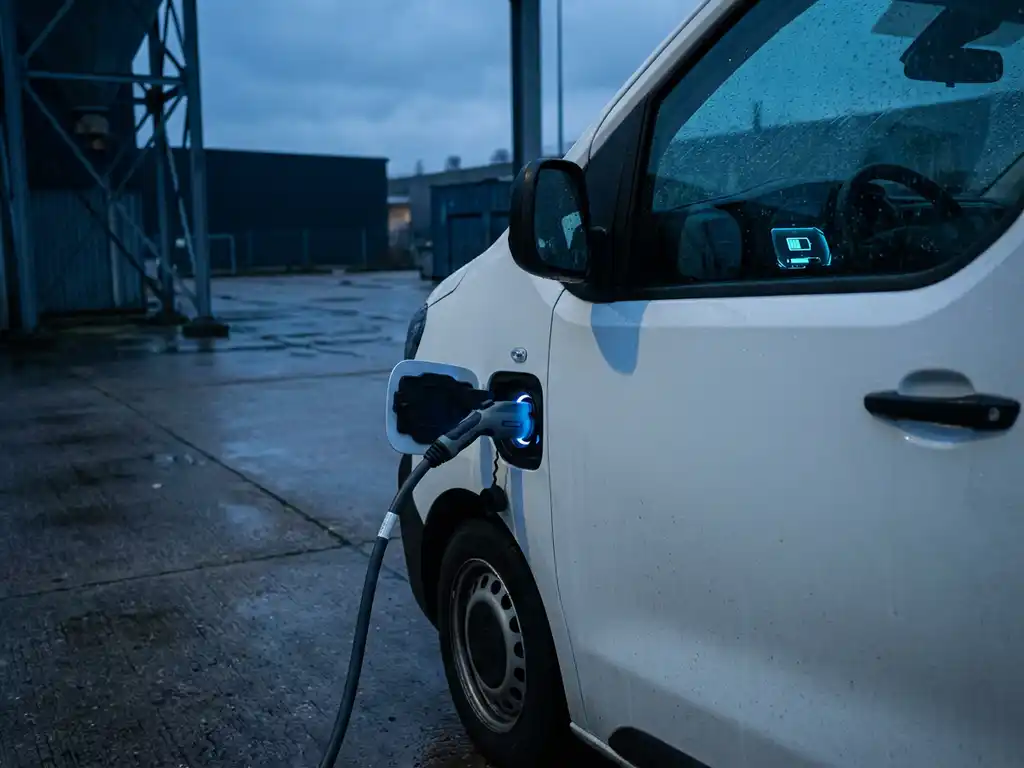
Charging time directly affects your work schedule. Home charging takes 6-8 hours, while fast charging is possible in 30-45 minutes up to 80%. Plan your routes so that charging fits into your work schedule, e.g. during breaks or at the end of the working day.
Load capacity remains important: electric commercial vehicles often have slightly less load capacity due to the weight of the battery. Always check that the payload fits your daily transport needs.
The handling of electric commercial vehicles is often smoother than diesel models, with direct power generation and quiet operation. This makes driving more comfortable, especially in urban environments with a lot of stop-and-go traffic.
What driving range do the most popular electric commercial vehicles have?
The Mercedes eSprinter offers 440 kilometres of range, the Ford E-Transit 350 kilometres and the Volkswagen e-Crafter 300 kilometres under ideal conditions. In practice, the actual range is often 20-30% lower, depending on weather conditions, driving style and load.
For local delivery services, a practical range of 200-250 kilometres is usually sufficient. You can then drive a full working day without recharging in between. Think parcel delivery, catering services or maintenance companies working within a 50-kilometre radius.
Transport companies driving longer distances benefit from models with more range. The Mercedes eSprinter is great for regional transport up to 300 kilometres per day. For shorter city trips, the Ford E-Transit is often more practical due to its manoeuvrability.
Weather conditions significantly affect range. In winter, 25% may reduce range due to the use of heating and lower battery efficiency. Therefore, always plan a buffer in your daily mileage and take seasonal variations into account.
How long does it take to charge an electric company car?
Home charging at an ordinary wallbox (11 kW) takes 6-8 hours for a full charge. Fast charging at public charging stations (50-150 kW) will take your battery from 20% to 80% in 30-45 minutes. The exact time depends on your battery size and charging speed.
Plan your charging strategy around your work schedule. Many entrepreneurs charge at home at night so that they start each morning with a full battery. This works perfectly for companies with fixed locations and daily trips under 200 kilometres.
For longer working days, you can use fast chargers during breaks. A 30-minute coffee break will give you enough energy for the rest of the day. Many fast chargers are located at petrol stations, restaurants or shopping centres along main roads.
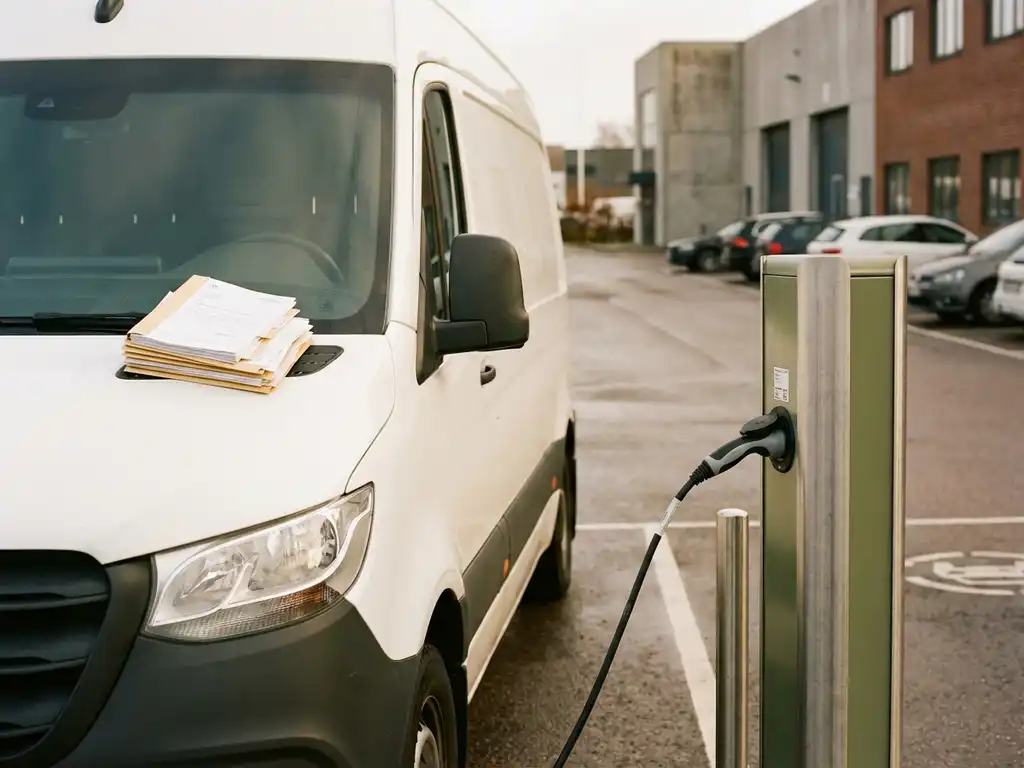
Public charging stations (22 kW) offer a middle way: faster than at home, but slower than fast chargers. You often find these at business parks, car parks and shopping centres. Ideal for charging during appointments or work visits of 2-3 hours.
Which electric commercial vehicle performs best in practice?
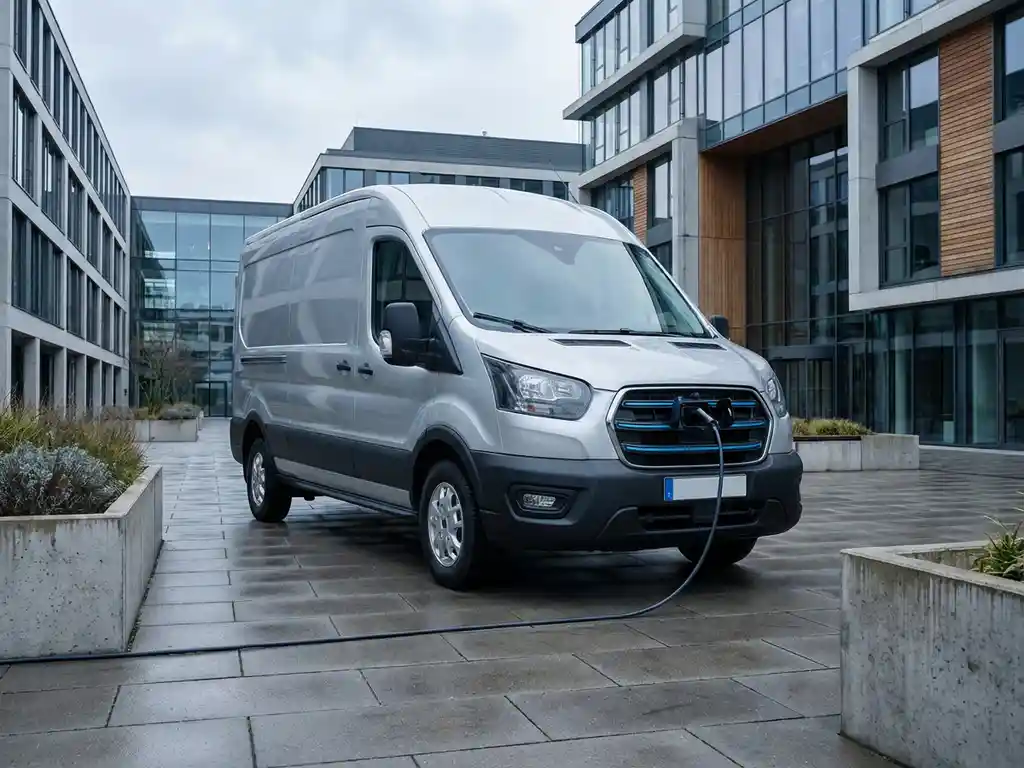
In field tests, the Ford E-Transit high on manoeuvrability and ease of loading, while Mercedes eSprinter excels in comfort and range. The Volkswagen e-Crafter offers a good balance between performance and value for money.
The Ford E-Transit drives smoothly around town due to its compact dimensions and low entry level. The cargo space is practical and the driving position is comfortable for long working days. Entrepreneurs appreciate the familiar controls, which are similar to those of the diesel version.
The Mercedes eSprinter offers the most luxury and driving comfort, with excellent sound insulation and high-quality finish. Its range is the greatest in this class, making it suitable for longer journeys and heavier loads.
The Volkswagen e-Crafter stands out for its reliability and practical details. The cargo space is efficiently arranged and maintenance is relatively easy. Many companies choose this model because of its well-known quality and extensive dealer network.
All models have regenerative braking, which allows you to recover energy when braking. This increases the range in urban traffic with many stops, where electric commercial vehicles really excel over diesel vehicles.
How Van den Hurk helps with electric commercial vehicles
We will help you find the right electric company car choose one that suits your operations and budget. With our 60 years of experience in commercial vehicles, we understand exactly what you need to look out for when switching to electric driving.
Our service includes:
- Personal advice on range, charging options and practical suitability for your business
- Large stock electric commercial vehicles from well-known brands such as Mercedes, Ford and Volkswagen
- Flexible financing with leasing options to suit your cash flow and tax situation
- Transparent pricing with no hidden costs, including explanations of all benefits and subsidies
- Complete unburdening from advice to delivery, so you can switch carefree
Want to know which electric company car is best for your business? Contact us for no-obligation advice. We will be happy to help you make the switch to sustainable and cost-efficient company mobility.