
What does charging electric commercial vehicles cost?
Charging an electric company car costs between €5 and €25 per 100 km, depending on your charging method. Charging at home is cheapest (€5-8 per 100 km), while fast charging on the road is more expensive (€15-25 per 100 km). Your charging costs depend on electricity tariffs, battery capacity and where you charge. We discuss all charging options and their costs, so you know exactly what electric driving will cost your business.
What are the different ways to charge your electric utility vehicle?
You can get your electric company car charging in three main ways: at home at a private charging point, at public charging stations or at fast charging stations. Each method has its own advantages and disadvantages in terms of cost, speed and convenience.
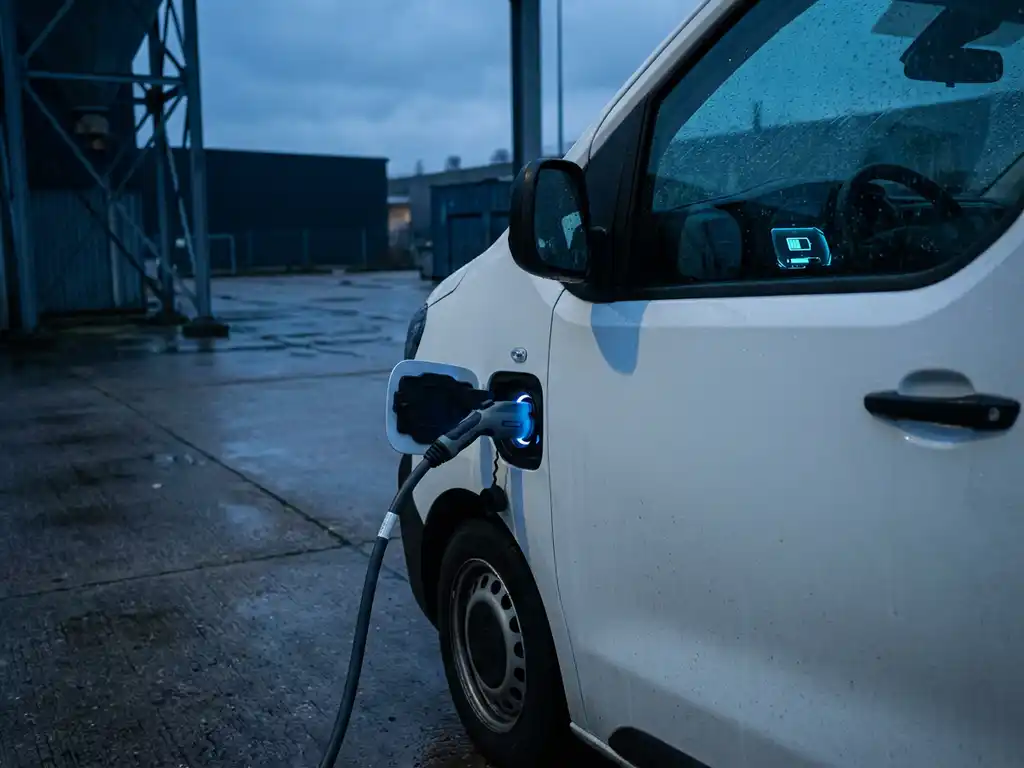
Home charging is usually done at night at a wallbox or regular socket. This is the cheapest option because you pay your own electricity tariff. Charging does take longer: a completely empty battery is full again after 6-12 hours. Perfect for company cars that come home in the evening and need to be ready the next morning.
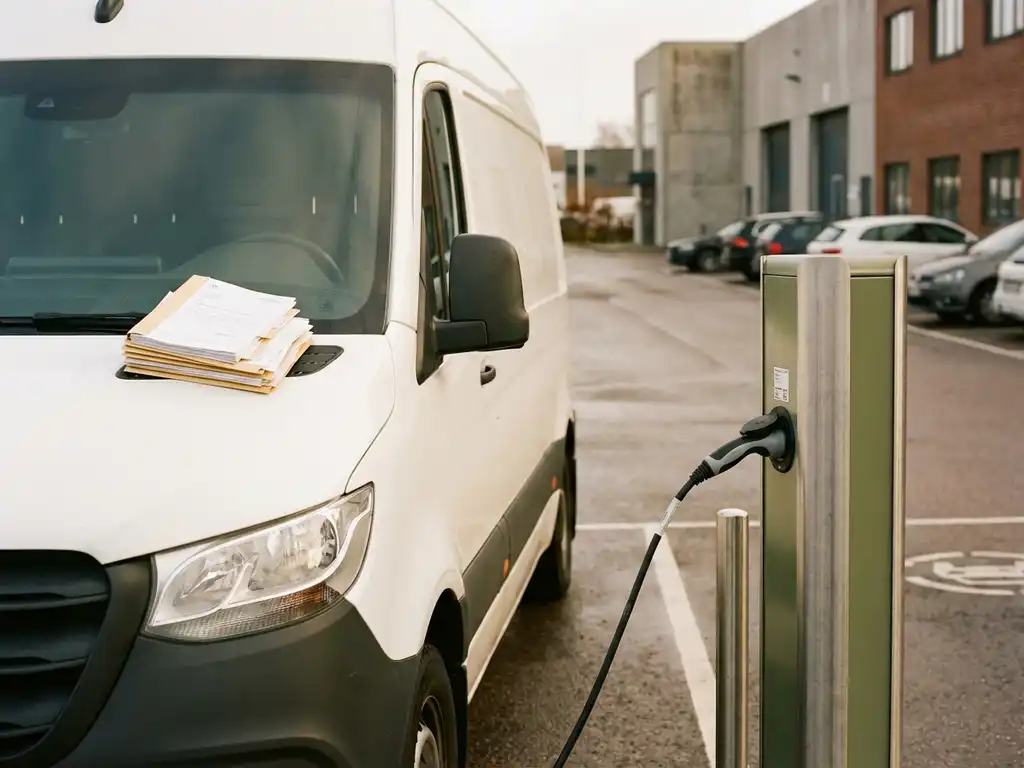
Public charging stations can be found all over the Netherlands, especially in city centres and near shops. Charging costs more than at home, but you do not need your own installation. The charging speed varies from slow (3.7 kW) to fast (22 kW). Handy for in-between charging during work visits.
Fast-charging stations along motorways charge your battery to 80% full in 20-45 minutes. This is the most expensive option, but indispensable for long trips. Most fast chargers provide 50-350 kW of power.
How much does it cost to charge your electric company car at home?
Home charging costs about €0.25-0.35 per kWh at an average Dutch electricity rate. For a commercial vehicle with a 75 kWh battery, you will pay around €19-26 for a full charge from 0 to 100%. This gives you about 300-400 kilometres of driving range.
You save big with a night tariff. Many energy suppliers offer cheaper electricity between 23:00 and 07:00. The night tariff is often €0.05-0.10 per kWh lower than during the day. A smart charging station automatically schedules your charging sessions in the cheapest hours.
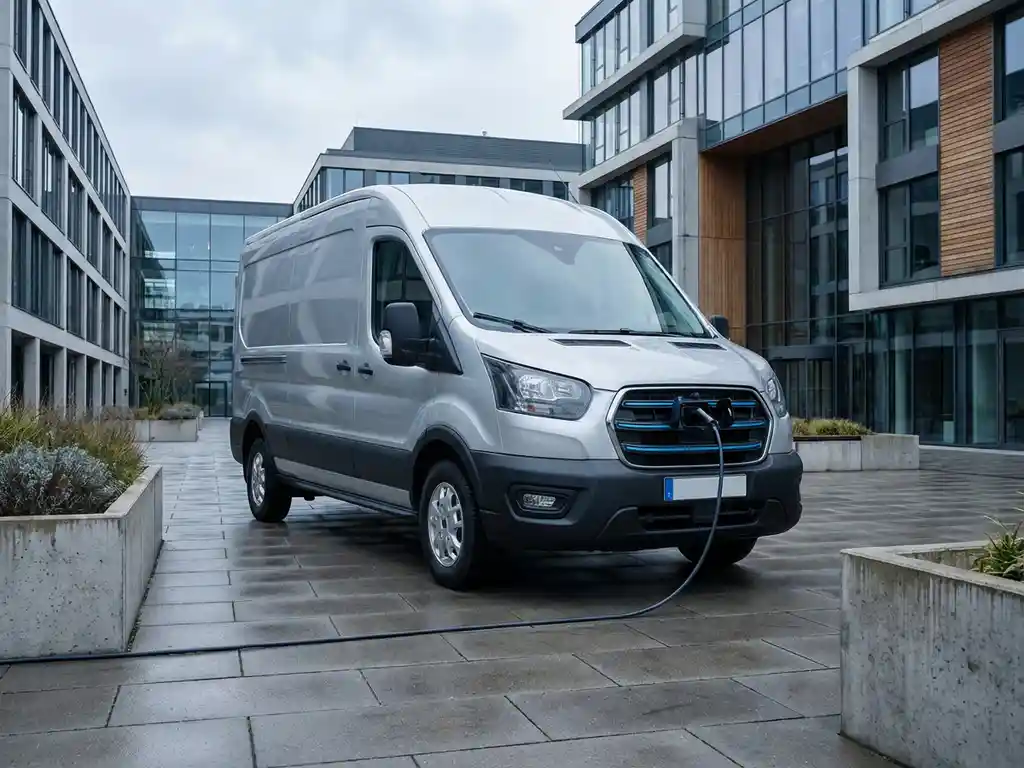
Case in point: a Ford E-Transit with a 68 kWh battery costs €17-24 to fully charge at normal tariffs. With night tariff, this drops to €14-20. Per 100 kilometres, you then pay only €5-8 in charging costs. That's much cheaper than filling up with diesel.
Solar panels make home charging even more advantageous. Power generated during the day will only cost you the purchase price of your solar panels. Some entrepreneurs charge their company cars for free with their own solar power.
What are the costs of charging at public charging stations?
Public charging stations cost €0.35-0.60 per kWh, depending on the operator and loading speed. On top of this, there are often starting charges of €0.35-1.00 per session. AC charging (up to 22 kW) is cheaper than DC fast charging (50+ kW).
Major operators such as Allego, Fastned and Shell Recharge have different tariff structures. Allego, for example, charges €0.39 per kWh for AC charging and €0.59 for DC charging. Fastned charges €0.69 per kWh at their fast chargers. These prices change regularly with the energy market.
Charge card subscriptions can save you money with regular use. For €5-15 per month, you often get lower kWh rates and no starting charges. NewMotion, for example, offers €0.05 discount per kWh with their subscription.
Charging costs at public poles are around €12-20 per 100 kilometres. This is more expensive than charging at home, but often cheaper than diesel. Plan your route smartly and charge mainly at home to reduce costs.
Which factors affect your charging costs the most?
You battery capacity largely determines your charging cost per session. A small commercial vehicle with a 40-kWh battery costs €10-14 to fully charge, while a large one with a 100-kWh battery costs €25-35. More capacity does mean more driving range per charge.
Electricity tariffs vary enormously by supplier and time of day. Fixed contracts offer security, but variable tariffs can be cheaper when energy prices are low. Business power contracts often have better terms and conditions than private contracts.
Seasonal influences play a big role. In winter, your commercial vehicle 20-30% consumes more energy due to heating and battery loss in cold weather. In summer, the same car travels further on the same charge. Take this into account in your cost calculation.
Your driving style significantly affects consumption. Calm driving, anticipation and regenerative braking can 15-25% save energy. Motorway driving consumes more than city driving because of higher air resistance.
How Van Den Hurk helps with electric commercial vehicles
We will help you make the switch to electric driving as smoothly as possible. With more than 60 years of experience in commercial vehicles, we know exactly what entrepreneurs face when choosing electric mobility.
Our support includes:
- Personal advice on charging options and charging infrastructure for your situation
- Cost-benefit analyses in which we compare charging costs with fuel costs
- Practical tips on optimal charging and reducing your consumption
- Flexible leasing options to suit your cash flow
- Aftercare and support after purchase or lease
Our product range electric commercial vehicles is constantly growing. From compact vans to large transporters, we have a suitable electric solution for every business. Since January 2025, electric commercial vehicles have also become more financially attractive due to the BPM levy on diesel.
Wondering what electric driving can bring to your business? Contact us for a no-obligation chat. We will be happy to calculate with you and show you how you can save on mobility costs.